

Atimonan Coal Plant: A Force for Local Progress
- November 21, 2025
Luzon remained the country’s economic powerhouse in 2024, generating the largest share of the Philippines’ total output. The Philippine Statistics Authority (PSA) reported that Luzon contributed more than a third of the national GDP.
The latest figures also showed that eight of the nation’s ten biggest local economies were concentrated in Luzon’s highly urbanized cities and fast-growing provinces. Topping the list were Quezon City at 6% of national GDP, followed by Makati, Laguna, Manila, and Cavite — all crossing the trillion-peso mark or close to it. Other entries were Batangas, Bulacan, Taguig City, Cebu, and Davao City.
Economic growth fuels rising energy needs. In 2024, Luzon’s power system faced mounting pressure as electricity demand continued to rise. The DOE projected that peak demand in 2025 would reach 14,769 megawatts (MW), representing a 5.4% increase from the previous year.
The National Grid Corporation of the Philippines (NGCP) placed the Luzon grid under a yellow alert on March 5, citing unexpectedly high consumption coupled with multiple plant outages.
To ease the strain and bolster grid stability, several new power projects currently undergoing testing and commissioning are expected to contribute an additional 1,890 MW to Luzon’s supply.
(Also read: Philippines Looks to Reignite Geothermal Drive to Power a Greener Future)
DOE backs Atimonan Plant as key energy project
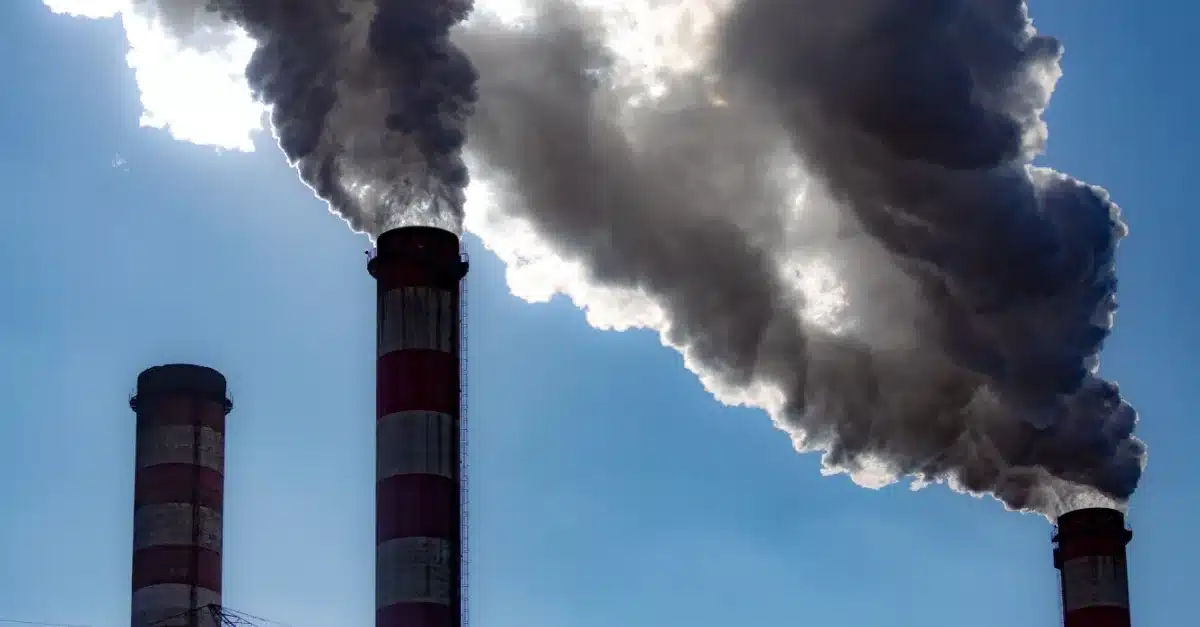
To help secure Luzon’s energy supply amid rising demand, the Department of Energy (DOE) has reaffirmed that the Atimonan Energy Power Plant remains a committed project and is not covered by the 2020 Coal Moratorium Policy. This clears the way for Meralco PowerGen Corporation (MGEN) to advance Atimonan One Energy, Inc.’s 1,200 MW ultra-supercritical coal-fired plant, with the company now able to proceed with the remaining permits.
The power plant will employ High Efficiency, Low Emission (HELE) technology, which uses high temperatures and pressures to maximize electricity output while reducing fuel consumption. This approach represents one of the latest advancements in thermal power generation and is designed to lower carbon emissions compared to traditional coal-fired plants.
HELE technology has been adopted globally, including in several Asian countries such as South Korea, Taiwan, Indonesia, Thailand, and China. By improving plant efficiency, these advanced thermal plants deliver more energy with less fuel, contributing to a more sustainable approach to meeting growing power demands.
However, environmental groups have criticized the project, arguing it undermines the country’s transition to cleaner energy.
(Also read: ACEN Fuels Nation’s Green Energy Ambitions with Fresh Offshore Wind Funding)
Opposition to the Atimonan Plant
In a Rappler article by Iya Gozum, residents shared their opposition to the Atimonan energy project. Here is a rundown of the issues:
- People vs. profit
Among those opposed is Fr. Noel Villareal, a parish priest in Pagbilao. Previously assigned to Atimonan from 2015 to 2021, Villareal has been actively involved in drafting statements articulating the community’s anti-coal stance.
“It is usually the host population who is repressed and affected,” said Villareal. “It is big business that benefits.”
While critics like Villareal argue that local communities bear the brunt of coal projects, proponents note that the Atimonan plant is set to deliver significant benefits to the local community, with an estimated annual economic contribution exceeding ₱1 billion. This includes revenue from real property taxes and funding for various community development initiatives. During the construction phase, the project is expected to create up to 6,000 local jobs, with an additional 300 permanent positions once the plant is operational.
MGEN stressed that the project follows all environmental and health standards set by the government, adding that it secured its DENR-issued environmental compliance certificate as early as 2015.
The company added that it remains committed to protecting community well-being and supporting sustainable livelihoods, especially for fishermen and other affected groups. “A multipartite monitoring team with EPIMB-DENR (Electric Power Industry Management Bureau-DENR) guides us in ensuring compliance and addressing concerns,” it added.
- Coal vs. clean energy transition
Gozum noted that there is widespread recognition of the urgent need to transition to cleaner energy sources. “It is an established fact that the power sector is one of the biggest sources of carbon emissions,” she wrote.
While the ambition to cut emissions is sound, nations that raced ahead in the renewable transition are discovering its growing pains.
The UK now contends with some of the developed world’s highest energy prices, Germany faces rising costs and bouts of grid instability, and the Netherlands is dealing with severe grid congestion as renewable power surges faster than infrastructure can keep up. Together, their experiences highlight how rapid shifts to clean energy can strain power systems and threaten economic stability.
With these developments, the reliability of fossil fuels is resurfacing in contrast to the inherent variability of renewables. When Germany saw its wind output plunge and portions of the grid falter, the country was forced to fall back on legacy fuels.
According to the International Energy Agency (IEA), the gap left by the country’s weak renewable generation was largely covered by fossil fuels. Reuters also noted that fossil sources climbed to their highest share of Germany’s power mix since 2018 — a clear sign of how quickly nations revert to conventional fuels when the grid is under strain.
The UK’s experience has revealed cracks in its aggressive net-zero strategy, prompting former Prime Minister Boris Johnson to admit he pushed the transition “far too fast,” overestimating how quickly renewables could replace fossil fuels—a miscalculation he now links to soaring household power bills.
Meanwhile, economic analysts warned that steep energy costs could trigger three straight years of the UK’s manufacturing job losses.
- Displacement fears
“The Atimonan coal project has already displaced a number of families in Villa Ibaba,” the Rappler article stated. “Some fishermen fear what this may mean for their livelihood.
In a document uploaded to the Environmental Management Bureau (EMB) website, MGEN reported that it had completed a 5.8-hectare resettlement site for residents displaced by the project back in 2017.
According to the company, 47 families have relocated to the community. “Many residents have upgraded their homes, started small businesses, and gained employment through skills training,” MGEN stated.
To support the livelihood of displaced residents, Meralco PowerGen has emphasized prioritizing the employment of qualified individuals from Villa Ibaba, other parts of Atimonan, and the wider Quezon province, beyond offering local construction jobs. Working with the Public Employment Service Office and the Technical Education and Skills Development Authority, the company has conducted skills assessments, training, and certification programs, recently including sessions on scaffolding and electrical installation.
Though clean energy is often praised as wholly positive, it can also displace communities. For instance, ACEN’s proposed floating solar project on Laguna Lake, covering about 2,000 hectares, has faced sharp criticism: fisherfolk and environmental groups warn it could undermine the livelihoods of over 8,000 people.
Energy security through a balanced approach
The Rappler article lauded solar as the Philippines’ most affordable electricity source. It cited Bloomberg New Energy Finance, which identifies solar as the cheapest option in the country, and noted that its rising share in the power mix could help lower costs for consumers. The article added that the Philippines added one gigawatt of solar capacity in 2024, exceeding earlier growth projections, according to the Institute for Energy Economics and Financial Analysis.
To be clear, the Atimonan power plant is not meant to replace solar but to complement it. Spain’s recent blackout, which energy experts attributed to overreliance on renewables, particularly solar, highlights the need for reliable baseload power. A stable and dependable energy supply is essential for a resilient green transition.
In fact, MGEN is a strong advocate of solar power. Its Baras Solar Project in Rizal earned the “Power Plant Upgrade of the Year – Philippines” award at the 2024 Asian Power Awards, while President and CEO Emmanuel V. Rubio was recognized as “CEO of the Year.” Under Rubio’s leadership, MGEN has expanded and diversified its portfolio, spearheading major initiatives such as MTerra Solar, which is set to become the world’s largest integrated solar and battery energy storage facility.
Everyone involved in the energy conversation, including residents, government officials, power producers, environmentalists, and others, agrees on the transformative impact of electrification, particularly for remote communities.
“In a just world, opposition is a choice in the same way that compliance is. People make choices from a common understanding that home is shared and passed down,” Gozum wrote. “The lights do not flicker inside homes and classrooms of the most remote towns.”
And this is exactly what the Atimonan power plant aims to achieve. When operational, it will deliver reliable baseload energy to around 5 million households, covering about 7% of Luzon’s demand. The plant will strengthen energy security and could cut electricity costs by roughly ₱12 billion annually, providing a stable, efficient power supply for the country’s future.
However, with the Philippines’ grid infrastructure still developing and even wealthy countries struggling with the green transition, the lesson is clear: while pursuing renewable goals, the country still needs reliable energy to keep the economy stable and prevent the poor from becoming even poorer.
Sources:
https://tribune.net.ph/2025/03/05/luzon-grid-runs-thin-as-demand-surges
https://www.bbc.com/news/articles/cn40y9yxkgvo
https://theweek.com/tech/why-britains-electricity-bills-are-some-of-the-highest-in-the-world
https://tribune.net.ph/2025/10/01/slow-but-sure-shift
https://www.iea.org/data-and-statistics/data-tools/monthly-electricity-statistics
https://www.telegraph.co.uk/politics/2025/10/05/boris-johnson-too-far-too-fast-net-zero
https://eia.emb.gov.ph/wp-content/uploads/2023/04/A1E-PDS_combined.pdf
https://www.ft.com/content/b155d922-288a-4bb8-b207-a9f49bb645c7


