

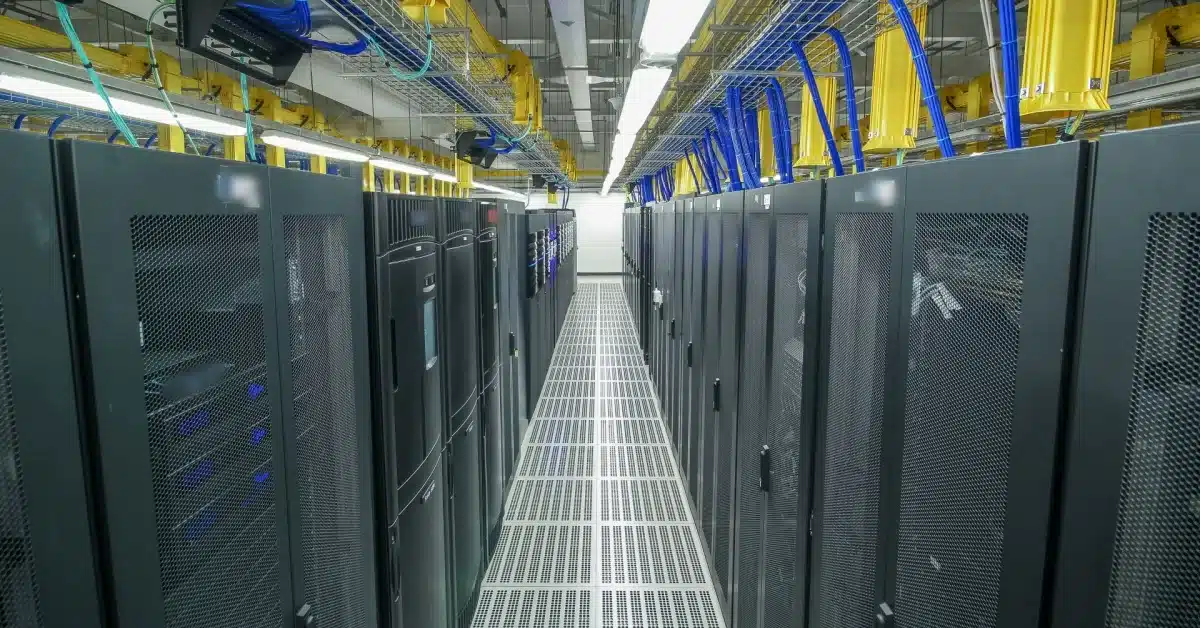
Power Project Failures Undermine PH Bid To Become Data Center Hub
- January 28, 2026
Table of Contents
Setbacks in major renewable energy developments have weakened the Philippines’ attempt to position itself as a regional destination for data centers, according to a network of digital advocates, who said the non-delivery of promised power capacity drove potential investors to neighboring countries.
Ronald Gustilo, national campaigner of Digital Pinoys, said the country lost a critical opportunity to attract hyperscale data centers and related digital infrastructure after renewable energy developers failed to meet their commitments. He identified Solar Philippines, founded by Batangas 1st District Rep. Leandro Leviste, as the main contributor to the problem.
Undelivered Power Commitments
Gustilo said projects awarded to Solar Philippines failed to deliver nearly 12 gigawatts (GW) of committed renewable energy capacity, representing about 64 percent of all terminated power supply contracts, or more than 11,000 megawatts. These commitments were made under contracts with the Department of Energy (DOE).
“This was not just an energy project failure. This was a lost national opportunity,” Gustilo said. “The Philippines failed to build data centers, artificial intelligence infrastructure, and a strong digital economy because the electricity that was promised was never delivered.”
He added that the undelivered capacity could have supported more than a hundred hyperscale data centers and attracted over USD 100 billion in potential foreign investment.
Impact On Data Center Investments
Data centers have expanded globally in recent years as demand for cloud computing, artificial intelligence, and large-scale digital services increased, a trend accelerated during the COVID-19 pandemic. Because these facilities require uninterrupted power supply, operators typically favor locations with reliable electricity and low carbon emissions.
Gustilo said the failure to deliver clean and dependable power pushed global technology firms to expand in other Southeast Asian countries where energy commitments were fulfilled.
“Data center investors don’t listen to projections or press releases. They look at delivered power,” he said. “When projects of this scale fail, investors don’t wait. They leave—and they may never come back.”
Digital Pinoys said the missed investments translated into lost jobs, foregone economic activity, and weakened prospects for the Philippines to host cloud computing and AI services.
Financial And Regulatory Fallout
As a result of the terminated contracts, Solar Philippines is facing billions of pesos in penalties. The issue has also drawn regulatory scrutiny.
Ombudsman Jesus Crispin Remulla earlier confirmed that authorities are investigating Leviste over allegations that the mega-franchise granted to Solar Philippines was sold without the required approval from Congress.
In 2023, Leviste sold 14.6 billion shares of Solar Philippines to Meralco PowerGen Corporation for about P18.26 billion, a transaction that drew public attention amid broader debates over energy policy and infrastructure governance.
Following the controversy, Leviste resigned from the boards of SP New Energy Corp. and its subsidiary Terra Solar Philippines Inc., saying the move was meant to prevent investors from being affected by what he described as political attacks against him.
Broader Implications
Gustilo said the non-performance of major renewable projects damaged the country’s credibility as a destination for energy-intensive digital industries.
“We lost a golden opportunity to compete at the ASEAN level—not because of a lack of vision, but because contracts that were awarded were not delivered,” he said.
Source:
https://business.inquirer.net/570332/leviste-leaves-board-seats-in-spnec-mterra-solar
