

BESS Technology Seen As Key In Disaster Energy Planning
- February 2, 2026
Table of Contents
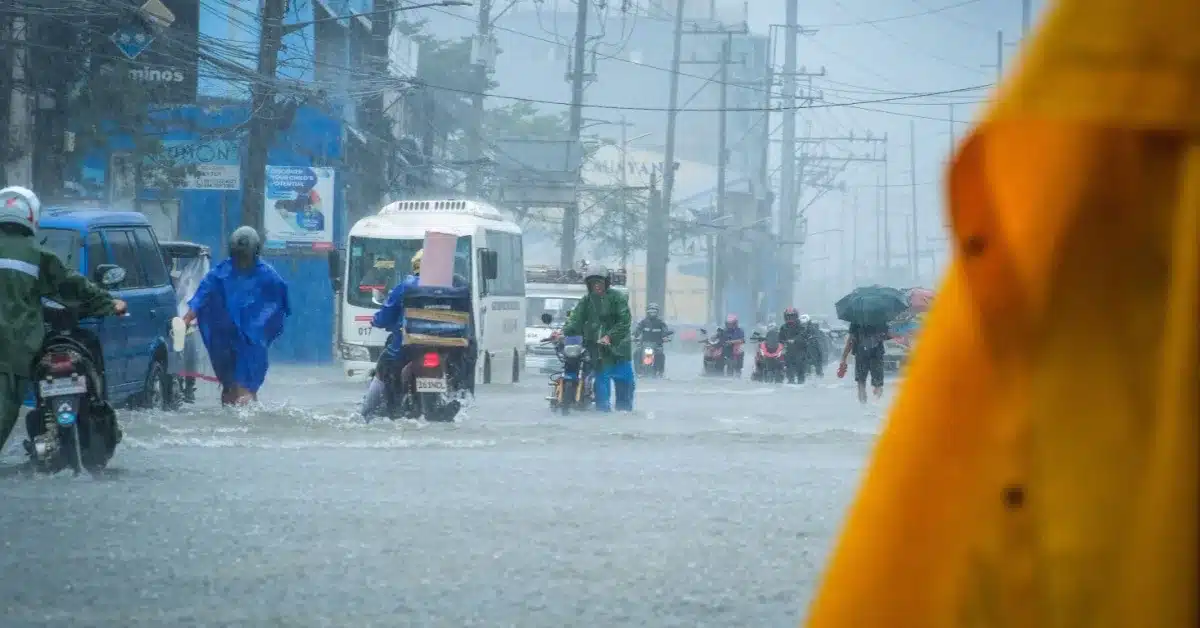
Power outages that linger for days or weeks after major typhoons have become a familiar reality across the Philippines, often outlasting the storms that caused them. Energy expert Pete Maniego argues that while extreme weather triggers the damage, the prolonged hardship that follows reflects deeper infrastructure failures, particularly in how electricity, water, and communications systems are designed and protected.
“When the lights go out, everything stops,” Maniego recently wrote, describing how hospitals ration generator use, water pumps shut down, and communities struggle to coordinate relief without reliable power. Maniego, an industrial engineer, lawyer, and former chair of the National Renewable Energy Board, said these conditions turn natural disasters into extended humanitarian and economic crises.
Maniego points to recent history to underscore the scale of the problem. After Supertyphoon Yolanda in 2013, large parts of Eastern Visayas were left without reliable electricity for weeks to several months as collapsed transmission towers had to be rebuilt. In the aftermath of Typhoon Odette in 2021, more than 1.7 million electricity customers lost power, with full restoration in some provinces taking two to eight weeks and even longer in remote areas.
Systemic Risk
According to Maniego, the Philippine power system’s heavy dependence on long transmission lines and centralized substations makes it especially vulnerable to typhoons. When towers collapse or substations flood, electricity cannot reach communities regardless of how much generation capacity remains available. Entire provinces can go dark even while power plants continue operating elsewhere.
This shifts the policy challenge beyond simply building more power plants. The more pressing issue is how to “weather-proof” the power system so electricity remains available where it is needed most during Category 4 and 5 storms.
Decentralizing Resilience with BESS
Maniego’s proposed response is to decentralize resilience by equipping critical public facilities with rooftop solar panels and battery energy storage systems (BESS). These include public hospitals, rural health units, evacuation schools, barangay and municipal halls, water pumping stations, ports, airports, and major communications hubs.
“These establishments hold the community together during disasters,” Maniego said, arguing that they should not depend entirely on a fragile transmission network. For island and remote communities, he added that solar-powered microgrids with batteries and limited diesel backup are often more reliable and cost-effective than systems dependent on fuel deliveries that are frequently delayed after typhoons.
Grid Stability
The importance of battery storage has also been emphasized by the National Grid Corporation of the Philippines (NGCP) as renewable energy capacity expands. NGCP recently welcomed the 2,500-megawatt Terra Solar Power Project, supported by a 1,125-MW BESS, but cautioned that heavy reliance on variable renewable energy sources can pose operational challenges if not properly managed.
NGCP cited operational experience at the San Marcelino Solar Farm in Zambales, where short-term solar variability of up to 300 MW has occurred due to brief cloud cover. Such fluctuations, the grid operator said, highlight the need for fast-acting resources like batteries, which can respond more quickly than conventional coal plants with longer ramping times.
These observations reinforce Maniego’s argument that batteries are central not only to integrating renewables into the grid but also to maintaining power during disasters.
Cost Of Inaction
Maniego also frames resilience as an economic issue. Yolanda caused an estimated ₱95 billion in infrastructure damage and ₱37 billion in agricultural losses, while Odette’s damage exceeded ₱50 billion.
The World Bank estimates that unreliable electricity costs the Philippine economy about $8 billion annually, and that a single five-hour nationwide outage can result in losses of roughly ₱556 million.
Against these figures, Maniego argues that it is fiscally workable to have a phased national investment of ₱180–₱240 billion over five years to install solar and batteries in critical facilities, deploy microgrids, and harden key grid assets. While typhoons cannot be prevented, he maintains that their aftermath does not have to bring entire communities to a standstill.
Source:
https://newsinfo.inquirer.net/2174481/power-resilience-is-a-critical-need
https://businessmirror.com.ph/2026/01/08/ngcp-welcomes-new-capacity-from-terra-solar-project
https://mb.com.ph/2026/01/23/leviste-exits-terra-solar-board-as-mgen-takes-control-of-giant-project


