

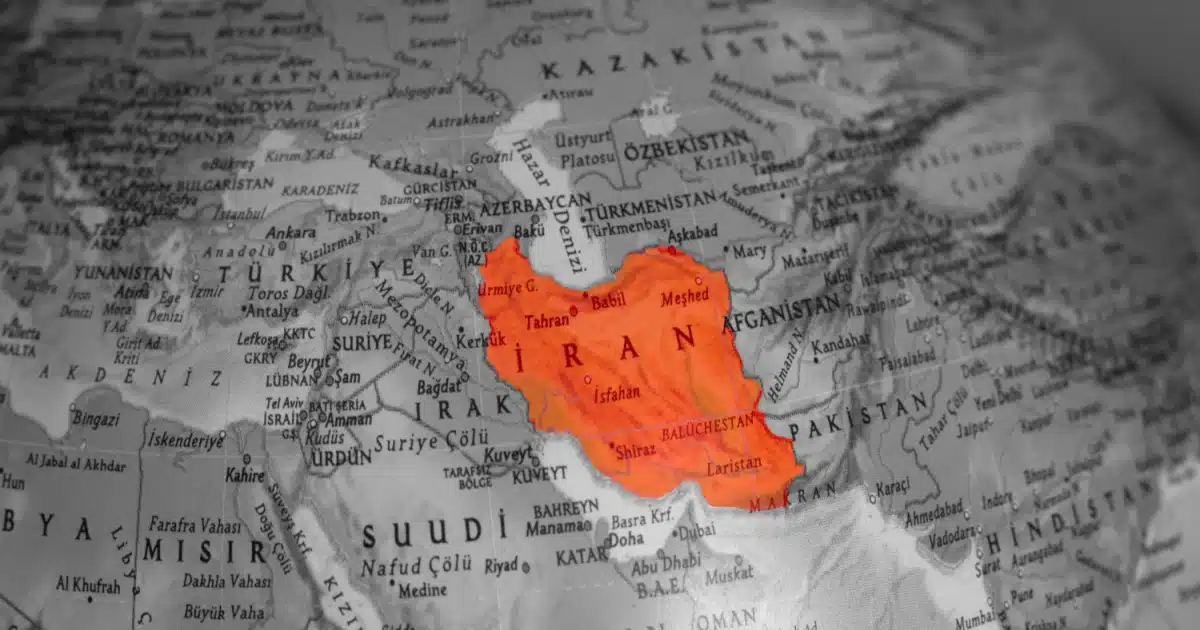
Beyond the Flares: How the 2026 War on Iran is Forcing a Cleaner, Safer Future
- March 14, 2026
Table of Contents
The flares rising over Middle Eastern oil fields in March 2026 are more than just a signal of regional conflict; they are a stark warning light for the global economy. As the war on Iran intensifies, the world finds itself trapped in a familiar cycle of surging gas prices, threatened shipping lanes, and economic stagflation. Once again, the fragility of a civilization built on fossil fuels is being laid bare.
This conflict serves as a definitive reminder that energy security is national security. To break the cycle of energy threats and price shocks, the global community must treat the transition to renewable energy not merely as a climate goal, but as a strategic imperative to decouple economic stability from geopolitical volatility.
(Also read: Middle East Tensions Raise Risk Of Higher Philippine Electricity Prices)
The 2026 War on Iran
The current conflict ignited on February 28, 2026, following months of escalating tensions regarding nuclear monitoring and regional maritime interference. These strikes were a coordinated joint military operation launched by the United States and Israel.
While the active combat remains concentrated within specific borders, the economic fallout has been instantaneous and global, proving that geography is no shield against energy-driven inflation. According to the Institute for the Study of War, the timeline of strikes indicates a rapid transition from highly targeted attacks to a broader campaign targeting logistics and export infrastructure. This shift has directly compromised Iran’s oil production, which reached approximately 3.5 million barrels per day but has since been throttled by strikes and immediate international sanctions.
However, the primary weapon in this conflict is not just the oil itself, but the geography of its transport. The Strait of Hormuz, a narrow waterway through which 20% of the world’s oil and liquefied natural gas (LNG) flows, has become a primary chokepoint that effectively holds the global economy hostage. Iran’s effective closure of the Strait has brought maritime traffic to a near standstill, sending shockwaves through every nation reliant on Middle Eastern energy and causing oil prices to surge as high as $126 per barrel at their peak.
Media reports from the region highlight that this blockade is not merely a military tactic but a deliberate effort at the economic strangulation of global supply routes, impacting everything from transport costs to the price of basic food commodities.
Impact on Global Energy: The High Cost of Dependence
The war has triggered what economists describe as “panic levels” in the energy markets. Within the first two weeks of the conflict, the world saw a dramatic restructuring of energy economics that threatened to undo years of post-pandemic recovery.
For the first time since the 2022 invasion of Ukraine, oil prices surged past the $100 mark this past Sunday as the war in Iran intensified. By early Monday, March 9, 2026, Brent crude— the global standard for oil pricing—jumped to nearly $120 a barrel before dropping back to just under $100 later that night.
Global oil supplies are currently falling roughly 20 million barrels per day short of demand due to the total shutdown of shipments through the Middle East. Experts warn there is no backup supply anywhere else in the world that can fill a gap this large.
The Strategic Case for Renewables
The case for renewable energy has moved beyond environmental concerns and is now a matter of national security.
According to Green Central Banking, the current geopolitical instability has underscored a profound systemic risk for Asian economies heavily dependent on imported liquefied natural gas (LNG). This dependency leaves national power grids and industrial sectors exposed to sudden supply shocks and price swings that are entirely beyond domestic control.
These energy spikes have triggered a damaging economic feedback loop across major markets, including Singapore, South Korea, and Thailand. High fuel import costs necessitate massive capital outflows, devaluing local currencies and driving up consumer inflation. To break this cycle, analysts argue that a structural policy shift toward domestic clean energy is the only sustainable hedge against external risks.
The US Energy Information Administration reports that the Strait of Hormuz serves as a critical artery for Asian energy security, with more than 80% of the oil and LNG moving through the passage destined for markets across Asia.
The United Nations highlights several strategic advantages beyond immediate energy security that arise from a transition to renewable power.
Economic resilience
In 2024, clean energy investment reached $2 trillion, outpacing fossil fuels by $800 billion and driving 10% of global GDP growth. While the global economy expanded by 3%, energy-related CO2 emissions grew at a much slower 0.8%.
Though the upfront cost is high, particularly for developing nations, the payoff is immense: reducing pollution could save the world $4.2 trillion annually by 2030.
This global momentum is reflected in the Philippines, where the Board of Investments reported that renewable energy projects accounted for 83% of all approved investments in 2024, totaling ₱1.38 trillion. Analysts from the International Monetary Fund (IMF) note that scaling these domestic sources is vital for the country to reduce its fossil fuel import dependency, which previously cost roughly 6% of national GDP.
Job creation
Clean energy is now a dominant global employer, with 35 million workers outstripping the fossil fuel sector. In 2023 alone, renewable energy jobs climbed to 16.2 million. This transition acts as a powerful economic engine, creating three times more jobs per dollar than fossil fuels.
The shift to net-zero is projected to generate 30 million new positions in green tech and efficiency. This 9 million net gain in the energy sector underscores the need for a just transition that prioritizes worker rights and inclusivity.
This trend is evident in the Philippines, where International Labor Organization (ILO) data indicates the sector currently supports about 120,000 workers. To reach national clean energy targets, the country will need an additional 350,000 workers by 2030, offering a major opportunity for local technical and engineering employment.
Affordable power
Renewables are now the world’s cheapest energy source, with 90% of new projects undercutting fossil fuel costs. Solar prices have plunged by 41%, offering low-income regions a historic opportunity.
This affordability is critical as AI data centers, which consume as much electricity as 100,000 homes, drive massive new demand. By 2030, renewables could provide 65% of global electricity, potentially decarbonizing 90% of the power sector by 2050 to mitigate climate change.
In the Philippines, where electricity prices are among the highest in Southeast Asia, expanding renewable energy is seen as key to reducing reliance on imported fossil fuels. According to the Independent Electricity Market Operator of the Philippines (IEMOP), increased renewable capacity has already helped lower spot electricity prices to ₱4.14 per kWh in the first half of 2025, down from ₱5.58 per kWh in 2024, and continued renewable expansion could reduce average power prices by up to 24% by 2029.
However, the green transition faces significant economic and structural hurdles. Because solar and wind are variable and intermittent, their integration requires substantial investment in grid stability and ancillary services. To make these projects financially viable for investors, the government utilizes policy-driven subsidies like the Feed-in Tariff (FiT) system, which is funded by a “FiT-All” charge on consumer electricity bills.
Meanwhile, the GEA-All (Green Energy Auction Allowance) is a fixed charge of P0.0371/kWh that began appearing on electricity bills in January 2026. This pass-through fee is collected from all on-grid consumers to fund the payment differential for renewable energy developers who won projects under the Green Energy Program (GEAP).
Additionally, rising supply chain costs and high material prices are increasingly straining the bankability of new renewable energy projects. According to the IEA Renewables 2025 report, these persistent bottlenecks have led to downward revisions in growth forecasts as global procurement costs rise. In the Philippines, developers must now navigate high capital expenditures and grid constraints that threaten project timelines.
Boosting homegrown supply
Approximately 6 billion people live in nations that must import fossil fuels, leaving 80% of the global population vulnerable to geopolitical shocks. Unlike finite fuels, renewable energy is a universal resource available in every country.
The International Renewable Energy Agency (IRENA) estimates that renewables can provide 90% of global electricity by 2050, enabling countries to reduce reliance on imported fuels while strengthening energy security and economic resilience.
The issue is particularly relevant for the Philippines. Despite having some domestic coal production, the country imports around 75% of its coal supply, largely from Indonesia, making its power sector vulnerable to global price fluctuations and supply disruptions. In 2024 alone, the Philippines imported nearly 40 million metric tons of coal.
Improved public health
The World Health Organization (WHO) estimates that around 99% of the global population is exposed to air that fails to meet recommended quality standards, placing billions at risk of serious health problems. Each year, air pollution is linked to roughly 7 million premature deaths worldwide, underscoring the scale of the public health crisis.
Beyond the human toll, the financial burden is also significant. Studies estimate that the health and productivity losses tied to polluted air reach about $8.1 trillion annually, representing around 6.1% of global GDP.
In the Philippines, air quality remains a mixed picture in 2024–2025. Government monitoring shows that concentrations of fine particulate matter (PM2.5) have improved in recent years but still pose challenges in urban areas. Episodes of “unhealthy” air quality continue to be recorded in Manila, and the city ranked among the most polluted major cities in the world on specific days in 2025, with PM2.5 levels well above safe thresholds.
(Also read: GEA-5 Update: Government Prepares For Landmark Offshore Wind Auction Under GEA-5)
The Path to Resilience
The Philippines and the world face a clear need to accelerate the shift to renewable energy. Recent crises have exposed the risks of relying on imported fossil fuels and unstable energy markets. As the Institute for Energy Economics and Financial Analysis (IEEFA) research lead Sam Reynolds notes, “this is the second major crisis in just four years,” referring to the Ukraine-Russia war in 2022, which also shook the global energy market.
Renewables are now among the cheapest electricity sources in Asia, with solar and wind projects lasting 25 to 30 years and requiring minimal maintenance, according to energy analysts. Europe’s experience, saving around €12 billion by reducing gas demand and adding wind and solar, shows the economic benefits of clean energy.
For the Philippines and ASEAN, where most wind and solar potential remains untapped, renewables offer a reliable, long-term solution for energy security and sustainable growth.
Sources:
https://understandingwar.org/research/middle-east/iran-update-evening-special-report-march-9-2026
https://www.goldmansachs.com/insights/articles/how-will-the-iran-conflict-impact-oil-prices
https://en.wikipedia.org/wiki/2026_Strait_of_Hormuz_crisis
https://news.northeastern.edu/2026/03/10/oil-prices-iran-war
https://www.theguardian.com/business/2026/mar/10/oil-prices-drop-trump-iran-war
https://www.theguardian.com/business/2026/mar/09/iran-war-oil-prices-stagflation-global-economy
https://www.csis.org/analysis/iran-conflict-sending-oil-prices-soaring-what-happens-next
https://www.un.org/en/climatechange/raising-ambition/renewable-energy
https://boi.gov.ph/wp-content/uploads/2026/01/Renewable-Energy.pdf
https://www.elibrary.imf.org/view/journals/018/2026/005/article-A001-en.xml
https://tribune.net.ph/2025/08/18/air-pollution-drops-across-metro-manila-nationwide
https://www.iqair.cn/cn-en/newsroom/manila-among-top-10-most-polluted-cities-in-the-world-10-30-2025


