

Lessons in Energy Resilience from the 2026 Middle East Crisis
- March 26, 2026
Table of Contents
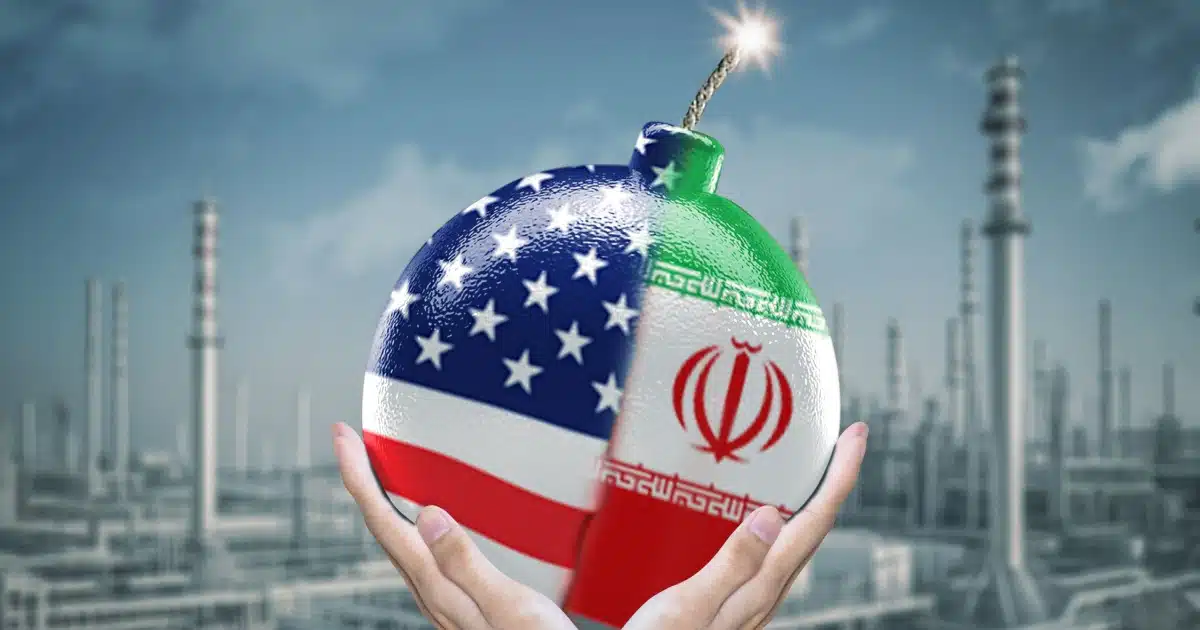
The past week has marked a dramatic escalation in the ongoing conflict involving Iran, with far-reaching implications not only for geopolitics but for the global energy system. What began as targeted strikes has rapidly evolved into a broader regional confrontation involving the US, Israel, and key Gulf states. The most consequential development has been the disruption of energy flows through the Strait of Hormuz—one of the world’s most critical chokepoints for oil and gas trade.
By mid-March 2026, the conflict had effectively curtailed up to 20% of global oil and liquefied natural gas (LNG) supply, triggering what the International Energy Agency (IEA) described as “the largest supply disruption in the history of the global oil market.”
Tanker traffic has been severely restricted, energy infrastructure has come under direct attack, and major production hubs, such as Iran’s South Pars gas field, have been caught in the crossfire. Shared by Iran and Qatar, the South Pars is the world’s largest offshore natural gas field. Holding an estimated 51 trillion cubic meters of usable reserves, it contains enough gas to power the entire world for 13 years.
Oil prices have surged past $100 per barrel, with warnings that they could climb as high as $180 or even $200 if disruptions persist. According to reports, prices have risen more than 25% since the conflict began. Governments worldwide have begun tapping strategic reserves, implementing emergency measures, and bracing for inflationary shocks.
According to the International Monetary Fund (IMF), a sustained 10% increase in oil prices raises global inflation by 0.4% and reduces worldwide economic output by 0.2%.
(Also read: Gatchalian Seeks Gradual Rate Hikes As Oil Crisis Escalates)
Pursuing Fossil Fuel Security
With shipping routes disrupted and production facilities damaged, global oil supply has fallen sharply, by as much as 8 million barrels per day in March alone, according to analysts. To mitigate surging prices, the IEA authorized a record-breaking release of 400 million barrels of oil from its global strategic reserves.
The global economy’s deep-seated dependence on fossil fuels is being laid bare as the conflict forces nations to reshuffle their energy sources. This shift is creating a stark divide between economic winners and losers: energy-intensive importers like Europe, Japan, South Korea, Taiwan, India, and China are bearing the brunt of soaring costs. Pakistan faces a particularly severe crisis, as the loss of Qatari liquefied natural gas (LNG), which accounts for a significant portion of its 40% energy import reliance, has crippled its domestic supply.
In contrast, this crisis solidifies the strategic leverage held by fossil-fuel-rich nations outside the war zone. Countries such as Norway, Canada, and Russia are poised for economic gains as the world pivots toward their oil to fill the supply vacuum.
Meanwhile, Australia is deferring oil refinery shutdowns and pivoting to the US for crude to address domestic fuel needs. Major energy firms, including ExxonMobil, BP, and Vitol, are rerouting a record 240,000 tons of oil products from the US to Australia this March. This logistical pivot follows export bans in China and Thailand, alongside regional production cuts triggered by the conflict.
Recently, Japan and several Asia-Pacific partners confirmed at least $30 billion in energy and infrastructure agreements with US companies. According to White House officials, approximately 20 confirmed deals, including purchase commitments and strategic transactions, were finalized as formal discussions commenced. These agreements represent a major move toward energy diversification, spanning LNG, coal, and nuclear energy, alongside critical investments in minerals, batteries, and strategic infrastructure financing.
While China has aggressively expanded its renewable portfolio, with one in ten cars now electric, the country remains the world’s largest importer of crude oil and the top buyer of Iranian supply. Additionally, coal remains a massive component of its energy strategy, with developers submitting or reactivating proposals for 161 gigawatts (GW) of new capacity in 2025 alone. This expansion is already hitting the grid; a record 95 GW was added last year, while an additional 291 GW currently sits in the pipeline, encompassing projects that are proposed, permitted, or already under construction.
In the wake of the 2022 invasion of Ukraine, India recalibrated its energy strategy to prioritize national security over transition speed. The government stabilized its economy by aggressively securing discounted Russian crude and ramping up domestic coal production to meet surging baseload demand. Even with a simultaneous expansion of solar and wind capacity, these renewables were not yet sufficient to fully insulate the country from the cascading supply disruptions of the 2026 crisis.
The Philippine Context: Vulnerability and Strategic Choices
The Philippines finds itself at a critical crossroads in 2026, where the immediate demands of energy security have forced a pragmatic, albeit heavy, return to coal. As the conflict in the Middle East disrupts global supply chains, the nation’s reliance on coal has proved to be significant, with coal currently accounting for approximately 60% of total power generation.
“In this environment, coal is not just a cheap alternative; it is being repriced as a critical backup fuel that can be ramped up when LNG cargoes do not arrive on schedule,” wrote Ben Kritz of Manila Times. He added that global utilities, traders, and various governments are rebuilding coal inventories while securing hedges against Newcastle and Indonesian benchmarks.
While environmentalists argue the conflict serves as a definitive catalyst to accelerate the renewable transition, Manila Bulletin’s Myra Velasco notes that this forces an unavoidable and urgent question to the forefront of the global conversation. “Can renewable energy really be the lifeline out of fossil chaos, or will it buckle under the weight of its own lofty promises?” she wrote.
Velasco pointed out that the Department of Energy (DOE) fast-tracked a transition promised to deliver energy independence, forcing consumers to shoulder the burden of inflated initial feed-in tariffs (FIT) at ₱9.68/kWh for solar and ₱8.53/kWh for wind. Despite the Electric Power Industry Reform Act (EPIRA) intending to eliminate subsidized rates, the DOE continues to lock in 20-year power supply agreements (PSAs) that essentially function as hidden subsidies.
The country’s baseload capacity remains in a precarious state. Despite the DOE loosening the coal moratorium and pursuing long-term nuclear targets, new fossil fuel projects face the persistent threat of legal delays. Amid the rapid rollout of consumer-subsidized contracts through Green Energy Auctions (GEA), Velasco questions whether the grid requires more intermittent renewables or a prioritized shoring up of baseload stability.
Evidence suggests the early distribution of RE capacity was undermined by non-performing entities that secured PSAs under the previous administration, stalling actual progress.
“So, can renewables truly rise to solve the Philippines’ chronic supply challenges? The jury is still out,” wrote Velasco. “The RE lobbyists may be loud, but talk won’t light a home.”
However, while renewables have yet to solve the country’s chronic reliability issues, they are already exerting a significant influence on the cost of power.
For Kritz, the power supply stack’s evolution since 2024 has fundamentally shifted market dynamics. Increased renewable energy, particularly solar, is priced at zero marginal cost ahead of coal and gas to depress midday prices and compress baseload averages.
This structural change explains the muted WESM reaction despite geopolitical volatility. Recent price spikes were linked to plant outages rather than fuel costs. While high coal prices may prevent rates from hitting 2025 lows, the expanded RE fleet suggests ₱5.1/kWh is now a market ceiling rather than a floor.
Yet, coal is experiencing a global resurgence. “Coal is trading in sympathy with oil, because even though coal itself is not physically constrained by the Strait of Hormuz, it is being repriced as a substitute fuel and as part of a broader ‘energy basket’ where all molecules now carry a geopolitical premium,” wrote Kritz. “In the derivative markets, the net result is a classic correlated energy rally: oil leads on direct supply shock, gas and LNG overshoot on route and infrastructure risk, and coal is dragged higher both as a hedge and as the marginal backup fuel.”
(Also read: Fuel Shock Awakens Energy Security Fears, Sparks Urgent Call For Renewable Shift)
Asia’s Energy Security Response
According to the Associated Press, Asian countries are increasingly relying on coal as disruptions linked to conflict involving Iran strain oil and gas supply routes and tighten LNG availability across the region.
South Korea has temporarily relaxed limits on coal-fired generation. Indonesia, the world’s largest coal exporter, has prioritized domestic supply over exports, a move that could further constrain regional availability. At the same time, Thailand and Vietnam have all raised coal-fired power generation to compensate for LNG shortfalls and maintain grid stability.
Meanwhile, benchmark prices for Newcastle coal, the primary pricing reference for Asia, have increased by about 13% since the escalation of conflict.
A Crisis That Reframes the Energy Debate
The war involving Iran has triggered one of the most significant energy disruptions in recent history, with consequences that extend far beyond the Middle East.
In the span of a few weeks, it has revealed the fragility of global energy supply chains and the challenges of transitioning to alternative energy sources at scale.
While the long-term trajectory toward cleaner energy remains intact, the current crisis serves as a reminder that energy transitions do not occur in a vacuum. They unfold within a complex landscape shaped by geopolitics, infrastructure, and economic realities.
For policymakers, the lesson is not necessarily to slow the transition, but to ground it in pragmatism—ensuring that reliability, affordability, and security remain at the forefront.
Sources:
https://www.iea.org/reports/oil-market-report-march-2026
https://theexchangeasia.com/asia-plans-us30b-energy-and-mineral-deals-with-us/
https://apnews.com/article/middle-east-wars-renewable-energy-asia-4b5fe0693ce5816472c905db85f7da6e
https://mb.com.ph/2026/03/16/when-oil-fuels-war-can-renewables-rise-or-will-they-flop
https://www.manilatimes.net/2026/03/15/opinion/columns/the-energy-crisis-expert-update/2300092
https://apnews.com/article/middle-east-wars-energy-asia-gas-coal-f8ea1e10a6bb47085e5e6141fc3f1d3e


