Why Pumped Hydro Is Essential to a Resilient Renewable Energy Future
- September 2, 2026
Table of Contents
Solar power is growing fast in the Philippines. As of July 2026, the Department of Energy (DOE) had awarded more than 1,000 renewable energy (RE) service contracts, representing over 93 gigawatts (GW) of potential capacity across all renewable technologies. Solar accounts for the largest share, with around 36 to 37 GW of potential capacity from awarded projects.
However, solar’s rapid growth also brings challenges: its weather- and daylight-dependent output can fluctuate, making power supply less predictable and harder to match with demand.
At the same time, demand is set to rise as industrialization and electrification accelerate. The International Energy Agency (IEA) projects Southeast Asia to be among the world’s fastest-growing electricity markets through 2030, driven by manufacturing, electric vehicles (EVs) and energy-intensive data centers, including those supporting artificial intelligence (AI) and cloud computing.
To support the country’s RE transition and rising power demand, investment in pumped-storage hydropower (PSH) is gaining momentum. The government and private sector are advancing large-scale projects, including green-financed developments, to strengthen grid reliability as electricity needs climb.
Currently, the Philippines has 1.19 GW of hydropower capacity, with projects in the pipeline that could add up to 12.74 GW, including opportunities for PSH.
(Also read: NGCP Transmission Projects Face New 2027 Completion Targets)
Why PSH Is Taking Center Stage
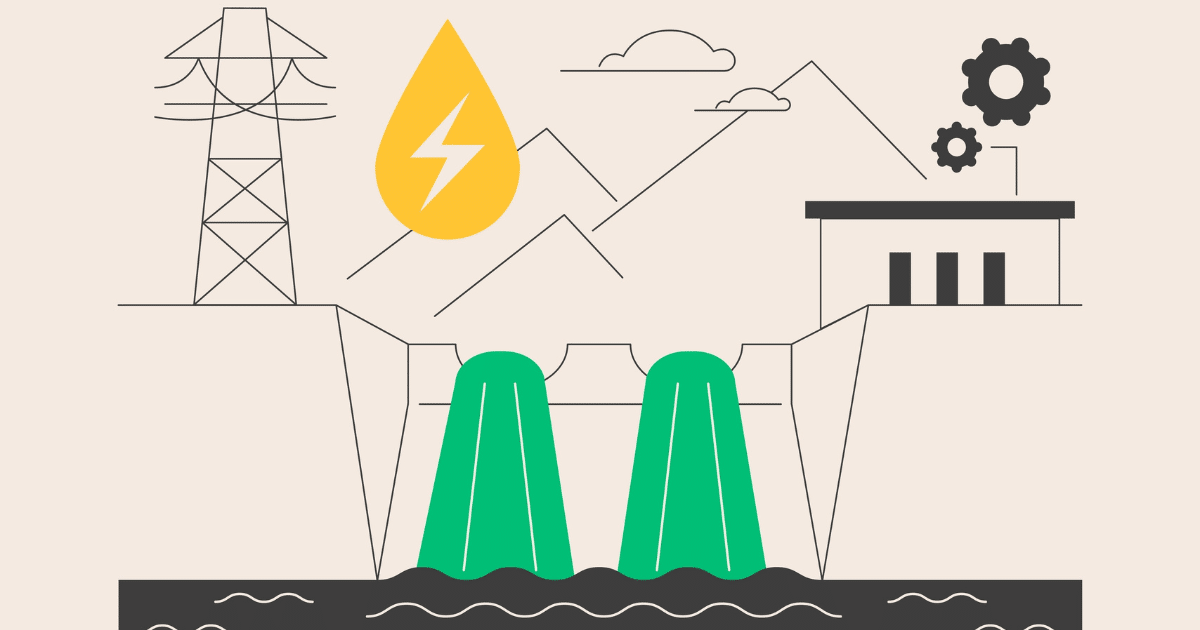
PSH acts like a giant rechargeable battery for the grid. When electricity is abundant, it uses excess power to pump water into an elevated reservoir. When demand rises, specifically when evening demand peaks, the stored water is released through turbines to quickly generate electricity.
The International Hydropower Association (IHA) stated that PSH is already the leading form of long-duration energy storage worldwide, with nearly 200 GW of installed capacity, representing about 90% of global capacity.
Battery energy storage systems (BESS) are also expanding rapidly, but their role has limits. Most lithium-ion systems provide roughly two to four hours of storage, making them effective for short-term balancing and shifting RE across the day, but less suited to longer-duration or seasonal needs as renewable generation grows.
Another concern is supply-chain concentration. Lithium-ion battery manufacturing remains heavily centered in East Asia, with Chinese, Japanese and Korean producers supplying nearly all of the world’s output. China alone accounted for more than 80% of global battery production in 2025, leaving the market vulnerable to disruptions in a handful of key manufacturing hubs.
Processing concentration poses another major risk. Critical battery minerals are refined and processed in a few key markets, with Indonesia dominant in nickel and China leading in cobalt, graphite and rare earths. This creates potential bottlenecks beyond mining, as disruptions, trade restrictions or geopolitical tensions can ripple through battery supply chains.
Benefits of PSH
The case for PSH goes beyond storing electricity. Its broader role in the power system is what makes it particularly relevant as the renewable transition gathers pace.
Longer-Duration Storage
PSH is particularly suited to long-duration energy storage, making it valuable for shifting large amounts of electricity over extended periods. The IEA notes that PSH can store substantial volumes of energy at relatively low cost compared with batteries, with systems capable of providing up to 10 hours of storage.
The technology combines high efficiency and durability, with typical round-trip efficiency of 70% to 85%. This gives PSH an advantage over some emerging long-duration options, such as hydrogen and ammonia, which require multiple conversion steps that can result in greater energy losses.
Reducing RE Curtailment
As clean power capacity expands, curtailment is becoming a costly problem, with grids increasingly forced to shut down RE when supply exceeds what the system can absorb. In Brazil, about 20% of solar output was curtailed in 2025, while the Netherlands, France and Germany collectively cut an estimated 3.9 terawatt-hours (TWh) of RE. The UK, meanwhile, lost more than $1.32 billion as wind power was curtailed because of insufficient grid demand.
PSH can turn surplus solar into a usable grid resource rather than leaving excess generation at risk of curtailment. It helps protect the value of new solar capacity and reduces the risk of increasingly crowded midday generation.
A Long-Term Grid Asset
PSH also offers a durability advantage. While BESS capacity gradually declines with repeated cycling and chemical ageing, pumped-storage facilities rely largely on mechanical infrastructure that can operate for decades with regular maintenance and refurbishment. Batteries may require replacement or major augmentation after around 10 to 15 years, while PSH assets can remain in service for 50 years or more. In the Philippines, the planned Wawa Pumped Storage Power Project in Rizal, for example, is designed for a 35-year operating life through 2064.
Cost-Effective Grid Flexibility
PSH is a proven technology that can strengthen grid stability, reduce reliance on fossil fuels, and improve resilience against disruptions.
Its economic value becomes more apparent as solar capacity grows in Luzon. By storing excess midday solar power and releasing it during the evening demand peak, PSH can reduce the need for costly thermal generation.
(Also read: DOE Launches Four-Stage Plan To Remove Electricity Theft Costs From Power Bills)
The Rise of PSH Projects in the PH
The Caliraya-Botocan-Kalayaan (CBK) complex, the Philippines’ first and only operational PSH facility, has been supporting the Luzon grid since 1983. Its role is becoming increasingly important as electricity demand rises, with Luzon’s peak reaching 14,769 MW in 2025, about 5.4% above the previous year. With 796.64 megawatts (MW) of contracted capacity, CBK remains one of Luzon’s largest sources of dispatchable grid flexibility.
However, investment in PSH is gaining traction, with several major projects moving forward across the country.
The DOE’s 2025 Green Energy Auction 3 (GEA-3) awarded contracts to several large-scale projects. The lineup includes the 2,000-MW Maton project in Apayao and the 500-MW Kibungan project in Benguet.
Other projects include the 800-MW San Roque Lower East and 800-MW San Roque West projects in Benguet, and the 250-MW Aklan project in Malay.
Prime Infra’s Wawa project is among the most advanced developments. The $2.57-billion facility is designed to store up to 6,000 MWh of electricity daily, using variable-speed pump turbines that can adjust output as grid conditions change. Construction of the pumped-storage component was about 17% complete as of 2026, with commercial operations targeted for 2030. Both Wawa and Pakil have been designated Energy Projects of National Significance by the government.
Another project is taking shape in Central Luzon. First Gen and the National Irrigation Administration (NIA) signed an agreement to develop the 120-MW Aya Pumped-Storage Project in Pantabangan, Nueva Ecija, targeted for commercial operation by 2030.
The Next Test for PSH
The Philippines is entering a new phase in its energy transition, with billions of pesos being committed to PSH. But building more capacity will require more than capital and engineering. It will also require the country to navigate land rights, environmental concerns, community interests, and overlapping regulatory responsibilities.
The stalled Asin Hydropower System in Benguet, one of the country’s oldest RE assets, illustrates how unresolved governance issues can hold back even established infrastructure. Similar concerns have surfaced around the proposed Pakil Pumped-Storage Project, where questions over forests, agricultural land, water resources and community impacts have fueled local opposition.
The challenge, then, is to capture the grid benefits of PSH without overlooking the costs and communities affected by its development. As the DOE has emphasized, flexible storage will become increasingly important as variable RE takes a larger share of the power mix.
PSH is therefore more than another source of generation. It can become a critical layer of flexibility for a grid increasingly shaped by solar and wind. But realizing that potential will depend on whether the Philippines can develop new projects in a way that earns the trust of communities and protects the resources on which they depend.
Sources:
https://www.iea.org/reports/electricity-2026/flexibility
https://businessmirror.com.ph/2026/05/28/wawa-pakil-hydro-projects-to-prop-up-first-gen-profits
https://www.linkedin.com/pulse/pumped-hydro-storage-vs-battery-energy-system-prakash-chaganty-lmdnc
https://www.wired.com/story/pumped-hydro-energy-storage-is-having-a-renaissance
https://powerphilippines.com/cbk-luzons-silent-solar-shock-absorber
https://pia.gov.ph/press-release/doe-announces-award-acceptances-under-gea-3
https://business.inquirer.net/599096/first-gen-nia-advance-with-120-mw-hydro-project
http://web.facebook.com/story.php?story_fbid=1331258109108186&id=100066720291938