Are Filipino Homes Ready To Embrace Solar Power?
- March 12, 2026
Table of Contents
As global conflicts push fuel prices upward and electricity costs threaten to follow, many Filipino households are beginning to ask whether the solution might be right above their roofs.
The Department of Energy (DOE) recently warned that electricity prices in the Philippines could rise in the coming months as geopolitical tensions disrupt global energy markets. During a March 9 press conference, Energy Secretary Sharon Garin said higher fuel costs could translate to an estimated 16% increase in electricity prices by April.
“Why is there a possible increase? Coal only had a slight increase [in price] but the transportation insurance is more expensive now,” Garin said. She also noted that liquefied natural gas prices have surged significantly, adding pressure to power generation costs.
For a country that still relies heavily on imported fossil fuels such as coal and natural gas, these developments highlight the vulnerability of the Philippine energy system. Increasingly, renewable energy advocates say residential solar power could offer households a measure of protection against volatile electricity prices.
A Practical Renewable Option
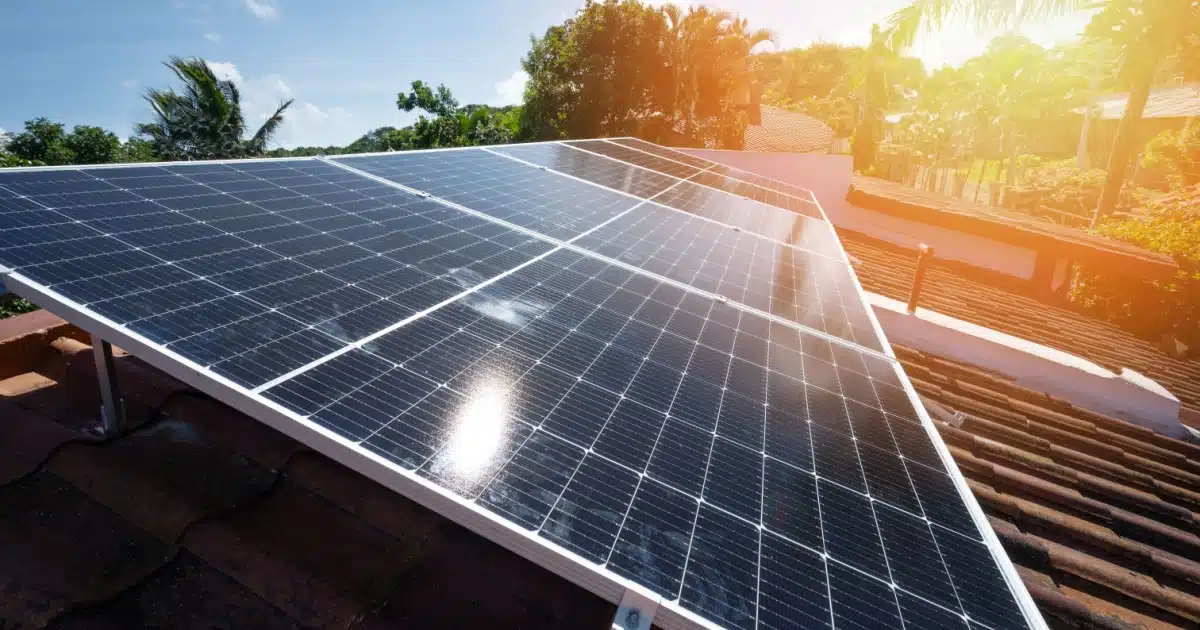
Among renewable technologies, solar energy is widely seen as one of the most accessible options for households. The Philippines receives abundant sunlight year-round, making rooftop solar systems particularly viable.
Irene Maranan, corporate communications head of renewable energy firm ACEN, said solar power can help households reduce their exposure to global fuel price swings. “The Philippines is fortunate to have abundant sunlight year-round, making solar one of the most practical energy resources available locally,” Maranan said.
Unlike traditional power generation, solar energy does not rely on imported fuel. Once panels are installed, electricity can be generated directly from sunlight, offering homeowners the potential for more predictable power costs over time.
Renewable energy, Maranan added, offers “an important silver lining amid global energy tensions,” noting that disruptions in global fuel supply highlight the need to develop indigenous energy resources.
“For the Philippines, [the conflict] underscores the importance of developing indigenous energy resources to strengthen energy security,” she said. “Solar energy plays a key role in this transition. By harnessing the sun, we can generate electricity without fuel and without emissions.”
Real Savings
For homeowners who have installed solar panels, the financial benefits can be substantial. Many Filipino households have enjoyed significant savings in electricity after installing rooftop systems, with some cutting their monthly power expenses roughly in half or more.
But while the long-term savings are appealing, the upfront investment remains the biggest hurdle.
Ping Mendoza, president of the Philippine Solar and Storage Energy Alliance (PSSEA), said installation costs typically range from ₱100,000 to ₱300,000, depending on a household’s energy consumption and system design.
The cost includes not only the panels but also inverters, installation work, and other components necessary to integrate the system into a home’s electrical setup. Adding batteries for energy storage, which allow households to use solar power at night or during outages, can significantly increase the price.
Because of this, many Filipino homes install grid-tied systems that remain connected to the power grid. While these systems are cheaper, they still rely on the grid for electricity at night or during cloudy periods.
Financing options are slowly expanding. Some banks and government institutions now offer loans for solar installations. However, access to credit remains uneven.
Jan Ralph Ebora, a program consultant for New Energy Nexus, said many households still struggle to secure financing.
“It’s just like a car loan. It’s easier to access a loan if you have a good credit standing or if you have a high salary,” Ebora said. “So, there are still barriers to solar (adoption) because it’s an upfront cost, and if you don’t have an upfront cost, it’s difficult to access the loans of the banks.”
Policy Hurdles
Beyond financing, the residential solar sector faces structural challenges. Mendoza noted that the Philippine solar installation market remains fragmented, with many small installers operating independently. For homeowners, this can make it difficult to evaluate providers or navigate technical specifications.
“So that’s what’s difficult where they’re fragmented and unable to scale, and the consumer has to go through so many different… research before finding the right party to trust,” Mendoza said.
There are also regulatory bottlenecks. One example is the government’s net-metering program, which allows households to sell excess electricity generated by their solar panels back to the grid.
Although more than 20,000 consumers are already enrolled, application requirements and processing times can vary widely between local government units and electric cooperatives.
Permits such as the Certificate of Final Electrical Inspection are often required before utilities can install the special meters needed for the program. These administrative steps can discourage homeowners from pursuing solar adoption.
A Decentralized Energy Future?
Despite the challenges, advocates say the potential impact of widespread residential solar adoption is enormous.
Even modest rooftop systems installed across thousands of homes could collectively generate significant power capacity while reducing pressure on the national grid. Distributed solar systems can also strengthen community resilience, particularly in a country frequently affected by extreme weather and power disruptions.
According to Ebora, decentralized energy solutions could extend beyond urban households and benefit remote communities as well.
“Because centralized systems have bigger points of failure,” he said. “But if we decentralize the approach… solar can go to those provinces and underdeveloped parts of the country, generating local jobs, improving local economies, and improving local power resilience.”
Are Households Ready?
The question, then, is not whether solar power works, but whether the conditions are right for mass adoption.
With electricity prices expected to rise and solar technology becoming more accessible, interest among Filipino homeowners is clearly growing. Yet significant barriers remain, from upfront costs and financing limitations to regulatory complexity and industry fragmentation.
Still, as energy costs fluctuate and climate concerns intensify, rooftop solar may gradually move from a niche investment to a mainstream household choice.
For many Filipino families, the shift may ultimately come down to a simple calculation: whether the promise of long-term savings and energy security outweighs the challenges of getting started.
Source:
https://philstarlife.com/news-and-views/169422-pros-cons-solar-powered-homes?page=4
https://www.rappler.com/business/solar-panel-adoption-philippine-households
https://www.gmanetwork.com/news/money/companies/979276/oil-price-hike-march-10-2026/story