

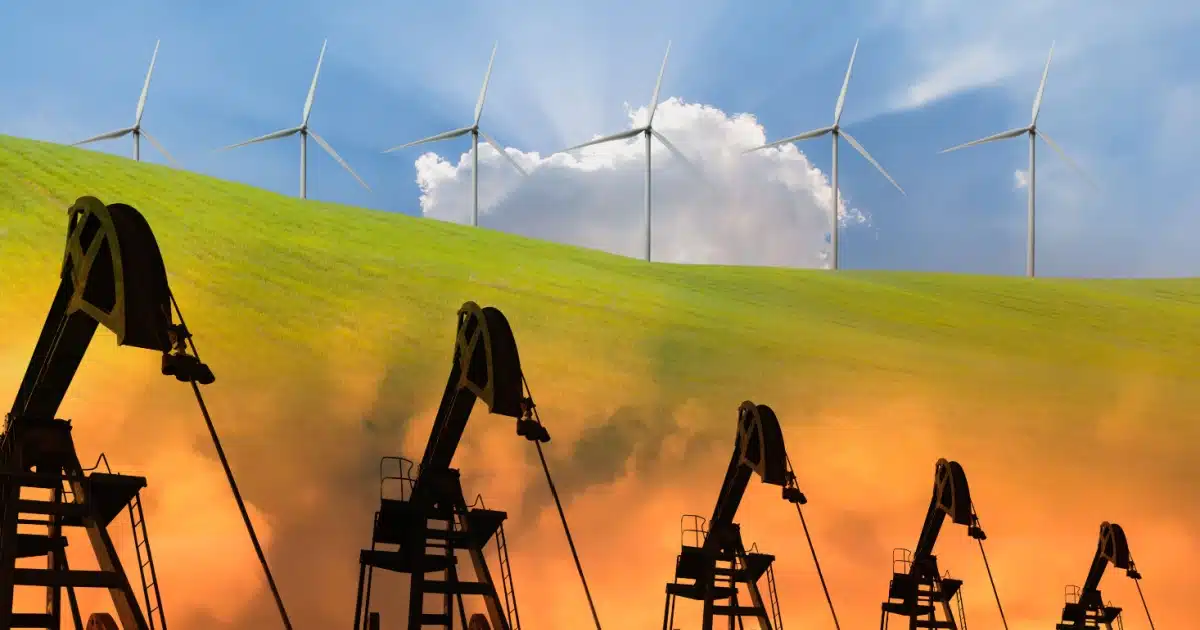
Breaking Free from Oil—or Trading One Dependency for Another?
- April 13, 2026
Table of Contents
The return of global energy instability, marked by oil price volatility and geopolitical tensions, has reignited a powerful idea: that countries should accelerate the development of indigenous renewable energy (RE). For import-dependent economies, this vision carries enormous appeal. Solar, wind, and geothermal energy promise not only decarbonization but also a path away from the geopolitical entanglements that have long defined fossil fuel markets.
This narrative is not new. In the aftermath of the 1970s oil shocks, countries such as the Philippines explored alternative energy sources, including nuclear power, to reduce dependence on imported fuel. Today, the clean energy transition is framed in similar terms—as a strategic escape from energy insecurity.
Yet, as Dianne Araral, an independent green finance and energy policy analyst in Singapore, and Eduardo Araral, Professor of Public Policy at the Lee Kuan Yew School of Public Policy at the National University of Singapore, argue, this assumption may be overly simplistic. Rather than eliminating geopolitical risk, the transition to renewables is reshaping it in new and complex ways.
(Also read: Global Oil Shock Forces Philippines To Rethink Energy Mix, With Malampaya Emerging As Critical Backup)
The Green Transition’s Complex Challenges
The case for indigenous RE is grounded in real vulnerabilities. The Philippines, like many emerging economies, remains heavily dependent on imported fossil fuels.
Renewables offer an appealing alternative. Unlike oil and gas, they are locally available and theoretically abundant. Government targets reflect this strategy, aiming for 35% RE by 2030 and 50% by 2040. At face value, the approach seems straightforward: invest in domestic clean energy and reduce exposure to external shocks.
However, the clean energy transition is not simply replacing fossil fuels with renewables; it is reconfiguring global dependencies. Instead of relying on oil-producing nations, countries are becoming increasingly dependent on critical minerals, manufacturing hubs, and complex supply chains.
Critical Minerals: The New Oil
Renewable technologies depend heavily on materials such as lithium, cobalt, nickel, and rare earth elements. Demand for these inputs is rising rapidly as countries scale up clean energy systems. In 2024, global lithium demand surged by nearly 30%, while demand for nickel, cobalt, graphite, and rare earth elements rose by approximately 6 to 8%. Additionally, energy transition metals markets tend to experience significant price volatility, driven by concentrated supply, limited alternatives, and low responsiveness of demand to price changes.
However, supply networks for these minerals remain highly concentrated, with a small number of countries dominating both extraction and processing and creating new strategic chokepoints. This concentration has intensified, as the top three countries’ average market share in processing rose from about 82% in 2020 to 86% in 2024, with key players including Indonesia in nickel and China in cobalt, graphite, and rare earth elements.
The environmental and social implications are also significant. In the Philippines, for instance, increased nickel mining, driven by global battery demand, has raised concerns about ecological degradation and local livelihoods.
Industrial Bottlenecks and Processing Power
But the key bottleneck lies beyond extraction, emerging in refining, processing, and export controls, including chemical plants and rare earth separation facilities. Countries that control refining and component production wield disproportionate influence over the clean energy supply chain.
When tensions arise in supplier countries or major powers impose export controls, disruptions spread across industries such as batteries, electric vehicles (EVs), wind energy, and grid infrastructure. At the same time, geopolitical restrictions on equipment, technical know-how, and intermediate inputs, including China’s controls on rare earth materials and processing technologies and limits imposed by the US and its allies on advanced manufacturing equipment, have slowed diversification.
“Abundant resources alone are not enough,” Eduardo and Dianne Araral noted. “The time, capital, and coordination required to build an integrated system around them are important, especially in an environment dominated by an incumbent player with deep industrial networks and enormous pricing power.”
Infrastructure Gaps and Delayed Integration
RE systems require robust grids, storage, and interconnections to function effectively, yet progress in building this infrastructure has been uneven.
Roughly half of Europe’s transmission lines are at least 40 years old, requiring more than $2 trillion in upgrades by mid-century to avoid large-scale outages. The scale of the challenge is evident in the Iberian Peninsula, where Spain and Portugal remain weakly connected to the wider European grid, with interconnection levels below EU targets. Projects like the Bay of Biscay interconnection, which links northern Spain and southwestern France, are expected to take years to complete.
The ASEAN Power Grid, a plan to link Southeast Asia’s electricity networks by 2045, has become a test of regional clean energy integration. Despite its clear strategic value, progress has been slow, with only about half of the 18 planned interconnections advancing. The main barriers are institutional and financial, including the lack of shared standards, transparent trading rules, and reliable legal frameworks, alongside weak confidence in long-term rule enforcement.
Moreover, the Philippines is still struggling with interconnection at a national level. This challenge is particularly acute because its archipelagic geography fragments electricity grids and complicates large-scale deployment. The country’s island configuration leads to disconnected and isolated grid systems that make nationwide integration of renewables more complex and costly.
Many remote islands rely on diesel generators or small mini-grids rather than being tied into a unified transmission network, which slows the transition to cleaner energy sources and raises infrastructure costs. This fragmentation also increases the technical and logistical hurdles of connecting variable renewable resources like solar and wind across multiple islands and diverse terrain.
(Also read: Lessons in Energy Resilience from the 2026 Middle East Crisis)
The Philippine Context: Risk of Falling Behind
Perhaps the most significant risk is geopolitical competition. Advanced economies are aggressively securing access to critical minerals, investing in domestic manufacturing, and reshaping delivery chains through industrial policy.
As the authors note, this competition risks leaving developing countries behind, as they struggle to access financing, technology, and logistics networks.
Take, for instance, the promise of offshore wind (OSW), which highlights both opportunity and challenge. The country holds one of Southeast Asia’s largest OSW potentials, estimated at up to 178 gigawatts (GW). In 2025, the Department of Energy (DOE) launched its first OSW–only auction under the Green Energy Auction Program (GEA-5), offering up to 3,300 MW for delivery between 2028 and 2030.
However, this approach may ultimately place a heavier burden on consumers. The Energy Regulatory Commission (ERC) has set a Green Energy Auction Reserve (GEAR) price of ₱11 per kilowatt-hour for GEA-5, establishing a binding ceiling for bids. While intended to support OSW development, this price level risks translating into higher electricity costs for end-users, particularly in the early stages of project deployment.
Additionally, OSW turbines depend on a highly complex global supply chain involving multiple specialized components that must be sourced from abroad, which poses a significant challenge for countries like the Philippines that lack domestic manufacturing capacity. According to an analysis by the Organization for Economic Cooperation and Development (OECD), early projects will rely heavily on imports of key components, including turbine parts, cables, and installation equipment, because local production capability is underdeveloped.
Adding to the complexity is the country’s status as a typhoon hotspot. Wind speeds across many potential sites often exceed standard turbine limits, making some locations technically difficult or too costly to develop. As a result, projects must rely on specialized typhoon-class turbines, increasing engineering complexity and overall project costs.
Given these realities, nuclear energy is being discussed as a potential complement, offering stable baseload power with low emissions.
“Nuclear power can reduce dependence on imported hydrocarbons and provide stable low-carbon electricity generation alongside renewable sources,” explained Eduardo and Dianne Araral. “It can also become a new arena of geopolitical competition, with governments vying for control over reactor technology, fuel cycle services, and uranium enrichment.”
Ultimately, while RE offers a compelling pathway toward cleaner and more secure power systems, it is not a direct or sufficient solution to the oil crisis on its own. The clean energy transition introduces its own set of dependencies.
For the Philippines, this means that relying solely on renewables risks new vulnerabilities even as it addresses old ones. A diversified and pragmatic energy mix remains essential, combining renewables with firm, dispatchable sources to ensure energy security, affordability, and resilience in an increasingly uncertain global energy landscape.
Sources:
https://en.wikipedia.org/wiki/Nuclear_power_in_the_Philippines
https://www.mdpi.com/2225-1154/13/1/14
https://arxiv.org/abs/2501.16069
https://www.sciencedirect.com/science/article/abs/pii/S0973082625002698
https://icsc.ngo/offshore-wind-could-transform-philippines-energy-security-icsc-powerphilippines
https://www.bworldonline.com/opinion/2026/03/09/734872/the-case-for-offshore-wind-energy/


