The Energy Reckoning: What Will Truly Power the Age of AI?
- April 8, 2026
Table of Contents
Artificial intelligence (AI) is no longer a niche technology. From generative AI tools to autonomous systems and advanced analytics, demand for computing power has skyrocketed. At the heart of this revolution are data centers—vast facilities housing servers that process, store, and transmit data.
According to the International Energy Agency (IEA), data center electricity consumption reached approximately 460 terawatt-hours (TWh) in 2022 and could surpass 1,000 TWh by 2026, driven largely by AI workloads. This level of demand is comparable to Japan’s total electricity consumption.
The US, China, and Europe are set to remain the primary drivers of data center electricity demand, but growth is increasingly shifting toward emerging regions. Southeast Asia, in particular, is gaining momentum, supported by hubs in Singapore and southern Malaysia. Still, most of the global increase will come from the US and China, which together will account for nearly 80% of growth. The US alone is projected to add around 240 TWh, followed by China at about 175 TWh, while Europe and Japan will see more modest, though steady, increases.
(Also read: Lessons in Energy Resilience from the 2026 Middle East Crisis)
Global Energy Demand & Electrification
AI is only one piece of a broader energy demand surge. Population growth, urbanization, and rising living standards continue to drive electricity consumption worldwide. Global electricity demand is projected to grow at an average annual rate of around 3.4% through 2026.
Electricity demand is rising due to a combination of population growth, increased use of cooling as temperatures climb, continued industrial activity, and the rapid expansion of digital technologies. These drivers are contributing to stronger demand growth, particularly in emerging and developing economies, with Asia playing a central role in the overall increase.
Meanwhile, electric vehicles (EVs) are becoming a significant and fast-growing source of electricity demand worldwide. In 2024, the global EV fleet consumed around 180 TWh of electricity, an increase of nearly 60% from the previous year.
Looking ahead, EV adoption is expected to expand rapidly, with the global fleet more than tripling by 2030, while electricity demand could rise more than fourfold. This growth is being driven not only by higher adoption rates but also by increasing use of electric trucks and greater driving distances in key markets.
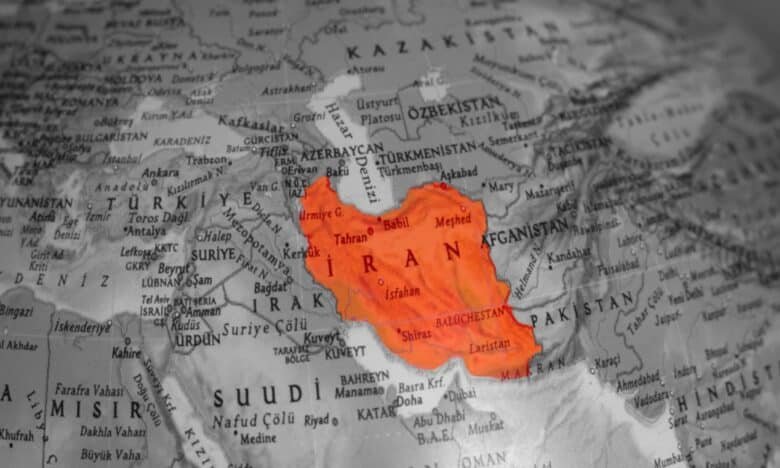
Across the Asia-Pacific region, rising fuel costs linked to the Middle East conflict are accelerating the shift toward EVs, as both consumers and businesses reassess their dependence on petrol and diesel. The disruption has been especially significant given that the Strait of Hormuz, through which roughly one-fifth of global crude oil and liquefied natural gas normally flows, has seen major supply interruptions, described by the IEA as one of the most severe in history.
With more than 80% of the oil passing through this route destined for Asia, the region has been the most heavily impacted. In response, countries like South Korea have reported a sharp uptick in EV adoption, with registrations doubling in March compared to the previous year.
Can Renewables Keep Pace?
Renewable energy capacity has been growing at a remarkable pace. In 2025, total renewable capacity reached about 5,149 GW, or nearly 49.4% of global electricity capacity, up from around 46.3% in 2024, driven by large increases in solar and wind installations. Solar capacity alone added roughly 511 GW, while wind contributed about 159 GW of new capacity.
Despite these gains, installed capacity is not the same as reliable, usable power. Solar and wind generation are inherently variable: solar produces only when the sun shines, and wind only when breezes blow. This intermittency means that even a large installed capacity can’t guarantee consistent electricity output when demand is high or weather conditions are unfavorable. Studies on renewable integration highlight that this variability raises concerns for grid reliability and complicates planning for systems that need a continuous power supply.
This gap between capacity and dependable supply also shows up in climate targets. Independent analyses indicate that, even with recent growth, global renewable energy capacity is still projected to fall short of the Paris Agreement goal totriple renewables by 2030. Current trends suggest capacity may only reach about 2.7 times 2022 levels by 2030, below the ambition needed.
Countries with high renewable penetration are already encountering real-world challenges. In Brazil, for example, wind and solar producers have had to downsize operations due to grid restrictions and curtailment—where available renewable power is wasted because the grid cannot absorb it.
These examples illustrate a core reality: while renewables are expanding rapidly and are crucial for decarbonization, installed capacity alone cannot yet supply the stable, continuous power required to meet the world’s accelerating electricity demand without costly grid upgrades and storage solutions.
Nuclear Power: A Reliable Alternative
Many energy experts and institutions argue that nuclear energy could play a critical role in meeting this demand with reliable, low-carbon power.
One of the strongest technical advantages of nuclear power is its ability to deliver 24/7 baseload electricity — something intermittent sources like wind and solar cannot provide without large-scale storage. According to the US Department of Energy, nuclear plants operate at high capacity factors and can deliver constant power that aligns well with the around-the-clock needs of data centers and AI workloads.
The agency also highlights nuclear power’s flexibility, saying how data centers vary widely, with current facilities using between 10 MW and 1 GW, and future ones potentially reaching 4 GW. “Next-generation reactors could meet those power needs with versatile, scalable designs ranging from transportable microreactors to small modular reactors to large-scale light-water nuclear plants,” it explained.
The scale of future AI energy demand is so large that governments and corporations are increasingly signing long-term nuclear power agreements to secure dependable, carbon-free electricity. In 2025, Meta signed a 20-year agreement with Constellation Energy to secure nuclear power for its operations. Major tech firms, including Amazon and Google, have also supported a World Nuclear Association pledge calling for nuclear energy capacity to triple globally by 2050.
Economists and climate commentators such as Bjorn Lomborg have also noted that while renewables are crucial to the energy transition, nuclear energy provides the firm, dispatchable power necessary to support advanced industrial and digital infrastructure without the intermittency challenges that constrain solar and wind.
“We also know that you can’t run AI just on solar and wind, because what are you going to do when the sun is not shining, and the wind is not blowing, and they really want 24/7 power,” he stated. “So much of this is going to come from gas right now, probably from coal…and that’s why we’re really talking about nuclear because nuclear has this wonderful potential. But I’m emphasizing the potential that it can both be clean, and it can sort of naturally be 24/7 power or baseload power.”
(Also read: Reliable Power for a Rising Batangas)
Why the Philippines Is Reviving Nuclear Power
Across Southeast Asia, countries are re-examining nuclear energy as a way to secure reliable, low-carbon electricity amid rising demand and energy supply vulnerabilities exposed by the war in Iran. Nations including Indonesia, Malaysia, Thailand, Vietnam, and the Philippines have all restarted or accelerated nuclear plans, driven in part by the region’s expanding electricity needs.
The Philippines, which built the never-operational Bataan Nuclear Power Plant in the 1970s, has taken concrete steps toward reintegrating nuclear energy into its energy mix. A new atomic energy regulatory authority was established in 2025 to guide nuclear development, and the government approved a roadmap targeting potential investors and aiming for nuclear integration by 2032. Officials have said that while nuclear won’t be cheap at first, it promises long-term improvements in energy reliability, independence, and security.
Domestically, the government has also finalized a seven-phase nuclear licensing roadmap to streamline permits and oversight, signaling readiness to accept license applications this year. Energy leaders have described this regulatory progress as a disciplined and forward-looking foundation for nuclear deployment.
In the Philippines, the data center industry is booming and poised to become a key digital hub in Southeast Asia, according to Department of Energy (DOE) Undersecretary Rowena Cristina L. Guevara. She noted that the country’s data center capacity is expected to exceed 500 MW by 2028, as global companies expand operations across Luzon, Visayas, and Mindanao.
However, Guevara said this expansion “must be powered by clean, green, and reliable energy,” which involves scaling up solar and wind capacity, retiring coal plants ahead of schedule, and investing in smarter, more resilient grid systems to support future demand.
Yet several international energy analysts and data center operators have already warned that renewables alone may struggle to provide the constant, 24/7 electricity that large data infrastructure requires. Data centers typically require “five-nines” reliability (99.999 % uptime), and nuclear’s high capacity factor makes it especially suited to meet such demand compared with intermittent solar and wind.
Local voices have echoed this perspective. Opinion writer Bienvenido S. Oplas Jr. has argued that nuclear energy’s stable output is vital to avoid reliability issues and to support long-term economic growth. Meanwhile, Dr. Carlo Arcilla, Director of the Philippine Nuclear Research Institute, has pointed to nuclear’s potential to help lower electricity rates and enhance energy security as the country scales up its digital economy.
These viewpoints suggest that, while renewables are central to the energy transition, nuclear power may be essential in sustaining the Philippines’ growth as it becomes more deeply integrated into an increasingly digital world.
Sources:
https://www.iea.org/reports/electricity-2024/executive-summary
https://www.iea.org/reports/energy-and-ai/energy-demand-from-ai
https://www.iea.org/reports/global-ev-outlook-2025/outlook-for-energy-demand
https://www.sciencedirect.com/science/article/pii/S1364032125001340
https://www.sciencedirect.com/science/article/pii/S2666498425000249
https://www.energy.gov/ne/articles/advantages-and-challenges-nuclear-powered-data-centers
https://www.gisreportsonline.com/r/ai-energy
https://www.youtube.com/watch?v=IPDXsNHIF8Y
https://www.reddit.com/r/nuclear/comments/1rdad1y/philippine_government_finalizes_nuclear_licensing
https://datacanopy.com/nuclear-power-will-transform-data-center-economics-by-2035
https://www.bworldonline.com/opinion/2025/04/22/666951/nuclear-energy-for-sustained-growth