Global Oil Shock Forces Philippines To Rethink Energy Mix, With Malampaya Emerging As Critical Backup
- March 23, 2026
Table of Contents
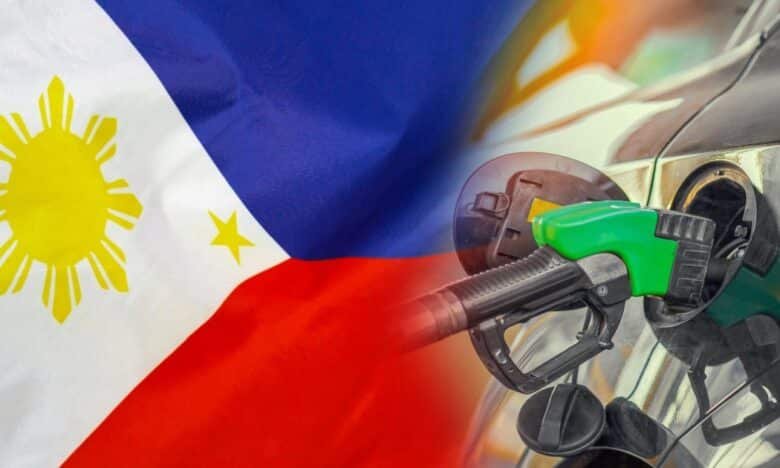
As fuel prices surge amid escalating conflict in the Middle East, the Philippine petroleum industry is urging full implementation of the Philippine Natural Gas Industry Development Act to cushion consumers from volatile global markets.
The Petroleum Association of the Philippines (PAP) said tapping more domestic gas, particularly from the Malampaya field, could significantly stabilize electricity prices. PAP chairperson Donnabel Kuizon Cruz emphasized during a Senate hearing that existing local gas capacity remains underutilized and could be redirected to power generation.
Electricity produced from indigenous gas costs around ₱4.80 per kilowatt-hour, far lower than the ₱10.30 per kWh generated using imported liquefied natural gas (LNG), highlighting the economic advantage of domestic supply.
The urgency comes as projections show diesel prices potentially rising by as much as ₱22.30 per liter and gasoline by up to ₱17 per liter, increases that could ripple across transport, food, and electricity costs.
Malampaya Expansion
President Ferdinand Marcos Jr. echoed the push for energy security, confirming that the government is working to maximize Malampaya’s output while seeking alternative fuel sources abroad.
“Ongoing din ang koordinasyon sa paggamit ng malampaya natural gas na full capacity para madagdagan naman ang supply natin sa kuryente (Coordination is ongoing to use Malampaya natural gas at full capacity to increase our electricity supply),” Marcos said in a recent vlog.
He added that the Philippines is negotiating with countries such as India, China, Japan, Thailand, Brunei, and South Korea to diversify oil supply sources and mitigate risks from global disruptions.
The Department of Energy is also expediting 23 power projects with a combined capacity of 900 megawatts, expected to come online within two months to reinforce grid reliability.
Long-Term Stability
Republic Act No. 12120 establishes a comprehensive framework for developing the downstream natural gas industry, including infrastructure for processing, transport, and distribution.
A key provision prioritizes the use of indigenous gas over imported fuels, while another grants tax incentives, such as value-added tax exemptions on electricity generated from local gas, to reduce costs for consumers. Industry leaders argue that fully enforcing these provisions offers a more sustainable solution than short-term measures like suspending fuel taxes.
Located off Palawan, the Malampaya Deep Water Gas-to-Power Project remains central to the country’s energy system. Since beginning operations in 2002, it has supplied fuel to power plants that generate roughly 20% to 40% of Luzon’s electricity.
The government extended its service contract to 2039, enabling continued production and new exploration. A recent discovery near the site, estimated at 98 billion cubic feet of gas, could supply electricity to over 5.7 million households for a year, marking the country’s first new gas find in more than a decade.
High Exposure
Energy officials continue to position natural gas as a “transition fuel” that supports the shift toward renewable energy while maintaining grid stability. Gas-fired plants can quickly adjust output, making them essential in balancing intermittent sources like solar and wind.
However, the Philippines remains highly exposed to global energy markets. Oil still accounts for about 40% of total energy consumption, down from over 90% in the 1960s, but still significant enough to transmit international price shocks domestically.
Recent geopolitical tensions, particularly threats to key shipping routes such as the Strait of Hormuz, expose these vulnerabilities, as disruptions can rapidly translate into higher fuel and electricity costs at home.
Coordinated Response
With rising uncertainty, coordination between government and industry is intensifying. The Department of Energy is working with stakeholders to optimize the country’s fuel mix and expand natural gas capacity, including potential auctions for additional gas-fired power generation.
At the same time, authorities are preparing for broader economic impacts, including higher fertilizer costs tied to petroleum prices.
As global energy markets remain volatile, policymakers face the challenge of balancing immediate supply security with long-term sustainability goals.
For both government and industry leaders, the message is increasingly clear: strengthening indigenous energy resources, particularly natural gas, has become critical to shielding Filipino consumers from external shocks while supporting the country’s evolving energy transition.
Source:
https://business.inquirer.net/579862/natural-gas-law-eyed-to-stabilize-energy-prices
https://palawan-news.com/marcos-eyes-squeezing-out-malampaya-taps-new-fuel-partners-amid-oil-crisis