IMF: Path To 50% Renewable Energy Hinges On ₱11-Trillion Investment
- January 14, 2026
The Philippines will need to mobilize nearly ₱11 trillion in public and private investments to meet its clean energy transition goals by 2050, the International Monetary Fund (IMF) said, as it warned that structural constraints could slow the country’s progress toward a more sustainable energy mix.
In a recent report, the IMF projected that investment requirements for renewable energy will rise sharply under all scenarios outlined in the Philippine Energy Plan (PEP) 2023–2050. Between 2029 and 2050 alone, the country could need about ₱7.39 trillion—equivalent to roughly 28 percent of gross domestic product (GDP)—to support projects involving offshore wind, nuclear energy, and more efficient power plants.
This level of investment would raise renewable energy’s share to about 50 percent of the national energy mix by 2050.
Capital-Intensive Targets
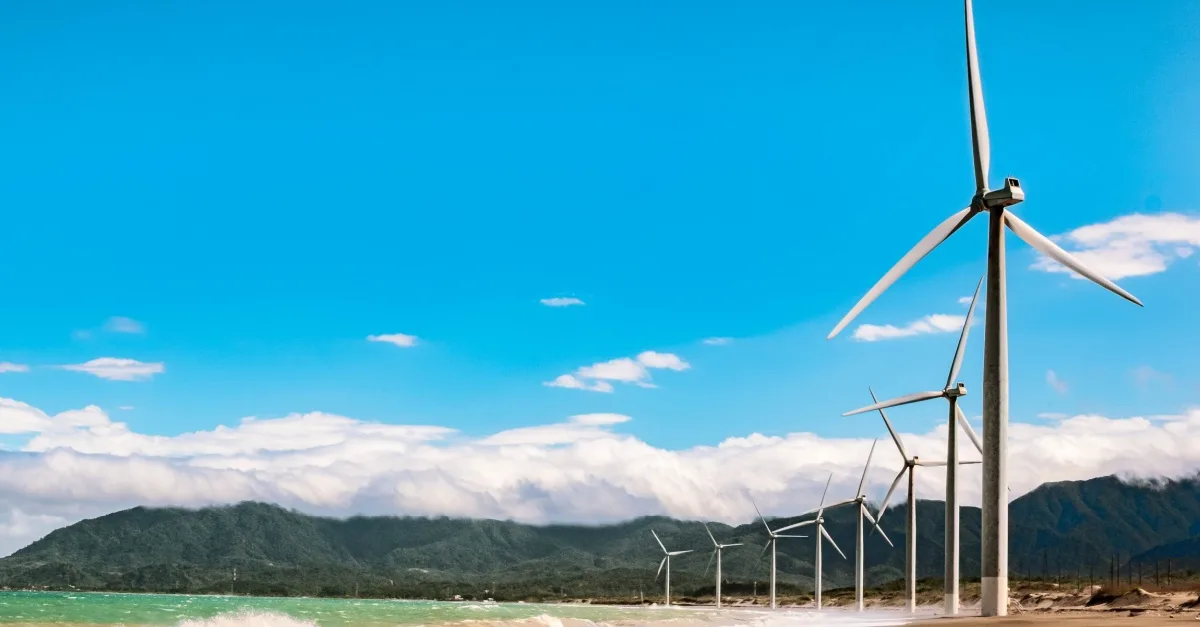
A more ambitious pathway projects expanded offshore wind capacity from 19 gigawatts (GW) to 50 GW and an even higher renewable energy share, pushing total required investments to ₱10.67 trillion, or about 40 percent of the Philippines’ 2024 GDP, the IMF said.
“Meeting these targets requires strong public and private participation, particularly in capital-intensive industries,” the IMF stressed. “This will necessitate prompt and comprehensive solutions to key barriers that currently impede project implementation and investor confidence.”
Infrastructure And Workforce Hurdles
While the Philippines has vast renewable energy potential—estimated at 1,200 GW when combining open-field and rooftop solar, offshore and onshore wind, and hydropower resources—the IMF cautioned that several systemic barriers could stall progress. These include limited grid infrastructure, high upfront capital costs, complex land acquisition processes, and a shortage of skilled technical workers.
Data from the Department of Energy (DOE) support this outlook, noting that the country’s diverse terrain and hydrological systems still have over 13 GW in untapped hydropower capacity. However, realizing this potential will require long-term investment in transmission lines, workforce training, and private-sector confidence.
The IMF noted that without major policy coordination and financing reforms, the pace of renewable expansion may fall short of national and international climate targets. It urged Philippine authorities to address grid bottlenecks, streamline permitting for clean energy projects, and strengthen collaboration between government, investors, and local communities.
Ramping Up Renewable Push For 2026
IMF’s report comes on the heels of the DOE’s recent statement that it intends to accelerate the shift to cleaner energy, with offshore wind as a key component of its 2026 agenda.
“We want cleaner energy and energy security,” said Energy Secretary Sharon Garin, outlining the DOE’s strategy to expand renewable capacity while scaling down reliance on coal and diesel, especially in off-grid and island areas, where renewables account for only about 7 percent of supply.
Garin said natural gas could serve as a transitional, cleaner baseload source as the Philippines increases its share of renewable power. The DOE is also pursuing exploration contracts for indigenous gas resources and extending the life of the Malampaya gas field to reduce dependence on imported fuels.
She added that the government remains confident of meeting its 3,300-megawatt offshore wind target through the Green Energy Auction (GEA), a competitive bidding mechanism that awards renewable capacity to developers offering the lowest generation cost.
Hydrogen and emerging renewable technologies are also part of the DOE’s long-term strategy to secure a stable energy supply while supporting the country’s climate goals.
A Coordinated Energy Transition
The IMF’s analysis underscores that while the Philippines’ renewable potential is considerable, the path to achieving a 50 percent clean energy share by mid-century will hinge on coordinated action between the public and private sectors.
With the DOE ramping up investment and regulatory programs, policymakers and investors face mounting pressure to bridge the financing and infrastructure gaps that could make or break the transition.
Source:
https://business.inquirer.net/566914/doe-doubles-down-in-push-for-renewables-energy-security