

Power Failure Brings Tokyo’s Iconic Rail Network to a Standstill
- January 23, 2026
Table of Contents
A rare power outage brought parts of Tokyo’s famously efficient rail network to a standstill on Friday morning, stranding hundreds of thousands of commuters and highlighting how even Japan’s most reliable infrastructure can falter under unexpected strain.
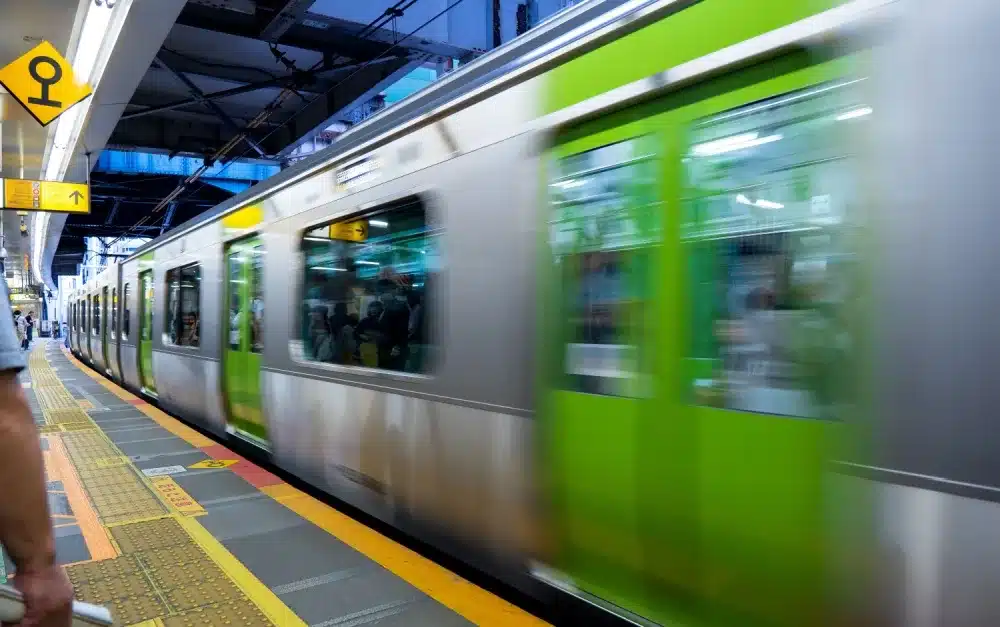
Train services operated by East Japan Railway (JR East) were suspended across several of the capital’s busiest lines, including both the inner and outer loops of the Yamanote Line, the entire Keihin-Tohoku Line, and a section of the Tokaido Line between Tokyo and Shinagawa stations.
Operations were gradually restored, with full service resuming around 1 p.m., after an eight-hour suspension that paralyzed parts of the morning rush. According to JR East, the outage was first detected around 3:50 a.m., when maintenance workers preparing for the first trains of the day noticed a power loss between Shimbashi and Shinagawa stations.
Upgrade Work Error
JR East later confirmed that the incident was linked to overnight upgrade work at Tamachi Station in Minato Ward, during which power had been temporarily shut off. When electricity was switched back on early Friday, the system unexpectedly went dark.
The company said overhead safety lines connected to the tracks, which are used to prevent electric shock during maintenance, were supposed to be disconnected once work was completed. However, a malfunction left the lines connected, tripping circuit breakers at a nearby substation and triggering the large-scale power outage.
JR East apologized for the disruption, saying it would conduct a full investigation and take measures to prevent a recurrence.
Transformer Fire
Shortly before 8 a.m., a fire broke out at a transformer near Tamachi Station, further complicating recovery efforts. The blaze, reported by NHK and the Tokyo Fire Department, was extinguished within about 90 minutes.
No injuries were reported, though five passengers were taken to the hospital after feeling unwell while trapped on idle trains. Some commuters were escorted along the tracks by railway staff and firefighters after trains became stranded between stations.
Commuters Stranded
JR East said about 673,000 people were affected by the suspensions, which coincided with Tokyo’s morning rush hour. At major transfer points such as Shinagawa, Shimbashi, and Ikebukuro, crowds quickly swelled as passengers sought alternative routes. Entry to several platforms was restricted to manage congestion, while long taxi queues formed outside key stations.
One commuter, a consultant traveling from Yokohama to Otsuka, told local media she had not expected the disruption to last so long. Another, a business traveler from Osaka, said he was forced to reschedule client meetings after being stranded en route to Tamachi Station.
Shocking Disruption
Tokyo’s rail network, often cited as the world’s most punctual, handles millions of passengers daily. Shinjuku Station alone sees about 3.5 million travelers each day, making it the busiest railway hub on the planet.
Large-scale interruptions like Friday’s are rare, though a smaller incident in May temporarily halted Yamanote Line services due to wire trouble, affecting nearly 200,000 commuters.
The latest outage served as a reminder of how deeply intertwined Tokyo’s daily rhythm is with its trains. Even a few hours of suspension can ripple through the city’s economy and daily life, underscoring the delicate balance that sustains one of the world’s most efficient urban transport systems.
Source:
https://www.japantimes.co.jp/news/2026/01/16/japan/yamanote-line-power-outage