Analysts Urge Stronger Screening For Renewable Energy Investors
- January 27, 2026
Table of Contents
Energy analysts have called on the government to tighten its selection and screening of renewable energy (RE) investors following the Department of Energy’s (DOE) recent termination of more than 160 inactive projects. They said the move should be followed by stronger due diligence, clearer rules, and faster rebidding to attract serious developers capable of delivering power on schedule.
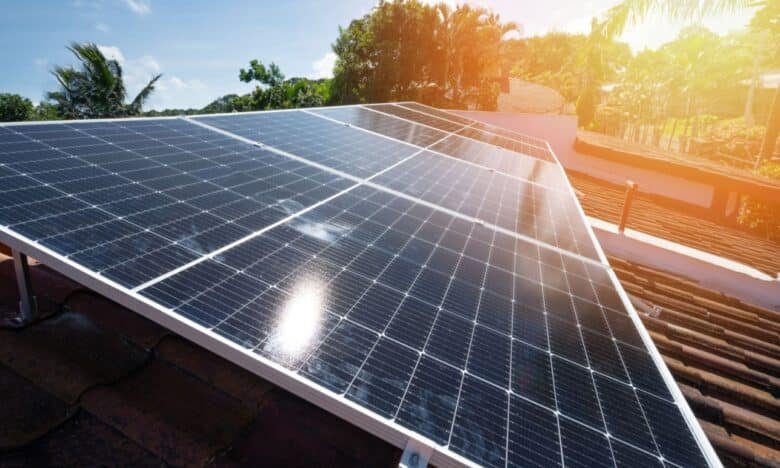
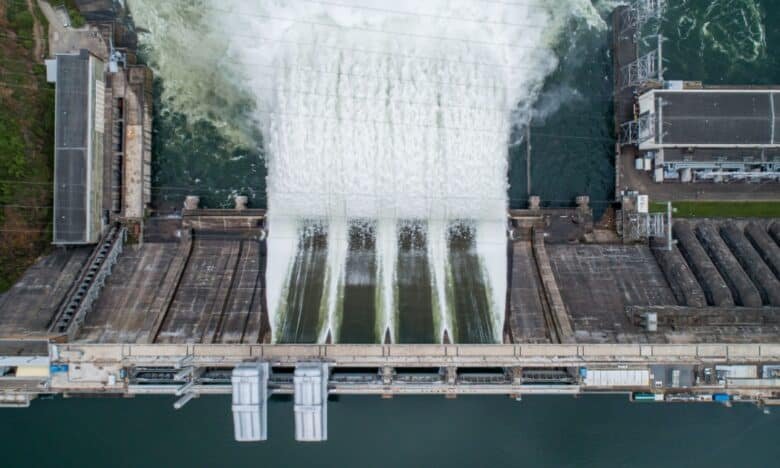
The DOE earlier canceled 163 service contracts covering solar, wind, hydropower, geothermal, and biomass projects that failed to meet regulatory and development milestones. Energy Secretary Sharon Garin said the move was intended to clear out idle ventures and open the door for developers with “technical muscle and deep pockets.”
“The purpose is not to scare off investors. It’s to make sure that we have the right investors in the Philippines,” Garin said. She added that the agency is studying tougher guidelines, including the possible blacklisting of developers that repeatedly fail to deliver. “People should not monetize a privilege given by the government,” she said.
Garin also warned that the government could pursue legal action against noncompliant developers. “We will file whatever cases we have to file, whether it’s civil, criminal, administrative or if there’s any anticompetitive behavior, we will do so,” she said.
Need For Refined Process
While the cancellations were widely seen as a push for accountability, market analysts and industry experts said the DOE should complement enforcement with reforms to strengthen the investor selection process.
“These incidents can be avoided in the future if energy authorities will strengthen due diligence and evaluation of energy companies, and ensure fair competition within the renewable energy market,” said Riedo “Rei” Panaligan, president of the Center for Renewable Energy and Sustainable Technology.
He added that the DOE should consider a developer’s track record and ability to meet timelines before awarding new contracts. “Economic growth was disrupted due to failure of these companies to deliver their committed power plants as scheduled,” Panaligan said.
Toby Allan Arce, head of sales trading at Globalinks Securities and Stocks, Inc., noted that investor confidence will depend on how the government manages the next round of project awards. “Investors will closely watch how quickly and fairly the terminated contracts are rebid, whether grid connection and permitting issues are addressed and whether timelines are realistic,” Arce said.
He added that inconsistency in the process could undermine investor sentiment. “If the process becomes protracted or inconsistent, the positive signaling effect of enforcement could be diluted, turning discipline into perceived uncertainty instead,” he said.
Arce also urged the government to strengthen its prequalification process and include a system of penalties and incentives tied to milestone-based progress. “[This] can encourage steady progress while allowing flexibility for genuine delays,” he said.
Accountability And Market Credibility
Isabella Suarez, engagement analyst at TransitionZero, said the DOE’s crackdown should be viewed as part of “pipeline rationalization” rather than a withdrawal from the Philippines’ renewable energy goals. “Stronger enforcement at the service-contract stage, paired with better transmission planning, is essential to meeting the Philippines’ clean energy goals credibly,” she said.
According to DOE data, the terminated and relinquished projects represented nearly 18 gigawatts of potential capacity. Solar projects accounted for most of the cancellations, with Solar Philippines Power Project Holdings, Inc. losing more than 11 GW of service contracts.
Suarez said consistent implementation of rules can build investor trust over time. “The
cancellations are best understood as pipeline rationalization, not a retreat from renewable ambition,” she said. “Consistent enforcement improves investor confidence over the medium term, reducing uncertainty and discouraging speculative capacity hoarding.”
Noel M. Baga, co-convenor of the Center for Energy Research and Policy, also said that the DOE’s decision strengthens the sector’s credibility. “The Philippines needs legitimate energy developers with proven capacity to expand our supply, which is fundamental to achieving both energy security and affordability for Filipino consumers,” he said. “The move sends a clear signal that the Philippines is open for business to serious investors who will deliver the power our country needs.”
Wake Up Call
Other energy advocates cautioned that contract terminations must be paired with timely replacement of projects to sustain renewable targets. “The terminations themselves are not the obstacle; they indicate the need to examine why targets are not being met,” said Avril de Torres, deputy executive director of the Center for Energy, Ecology and Development.
“Failure to act on contracts that have not been honored — or to ensure their capacities are replaced by renewable energy to displace fossil-fuel generation — would hamper the Philippines’ RE targets,” she added.
The Philippines currently sources about 25% of its electricity from renewable energy. The government aims to increase this share to 35% by 2030 and 50% by 2040. Analysts said achieving these goals will require not just strict enforcement but also a transparent, competitive, and technically sound selection framework that filters out speculative players while attracting credible, long-term investors.
Source:
https://business.inquirer.net/569396/revival-of-163-scuttled-energy-projects-still-uncertain