Rooftop Solar Installations Surge As Filipinos Seek Relief From Soaring Power Costs
- July 8, 2026
Table of Contents
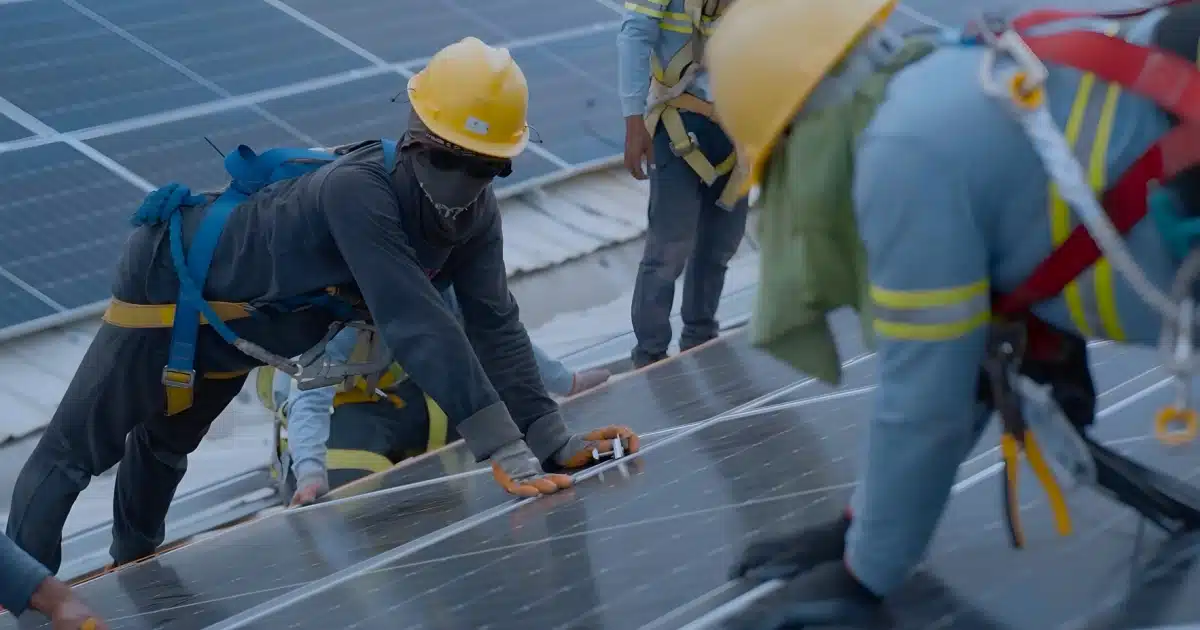
Rooftop solar installations in the Philippines are accelerating at an unprecedented pace as households and businesses turn to renewable energy to cushion the impact of rising electricity prices, with analysts projecting distributed solar capacity to nearly triple within the next two years.
A new analysis by energy think tank Ember indicates that rooftop solar capacity has likely almost doubled over the past year, driven by falling equipment costs, shorter investment payback periods, and sustained increases in electricity rates. The trend is also reflected in a sharp rise in imports of Chinese solar panels, underscoring growing consumer demand for self-generation.
Based on satellite data from the Institute for Climate and Sustainable Cities (ICSC), rooftop solar installations stood at 721 megawatts (MW) as of January 2025. Ember’s analysis of Independent Electricity Market Operator of the Philippines (IEMOP) data suggests another 600 MW was added between April 2025 and April 2026, bringing the country’s estimated installed rooftop solar capacity to around 1,300 MW.
Despite the rapid expansion, Ember noted that existing installations represent only about one percent of the Philippines’ estimated rooftop solar potential of 106,000 MW.
Rising Power Prices Fuel Demand
The surge in rooftop solar adoption comes as Filipino consumers grapple with some of Southeast Asia’s highest electricity prices.
Ember said residential electricity rates in May 2026 were 17 percent higher than a year earlier, while commercial and industrial rates climbed 18 percent and 14 percent, respectively. These higher tariffs have significantly improved the economics of rooftop solar, reducing residential payback periods from four years to just 3.1 years. Commercial installations can now recover costs in as little as 2.3 years, while industrial systems have a payback period of about 3.1 years.
Electricity prices served by Manila Electric Co. (Meralco) have also climbed sharply in recent months, prompting more consumers to invest in rooftop systems to reduce monthly bills.
Software engineer Adrian Sabatera was among those who recently decided to install solar after years of postponing the investment. He spent about ₱570,000 on a rooftop system for the home he shares with three others, saying declining equipment costs and rising electricity bills finally made the investment worthwhile.
Entrepreneur Jason Porciuncula reported similar savings after installing a 12-kilowatt solar system with battery storage earlier this year. His monthly electricity bill has fallen to roughly one-fifth of what he paid during the previous summer, illustrating the financial benefits now attracting more households to distributed solar.
Expanding Market
The rapid increase in installations is mirrored by record imports of solar panels.
Ember reported that the Philippines imported 5,068 MW worth of solar panel capacity in 2025—more than five times the country’s 800 MW of newly connected utility-scale solar projects during the same period. The gap suggests a large inventory that is expected to translate into additional rooftop installations over the coming months.
China remains the dominant supplier, accounting for 98 percent of the country’s solar panel imports in 2025. Ember also noted that the Philippines has become China’s second-largest export market for solar panels in 2026, behind only the Netherlands, which primarily serves as a distribution hub for Europe. During March and April alone, Chinese exports to the Philippines exceeded 3,000 MW.
Reuters likewise reported that solar panel imports reached $407 million in the three months through May, representing a 145-percent increase from a year earlier as consumers rushed to adopt rooftop systems.
Policy Support
Ember said several policy reforms are making rooftop solar more attractive for consumers and businesses.
Beginning this year, distribution utilities are required to process net metering applications within 10 days, while electrical permits can now be issued within three working days. New rules also allow multi-site and aggregate net metering, enabling businesses to offset electricity consumption across multiple facilities.
Regulatory changes under the Energy Regulatory Commission’s updated Retail Competition and Open Access framework also allow eligible large customers to procure electricity through rooftop solar power purchase agreements, while the CREATE MORE Act introduced tax incentives that improve the economics of renewable energy investments.
The think tank said these measures, combined with higher electricity prices, are expected to accelerate rooftop solar deployment to around 3,500 MW within two years, roughly matching the country’s existing utility-scale solar fleet.
Ember also said that widespread rooftop solar could reduce the country’s dependence on imported liquefied natural gas. Since Meralco’s supply mix relies heavily on gas-fired generation, replacing part of that demand with locally generated solar power could improve energy security while lowering long-term import requirements.
The report also cited findings from the International Renewable Energy Agency showing that combining solar power with battery storage can provide electricity at costs below those of new coal-fired power plants, particularly in sunny countries such as the Philippines.
Challenges Remain
Despite the strong momentum, barriers to wider adoption remain.
High upfront installation costs continue to limit access for many households, with complete residential systems often costing more than the average annual household income. Government financing programs offering loans of up to ₱500,000 at below-market interest rates are available, but Reuters noted these currently exclude many private-sector workers.
Industry participants also cited supply bottlenecks, equipment price volatility, and inconsistent quality standards as challenges that could slow deployment if left unaddressed.
Still, public support for rooftop solar continues to grow. A recent Pulse Asia survey commissioned by the ICSC found that 97 percent of Filipinos believe the government should make rooftop solar more affordable. About 93 percent said rising electricity demand makes affordable solar increasingly necessary, while 91 percent believe widespread adoption is achievable if better financing becomes available.
Rooftop solar is rapidly and undeniably shifting from an alternative energy option into a mainstream solution for Filipino households and businesses seeking long-term savings and greater energy independence.
Source:
https://www.philstar.com/business/2026/07/04/2539603/filipinos-going-solar