

New DOE Rules Fast-Track Small-Scale Solar Installations Nationwide
- August 10, 2026
Table of Contents
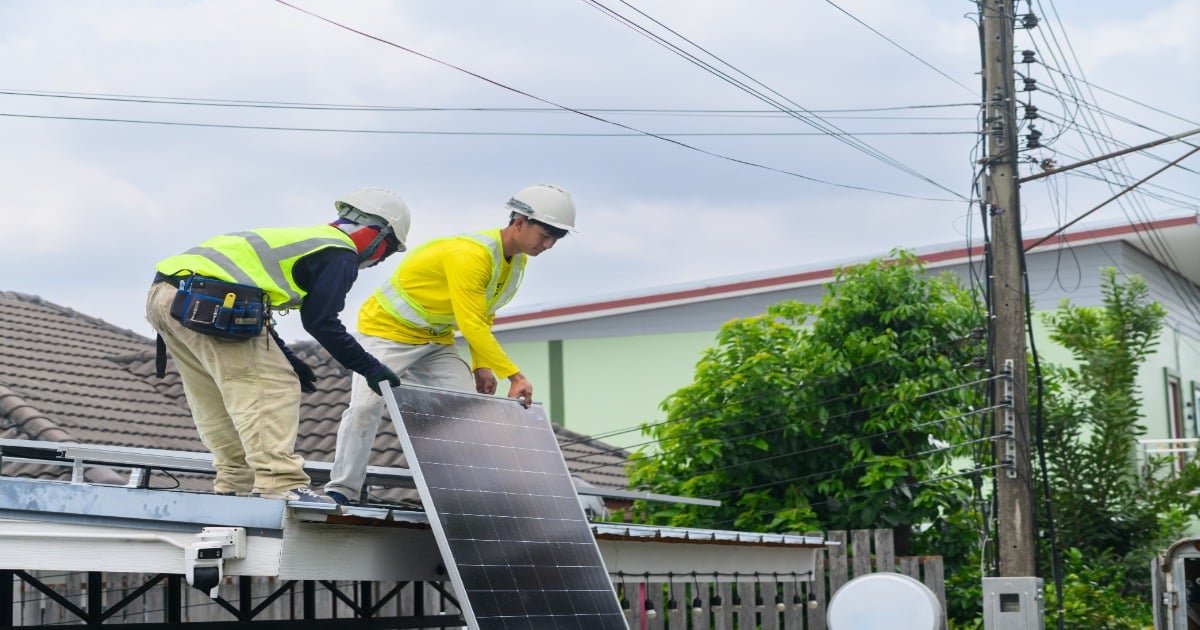
Small electricity consumers will soon be able to install rooftop solar systems more quickly after the Department of Energy (DOE) removed several permitting requirements, a move aimed at accelerating renewable energy adoption while maintaining consumer safety.
Under Department Circular 2026-08-0017, the DOE directed distribution utilities (DUs) to eliminate administrative barriers such as pre-installation clearances, technical permits, and inspection fees for eligible small-scale solar power systems. The policy is expected to simplify the installation process for households, businesses and certain medical facilities seeking to generate electricity for their own use.
“To achieve the renewable energy target of 35 percent by 2030 and 50 percent by 2040, the DOE envisions maximizing the inclusion, utilization, and acceleration of renewable energy even at the consumer level,” the department said.
Simplified Permitting Process
The new guidelines apply to self-generating facility zero-export solar systems (SGF ZESS) and micro-solar systems (MSS), including installations in households and medical facilities that do not export electricity to the distribution grid.
The DOE defines SGF ZESS as solar photovoltaic installations intended solely for the owner’s electricity consumption. These systems are classified either as connected systems, which remain linked to the distribution network but are equipped with mechanisms preventing electricity export, or isolated systems that operate independently from the grid.
Consumers installing connected SGF ZESS are required to notify their host distribution utility, while those deploying isolated systems are exempt from this notification requirement.
For connected and isolated SGF ZESS, end-users must still obtain a building permit from their local government unit when required. However, the DOE said a new permit will not be necessary if an existing permit is deemed sufficient by the local government.
Households, clinics, hospitals and other medical facilities installing eligible SGF ZESS are also exempt from securing a Certificate of Compliance (COC) from the Energy Regulatory Commission (ERC). Although the permitting requirement has been removed for qualified users, the ERC retains its authority to establish and enforce technical and commercial standards.
Meanwhile, users of plug-and-play micro-solar systems will no longer need either a building permit or an ERC certificate of compliance, significantly reducing the regulatory requirements for small consumer-owned systems.
Safety Standards
While easing administrative procedures, the DOE emphasized that safety requirements remain a key component of the policy.
All micro-solar systems must be equipped with an automatic anti-islanding disconnection mechanism. The feature automatically shuts down the solar installation during a power outage, preventing electricity from flowing back into the distribution network and protecting utility personnel conducting repairs.
The department is also coordinating with the Bureau of Philippine Standards under the Department of Trade and Industry to develop guidelines that will place solar system components under mandatory product certification.
The initiative seeks to prevent substandard equipment from entering the market, improve product quality and system reliability, and safeguard consumers without imposing unnecessary regulatory burdens.
The DOE said the policy strikes a balance between encouraging wider adoption of distributed renewable energy technologies and ensuring that installations comply with appropriate technical and safety standards.
Industry Feedback
“There is a need to issue a policy that supports the participation of small-scale end-users in the deployment of renewable energy technologies by providing a streamlined regulatory approach that complements the existing net-metering framework and other consumer choice programs,” the DOE said.
The agency added that wider deployment of self-generating facilities and distributed energy resources can strengthen energy self-sufficiency, provide backup and peak-shaving capabilities, and help reduce electricity costs for consumers.
Industry players welcomed the latest reforms, saying fewer permitting requirements would shorten project timelines and lower installation costs.
Theresa “Tetchi” Capellan, chairman of the Philippine Solar and Storage Energy Alliance, said streamlining the process would make solar installations more accessible but stressed that safeguards should remain in place.
Net-Metering Program
She said government and industry must continue working together to ensure homeowners remain protected through reliable equipment standards and safe installation practices.
The latest circular follows an earlier DOE directive issued in April that instructed distribution utilities, electric cooperatives and local government units to expedite net-metering applications by eliminating unnecessary delays and simplifying procedures.
Under the net-metering program, qualified consumers with renewable energy systems of up to 100 kilowatts can export excess electricity to the grid in exchange for bill credits. As of the end of 2025, the national grid had 21,224 qualified net-metering participants with a combined installed capacity of about 200 kilowatt-peak.
Energy Secretary Sharon S. Garin said the government is pursuing faster and more responsive approval processes so more households and businesses can adopt rooftop solar systems, lower their electricity expenses, and strengthen their resilience against volatile global energy prices.
Source:
https://business.inquirer.net/604170/doe-cuts-red-tape-for-small-solar-system
https://businessmirror.com.ph/2026/08/05/doe-simplifies-rules-for-own-use-solar-panel-installation


