DA, DOE Move To Shield 3 Million Hectares Of Farmland From Solar Projects
- September 3, 2026
Table of Contents
The Department of Agriculture and the Department of Energy are moving to draw digital boundaries around priority farmlands, seeking to prevent the country’s renewable energy expansion from encroaching on areas critical to food production.
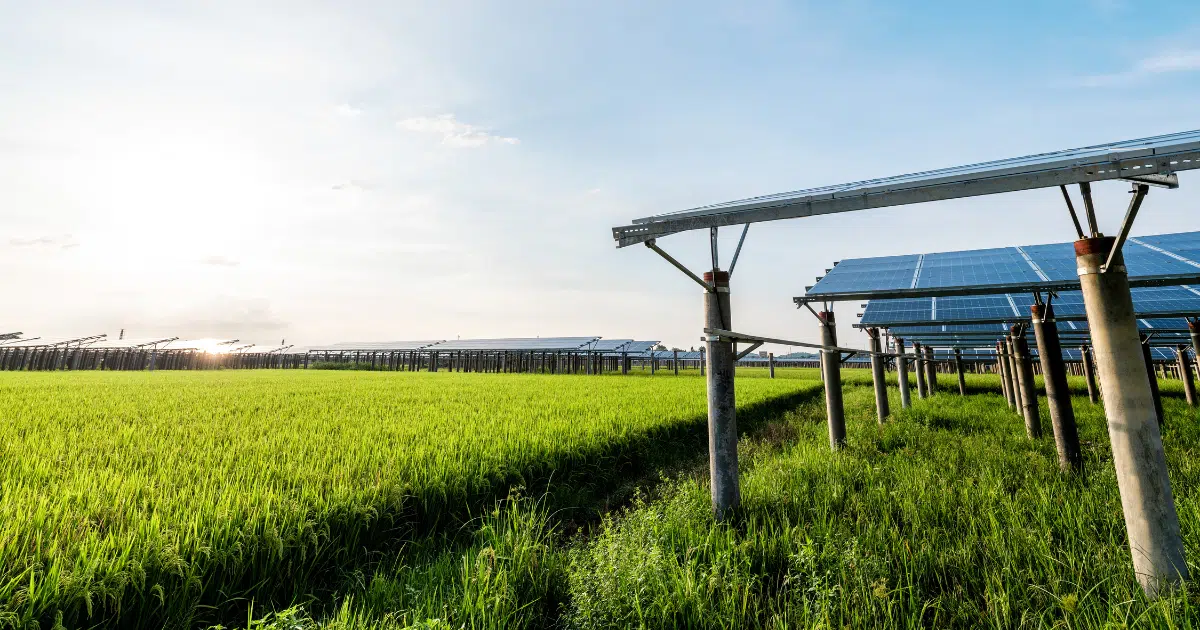
Agriculture Secretary Francisco Tiu Laurel Jr. said the Department of Agriculture is proposing to geofence around 3 million hectares of flat agricultural land, particularly areas primarily used for rice production, as solar energy projects continue to expand across the country.
The proposal emerged from recent discussions between Tiu Laurel and Energy Secretary Sharon Garin on how the government can pursue energy security while protecting lands needed to sustain domestic food production.
“We need energy security, but it cannot come at the cost of food security,” Tiu Laurel said.
“The country must be able to keep the lights on without putting at risk the lands that keep food on Filipino tables,” he added.
Priority Agricultural Areas
Under the proposed program, the DA will establish virtual geographic boundaries around priority agricultural areas through digital mapping. The system is intended to give renewable energy developers a clearer guide on locations where projects should not be built while identifying other areas that may be suitable for investment.
The agency has already identified flat rice-producing lands that are being considered for mapping and geofencing, according to the DA.
Between 1,000 and 2,000 priority agricultural areas are expected to be identified under the initiative. These areas will be cross-checked against existing and awarded energy projects to prevent potential conflicts and overlaps.
The DOE has also been asked to provide the DA with a list of ongoing and awarded energy projects. The information will help regional agriculture officials distinguish between developments that have already been approved and proposals that remain under evaluation.
The initiative comes as the government pushes for greater renewable energy capacity, including the expansion of solar power. While renewable energy is seen as central to improving the country’s energy security and reducing dependence on fossil fuels, the DA is seeking safeguards against the conversion of productive agricultural land.
Tiu Laurel said the objective is to address two pressing national concerns without allowing one to undermine the other.
“Our goal now, for both the DOE and the DA, is to ensure that both of these pressing needs of Filipinos are addressed in a way that benefits the country without sacrificing one for the other,” he said.
Lower Power Costs For Agriculture
The DA and DOE are also exploring ways for the renewable energy transition to directly benefit farmers and fisherfolk.
The DA is pushing for mechanisms that could reduce electricity costs for agricultural stakeholders, whose operations are often heavily affected by power expenses.
Officials have discussed possible arrangements that could link renewable energy suppliers with qualified agricultural users through programs such as the Green Energy Auction, the Green Energy Option, and the Retail Competition and Open Access framework.
Potential beneficiaries include irrigation systems, post-harvest facilities, rice mills, cold storage plants, slaughterhouses, farms and fishponds, as well as other food production operations where electricity costs form a significant part of operating expenses.
The DOE is examining how renewable energy suppliers and distribution utilities could participate in the proposed arrangement.
The DA and DOE are also in talks with the Energy Regulatory Commission on whether savings available under the Green Energy Option could eventually be reflected in electricity rates paid by agricultural stakeholders.
Under the program, qualified electricity users can source their power from renewable energy suppliers.
Farm-To-Energy Framework
Agriculture Undersecretary Roger Navarro and Energy Undersecretary Rowena Cristina Guevarra have been tasked with developing a Farm-to-Energy Framework in coordination with the ERC.
The proposed framework will explore ways for organized farmers and fisherfolk to gain more direct access to the benefits of renewable energy, including lower power costs.
“The framework will help proponents under the agricultural energy category lower electricity costs, generate savings, and strengthen incomes across the sector,” Navarro said.
The initiative reflects the DA’s broader effort to connect the country’s energy transition with the needs of the agriculture sector, particularly as producers face rising costs in irrigation, processing, storage, and other energy-dependent activities.
A memorandum of agreement between the DA and DOE is expected to be signed in October to formalize the partnership and help speed up the development of the proposed programs.
The planned agreement is expected to provide a framework for closer coordination between the two agencies as they refine the geofencing initiative and explore mechanisms for agricultural users to access cheaper renewable energy.
The effort helps to ensure that the rapid buildout of solar and other renewable energy facilities does not come at the expense of productive farmland. The proposed geofencing system and Farm-to-Energy Framework remain under development, but officials have made clear that the government’s goal is to advance energy and food security together as the Philippines accelerates its shift toward renewable sources.
Source:
https://mb.com.ph/2026/08/31/da-moves-to-stop-polar-projects-from-encroaching-on-farmland