

Pumped Hydro: Turning Stored Water Into Energy Security
- October 14, 2026
Table of Contents
El Niño, a climate pattern marked by unusually warm waters in the tropical Pacific, is expected to intensify into a very strong event in the coming months, bringing potentially major shifts in rainfall and temperature patterns worldwide, the World Meteorological Organization (WMO) said.
The WMO sees near-certain odds that it will persist through February 2027, with exceptionally warm Pacific waters supporting further strengthening. A very strong El Niño can significantly alter rainfall and temperature patterns worldwide, raising the risks of drought, extreme heat and flooding.
However, it does not rule out rain or storms.Rafaela Jane Delfino of the University of the Philippines Institute of Environmental Science and Meteorology urged the public to prepare for both the dry conditions expected during a Very Strong El Niño and possible bouts of heavy rain.
“So naturally occurring itong El Niño and La Niña, and essentially parang hindi natin mako-control kung kailan siya bumabalik, kung gaano siya kalakas. Ang kaya lang natin sigurong maikontrol is kung paano natin mababawasan ‘yung impact niya (El Niño and La Niña occur naturally, and essentially, we cannot control when they return or how strong they become. What we can probably control is how we reduce their impact),” Delfino explained.
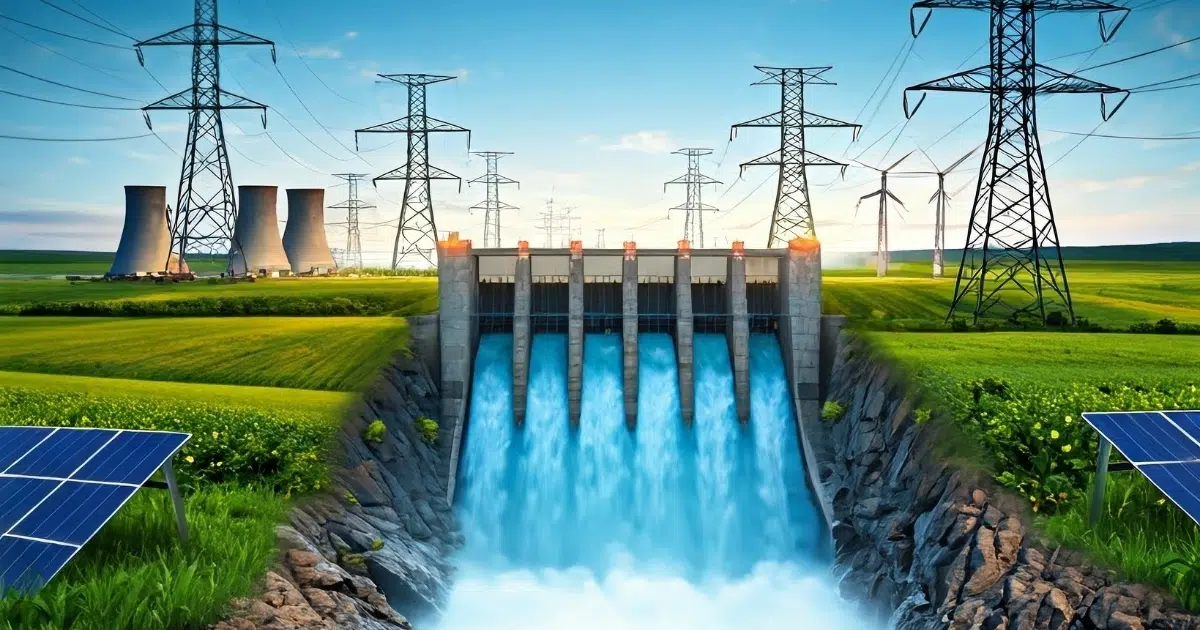
The challenge, then, is not only to prepare for changing weather patterns but also to make better use of the water resources available. One option is pumped hydro storage (PHS), which can turn stored water into a flexible source of energy when the grid needs it most.
(Also read: Geothermal Leaders Press ASEAN To Unlock 35 GW Energy Potential)
Benefits of Pumped Hydro Storage
Hydropower facilities can also help manage excess water, with dams, weirs, and storage reservoirs providing a buffer during periods of heavy rainfall. Additionally, PHS facilities can absorb and store large volumes of water, helping ease flood pressures while providing electricity when the grid needs it most.
“Given its [PHS] water storage capacity, it is important for flood and drought control,” noted the International Hydropower Association (IHA). “It is mitigation for, and resilient to, climate change.”
The water volumes involved can be substantial. The U.S. National Renewable Energy Laboratory (NREL) estimates that a typical closed-loop pumped storage site can have a reservoir holding around 6.4 million to 8.9 million cubic meters of water, although some sites can exceed 30 million cubic meters. Such reservoirs give PHS a dual role, serving as large-scale energy storage while also providing a significant water-management resource.
Beyond its role in water management, PHS offers a range of other benefits for the power system.
Bridging the Renewable Gap
According to IHA President Malcolm Turnbull, the lack of attention to long-duration electricity storage represents an “ignored crisis within the energy crisis.” He pointed to PHS as a large-scale solution, with capacity far beyond what even the biggest batteries can provide.
PHS can also strengthen grid stability as variable renewables take a larger share of the power mix. Its ability to quickly shift between storing and generating electricity allows it to provide reserve capacity, frequency and voltage support, system inertia and black-start capability, helping keep power supplies stable even as solar and wind output fluctuates.
The Department of Energy (DOE) has already incorporated PHS into its energy outlook, with new facilities expected to come online from 2028 to 2030.
Large-Scale, Flexible Storage
PHS is well suited to long-duration energy storage, allowing large amounts of electricity to be shifted over extended periods. The International Energy Agency states that PHS can store energy at relatively low cost, with some systems capable of providing up to 10 hours of storage.
With typical round-trip efficiency of 70% to 85%, PHS combines high efficiency with long operating life.
Unlike conventional battery storage, PHS uses water as its energy medium and can cycle the same water repeatedly between reservoirs. With nearly 200 gigawatts (GW) of installed capacity worldwide, PHS accounts for more than 94% of global long-duration energy storage capacity, making it the largest storage technology of its kind.
A Long-Term Grid Asset
While BESS capacity gradually declines with repeated cycling and chemical ageing, PHS relies largely on mechanical infrastructure that can operate for decades with regular maintenance and refurbishment. Batteries may require replacement or major augmentation after around 10 to 15 years, while PHS assets can remain in service for 50 years or more. The planned Wawa Pumped Storage Power Project in Rizal, for example, is designed for a 35-year operating life through 2064.
Stabilizing Prices
PHS helps moderate electricity prices by absorbing excess power when supply is abundant and releasing it when demand and prices surge. During low-price periods, storage facilities can draw electricity from the grid to pump water into an upper reservoir, then generate power during costly evening peaks. This flexibility can reduce reliance on expensive thermal plants providing ancillary services.
The Energy Regulatory Commission’s (ERC) temporary suspension of Power Delivery Service charges for electricity used specifically to charge energy storage systems during declared energy emergencies further improves the economics of this role.
Energy Independence
PHS can strengthen energy independence by reducing reliance on imported fossil fuels and making greater use of electricity generated from domestic renewable resources.
The clean energy transition, however, is creating new dependence on critical minerals and concentrated global supply chains. Batteries and other clean-energy technologies rely heavily on materials and rare earth elements, exposing countries to potential supply bottlenecks and price swings.
PHS can help ease this emerging dependence because its storage medium is water rather than mineral-intensive materials, reducing exposure to another set of global supply-chain vulnerabilities.
PHS Gains Momentum
PHS is moving from concept to construction planning in the Philippines, with several large projects gaining government recognition and private-sector backing. A number have been designated Energy Projects of National Significance and secured positions under the country’s green energy auctions. Combined investments are expected to reach billions of pesos.
The 600-MW Wawa Pumped Storage Hydropower Project has attracted Japanese utility Kansai Electric Power, which acquired a 14% stake in the project’s parent company. The variable-speed facility is designed to provide up to 6,000 megawatt-hours (MWh) of daily storage.
In Nueva Ecija, First Gen is preparing its P6-billion, 120-MW Aya pumped-storage project following an agreement with the National Irrigation Administration (NIA). Targeted for commercial operation by 2030, the facility will use the Aya and Masiway reservoirs to store and recycle water for power generation while complementing existing hydropower assets in the area.
The Philippines already has pumped-storage capacity through the CBK complex, which functions as a large-scale energy buffer for the Luzon grid and can rapidly dispatch stored power during periods of high demand.
A 1,400-MW pumped-storage facility is also planned in Pakil, Laguna, while San Roque Hydropower Inc. has proposed two 800-MW projects in Pangasinan and Benguet.
(Also read: Renewable Energy Seen As Shield Against Global Fuel And Geopolitical Risks)
Building a More Resilient Power System
The expansion of PHS will not be without challenges. Large projects must navigate right-of-way issues, environmental safeguards, water-resource concerns, and potential impacts on communities. These risks make rigorous feasibility studies, environmental assessments, and meaningful community engagement essential before projects move ahead.
Still, the Philippines has a substantial natural advantage. Its mountainous terrain and abundant rainfall give the country considerable hydropower potential, much of which remains undeveloped. If the proposed PHS pipeline reaches fruition, as much as 8.7 GW of additional storage capacity could emerge, representing a significant addition to the country’s roughly 29 GW installed power capacity.
The bigger opportunity, however, goes beyond adding megawatts. As climate variability intensifies and renewable generation expands, the grid will need resources that can absorb excess electricity, respond quickly to changing demand, and deliver power when intermittent sources fall short.
PHS can form part of that foundation, helping the Philippines build a power system that is not only cleaner, but also more resilient to droughts, storms, fuel shocks, and the seasonal swings that come with a changing climate.
Sources:
https://www.hydropower.org/factsheets/pumped-storage
https://www.philstar.com/opinion/2025/07/23/2460003/pumped-storage-hydro
https://businessmirror.com.ph/2026/05/28/wawa-pakil-hydro-projects-to-prop-up-first-gen-profits
https://www.linkedin.com/pulse/pumped-hydro-storage-vs-battery-energy-system-prakash-chaganty-lmdnc
https://tribune.net.ph/2026/07/30/japans-kansai-takes-stake-in-600-mw-wawa-hydropower-2
https://www.philstar.com/business/2026/07/10/2541015/first-gen-all-set-p6-billion-hydro-development


