ACEN Powers a Greener Future with Full Shift to 100% Renewables
- January 7, 2026
Ayala-led ACEN Corp. has completed its transition to a fully renewable energy portfolio, marking a milestone in the company’s long-term strategy to align its operations with global decarbonization goals.
In a disclosure on Monday, ACEN said it now operates entirely on renewable energy sources, following its divestment from all fossil fuel assets earlier this year. The shift positions the company as one of the first Philippine power producers to run a 100-percent renewable generation portfolio.
“This milestone reflects our long-term strategy to align ACEN with the future of the energy system, while supporting decarbonization in a commercially disciplined way,” said Eric T. Francia, ACEN president and chief executive officer.
Expanding Renewable Footprint
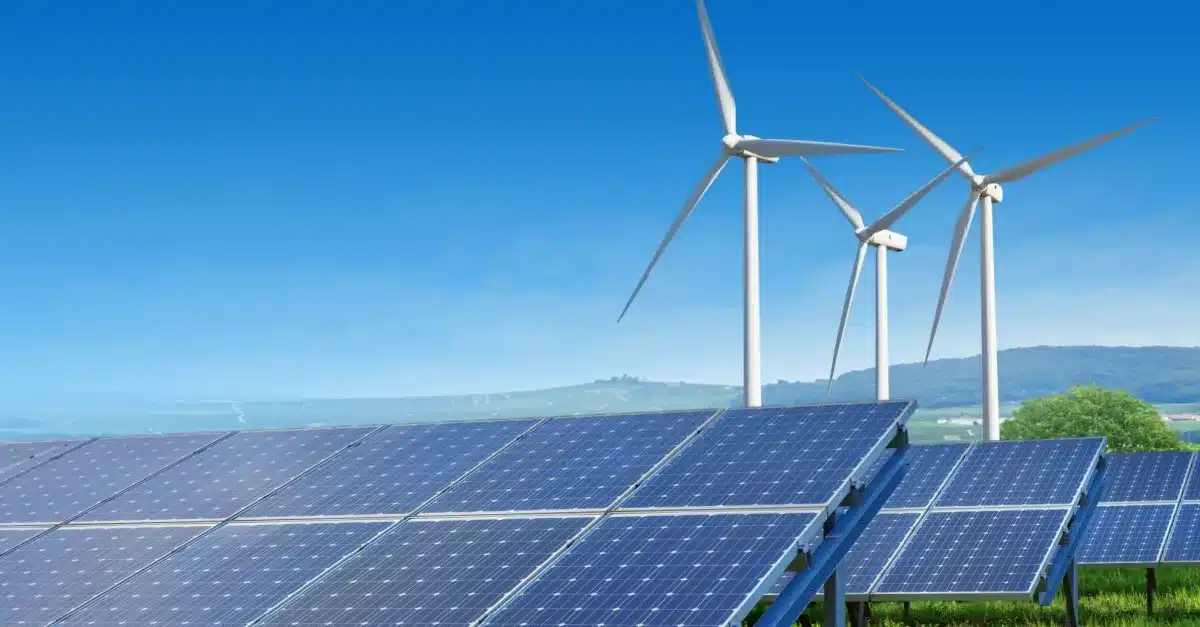
ACEN’s renewable energy portfolio now totals 7 gigawatts (GW) of attributable capacity, spanning operational, under-construction, and committed projects. Of this, 4,634 megawatts (MW) come from solar, 1,957 MW from wind, 115 MW from geothermal, and 304 MW from battery energy storage systems.
The company’s assets are spread across the Philippines, Australia, Vietnam, India, Indonesia, Laos, and the United States, reflecting its rapid regional expansion. ACEN’s 520-MW Stubbo Solar Project in Australia, completed in 2025, was cited as one of its largest overseas developments.
Since 2016, the company has grown from a largely coal-dependent portfolio, where renewables made up just two percent, to becoming one of the fastest-growing renewable energy firms in the Asia-Pacific region.
Strategic Realignment and Investments
ACEN’s full transition was solidified in September when it completed the divestment of its diesel power plants in Bulacan, Subic Bay, and La Union. The move followed a deliberate strategic pivot to renewable energy, driven by growing climate concerns and the long-term financial risks associated with carbon-intensive assets.
“The company reshaped its strategy, redirected capital, and built the capabilities needed to scale clean energy across multiple markets — while taking measured steps to reduce and ultimately exit coal,” ACEN said in its statement.
As part of its continuing expansion, the company disclosed that it will allocate over ₱80 billion in capital expenditures next year to fund large-scale renewable projects both locally and abroad. It also increased its stake in ENEX Energy Corp., a subsidiary focused on oil and gas exploration, through a ₱17.4-million subscription to preferred shares. ACEN said the investment will support ENEX’s ongoing operations as part of its diversified energy strategy.
Financial Performance and Outlook
Despite achieving full renewable capacity, ACEN reported a 78% decline in consolidated net income to ₱1.8 billion in the first nine months of 2025, citing non-recurring items and lower revenues. Total revenue for the period dropped 18% to ₱23 billion, affected by reduced generation output in the Philippines and Australia and weaker spot market prices.
At the Philippine Stock Exchange on Monday, ACEN shares fell 0.73% to ₱2.72 apiece, while ENEX Energy shares slipped 2.34% to ₱3.34.
Looking Ahead
ACEN aims to achieve net zero greenhouse gas emissions by 2050, focusing not just on capacity growth but also on enabling what it calls a “just, orderly, and inclusive energy transition.” The company said its future plans emphasize sustainability, energy access, and long-term stakeholder value.
“As the company looks ahead, its focus extends beyond capacity expansion toward enabling a just, orderly, and inclusive energy transition that delivers long-term value for stakeholders,” ACEN said.
Source:
https://mb.com.ph/2025/12/29/acen-hits-100-renewable-energy-milestone-eyes-net-zero-by-2050