

Brownouts and Broken Economies: The Crisis Facing Philippine Island Tourism
- May 15, 2026
Table of Contents
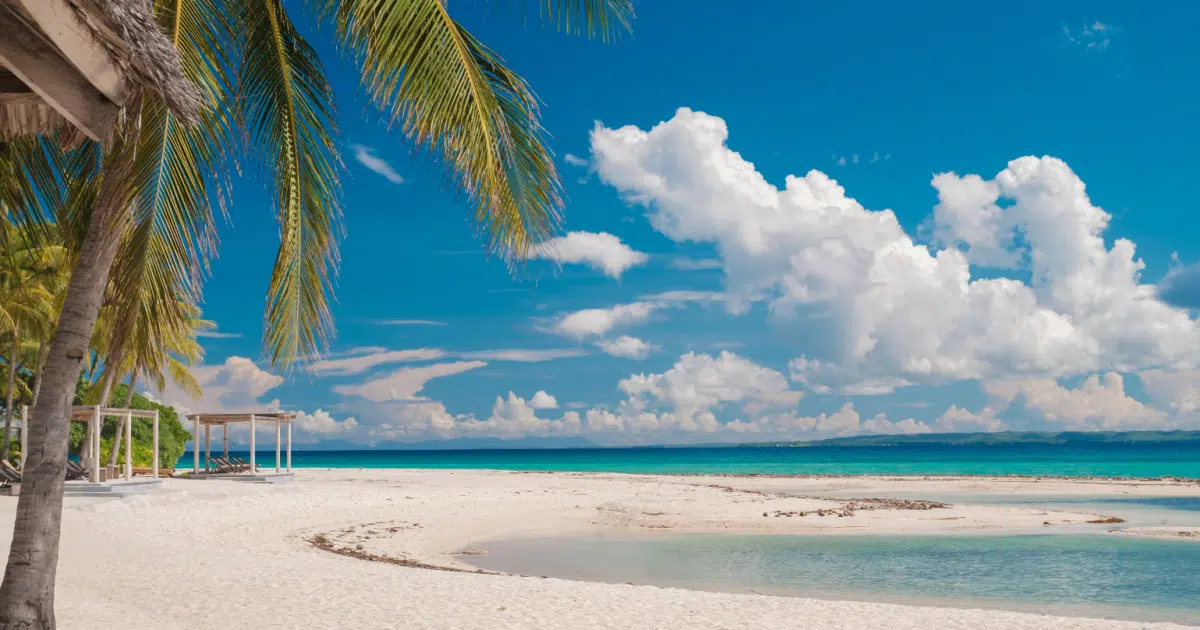
The Philippines has long depended on tourism as one of the strongest pillars of its economy. With its white sand beaches and tropical landscapes, the country possesses natural attractions that rival some of the best tourism destinations in Southeast Asia. Tourism creates jobs not only for hotels and airlines, but also for small businesses, tricycle drivers, fishermen, restaurants, souvenir vendors, tour guides, and local communities.
According to the World Travel and Tourism Council, tourism was projected to contribute around ₱5.9 trillion to the Philippine economy in 2025, equivalent to roughly 21% of national GDP, while also supporting about 11.7 million jobs nationwide.
The Department of Tourism (DOT) likewise reported nearly 2.9 million international arrivals during the first half of 2025 alone, showing that global interest in the Philippines remains strong despite international economic uncertainties.
(Also read: Guerrilla Solar vs Grid Stability: The Growing Clash Over Rooftop Power in the Philippines)
Power Problems Hurt Paradise
Stable power is one of the foundations of modern tourism. Hotels cannot function properly without electricity. Resorts need reliable power for air conditioning, internet connectivity, refrigeration, water systems, lighting, and guest safety. Restaurants require electricity to preserve food and maintain sanitary conditions.
Tourists today, especially foreign travelers and digital nomads, expect uninterrupted internet and electrical service. Frequent brownouts damage appliances, discourage investors, interrupt business operations, and create negative experiences for visitors.
Unfortunately, many of the country’s tourist areas are served not by large private utilities but by electric cooperatives (ECs), many of which have long faced criticism over poor service reliability, high system losses, aging infrastructure, and recurring controversies.
Baler’s Tourism Held Back
During the Holy Week and extended summer vacation period in April 2025 alone, Aurora province recorded a total of 1,165,254 tourist arrivals, with Baler accounting for 307,077 visitors. However, Baler, the provincial capital and a key surfing destination, continues to experience electricity reliability challenges.
In November 2025, for instance, disruptions due to Super Typhoon Uwan left parts of Aurora, including Baler, without electricity as transmission lines tripped under severe conditions. Recent field reporting from Aurora’s disaster management updates also shows that power interruptions tend to coincide with peak weather events and evacuation periods.
These recurring outages underscore the Aurora Electric Cooperative’s (AURELCO) vulnerability to extreme weather and gaps in infrastructure resilience. In a province where typhoons are a regular occurrence, they raise questions about preparedness and long-term investment in power systems that should already be standard for areas routinely exposed to severe climatic events.
Manila Times columnist Ben Kritz, who recently vacationed in Baler, described experiencing firsthand the town’s unstable electricity supply during his stay. He wrote that beginning at about 3 p.m. on May 1, the Sabang area began to experience severe power fluctuations, which eventually escalated into a complete outage that lasted well into the evening hours.
“As far as the electricity service in the Baler area is concerned, the complaints were voluminous,” he wrote. “Several people explained that power outages and other problems were not monitored by Aurelco, and only addressed if someone reported them, which meant that sometimes hours would pass before any repairs were made.”
AURELCO received a “yellow” classification in the NEA’s fourth quarter 2025 report, indicating a shortfall in one of 14 performance indicators, specifically collection efficiency, while otherwise meeting baseline benchmarks. However, the rating reflects administrative compliance on paper and does not fully capture on-the-ground service conditions.
Another concern is the comparatively high cost of electricity in the area, with reported rates ranging from around ₱22 to ₱25 per kilowatt-hour (kWh). By contrast, consumers under Meralco’s service area typically consider rates of ₱12 to ₱14/kWh already unusually high.
Brownouts Weaken Malapascua’s Tourism
Malapascua, a small island off the northern tip of Cebu in the Philippines, is internationally recognized for its diving sites, most notably Monad Shoal, where regular encounters with pelagic thresher sharks have made it a signature attraction for divers. Administratively part of Daanbantayan, the area has previously been ranked as the fourth most visited destination in Central Visayas. Visitor numbers have been reported at over a thousand tourists per month.
The island continues to rely on island-based generation and distribution arrangements under the Cebu Electric Cooperative II (CEBECO II), with past interventions and transition efforts aimed at improving supply stability due to long-standing concerns over unreliable electricity service.
A 2024 provincial update noted improved or more stable operations supported by generator-assisted supply systems, though the island remains structurally dependent on limited local generation rather than a fully interconnected mainland grid, leaving it vulnerable to supply constraints.
Earlier reporting also highlighted recurring concerns from tourism stakeholders over power interruptions affecting hospitality operations, prompting continued efforts from utilities and local authorities to address reliability gaps in island servicing.
A Reddit user describing the electricity situation in Malapascua reported that power interruptions were frequent during their stay, noting that “it went out every day for at least an hour, and one day, there was a 6 am–noon scheduled outage.”
Malapascua’s fragile energy situation was underscored again in April 2026, when local advisories warned of continuing daily power interruptions due to limited generator capacity and sustained high demand on the island’s small power system. With one generator set under maintenance and “no confirmed timeline for completion”, the post said temporary shutdowns were necessary to allow the remaining units to “rest” and prevent overheating or damage that could trigger a wider blackout.
(Also read: PCCI Pushes Faster Oil, Gas Exploration to Secure Energy Future)
Samal’s Power Shift
For years, Samal Island’s promise as a premier tourism and investment hub has been repeatedly undercut by one persistent weakness: unreliable electricity under Northern Davao Electric Cooperative (NORDECO). Residents, businesses, and local officials long complained of unstable supply and frequent outages that disrupted daily life, raised operating costs, and discouraged investment.
Former Mayor Al David Uy estimated that the island suffered ₱120 million to ₱150 million in annual economic losses since the 2010s due to persistent power issues, with commercial activity repeatedly hampered by interruptions across tourism and small enterprises.
NORDECO had previously proposed a ₱1.1 billion submarine cable project linking Pantukan to Samal via a 69-kV line, but the plan was never implemented despite being scheduled for completion in 2023.
Similar complaints echoed across other NORDECO-served areas in Davao del Norte, where small businesses reported spoiled goods, damaged appliances, and rising generator dependence amid recurring outages.
On Samal itself, local leaders said the electricity problem became a recurring barrier to investment, with potential investors frequently asking about power reliability and receiving discouraging answers.
A major shift came in 2026 following the implementation of Republic Act No. 12144, which expanded Davao Light’s franchise area to include Samal and other parts of the province. In February 2026, a court-enforced turnover of NORDECO’s distribution assets allowed Davao Light to assume operational control, despite resistance from the EC. The transition marked the end of a long-standing dispute over franchise authority and service responsibility.
By April 17, 2026, Davao Light formally inaugurated the Davao–Samal submarine interconnection in Bridgeport, Samal. The 1.25-kilometre, 69-kV cable can deliver up to 50 megawatts (MW) of power, positioning it as a long-term main supply line rather than a temporary backup. Built to improve resilience and reduce dependence on diesel generation, the project is widely seen as a turning point in efforts to stabilise Samal’s power supply and unlock its long-constrained growth potential.
Power Reliability as Tourism Development
Reliable electricity is not just a technical concern but a core development issue, shaping business survival, investor confidence, tourist experience, and a destination’s competitiveness. In popular tourist areas, outcomes often hinge on whether power systems can support sustained economic activity or contribute to stagnation.
The Philippines has abundant natural attractions, but tourism growth depends on more than scenery. Without consistent electricity, even high-potential destinations risk being held back despite their natural advantages.
Kritz pointed out that much of what is labelled as “tourism infrastructure” is, in reality, just basic public services such as electricity, communications, water and sanitation, waste management, transport networks, and healthcare facilities. Instead of focusing on branding exercises, slogans, and surface-level initiatives, he argued that government attention should shift towards strengthening these fundamentals, while allowing destination communities to develop the rest.
As he put it, if this approach is taken, “the world will beat a path to the Philippines’ door.”
Sources:
https://www.philstar.com/business/2025/06/14/2450329/tourism-seen-contributing-p59-trillion-2025-gdp
https://mb.com.ph/2025/06/26/dot-logs-29-m-tourist-arrivals-in-first-half-of-2025
https://iorbitnews.com/aurora-records-over-1-1-million-tourists/
https://www.pna.gov.ph/articles/1258945
https://cebudailynews.inquirer.net/220288/daanbantayan-town-named-4th-most-visited-locality-in-cv
https://media.divebooker.com/media/files/14005690298924dbcbc3e1e2663d5b3903e5848045.pdf
https://www.pna.gov.ph/articles/1230704
https://www.facebook.com/groups/1167444178034829/posts/1709414613837780
https://www.reddit.com/r/scuba/comments/1iw796e/itinerary_for_phillipines/
https://www.sunstar.com.ph/davao/mayor-samal-loses-p120-p150m-yearly-due-to-unresolved-power-woes
https://www.sunstar.com.ph/davao/supreme-court-upholds-davao-light-expansion
https://www.sunstar.com.ph/davao/davao-samal-submarine-cable-launched-to-stabilize-power


