

The Fossil Fuel Reality Behind the Energy Transition
- May 7, 2026
Table of Contents
The renewable energy transition has advanced substantially over the past decade. According to the International Energy Agency (IEA), renewables accounted for 34% of global electricity generation in 2025, up from 23% a decade earlier, driven by rapid expansion in solar, wind, and other low-emissions power sources. Yet even with this progress, fossil fuels remain deeply embedded across transport, heavy industry, and heating, where alternatives are often harder to scale.
That tension between clean-energy momentum and enduring fossil-fuel dependence sits at the heart of interdisciplinary scientist and policy analyst Vaclav Smil’s How the World Really Works: The Science Behind How We Got Here and Where We’re Going. Smil argues that modern civilization is best understood not through politics or technology trends, but through physical systems such as energy, materials, food, and infrastructure.
His central thesis is that industrial society functions as an energy system, and without dense, reliable fuels, the modern world could not operate at its present scale. In essence, Smil contends that modern civilization as we know it was built on the foundation of fossil fuels.
(Also read: Renewables Alone Not Enough, ACEN Says)
Fossil Fuels and Food Security
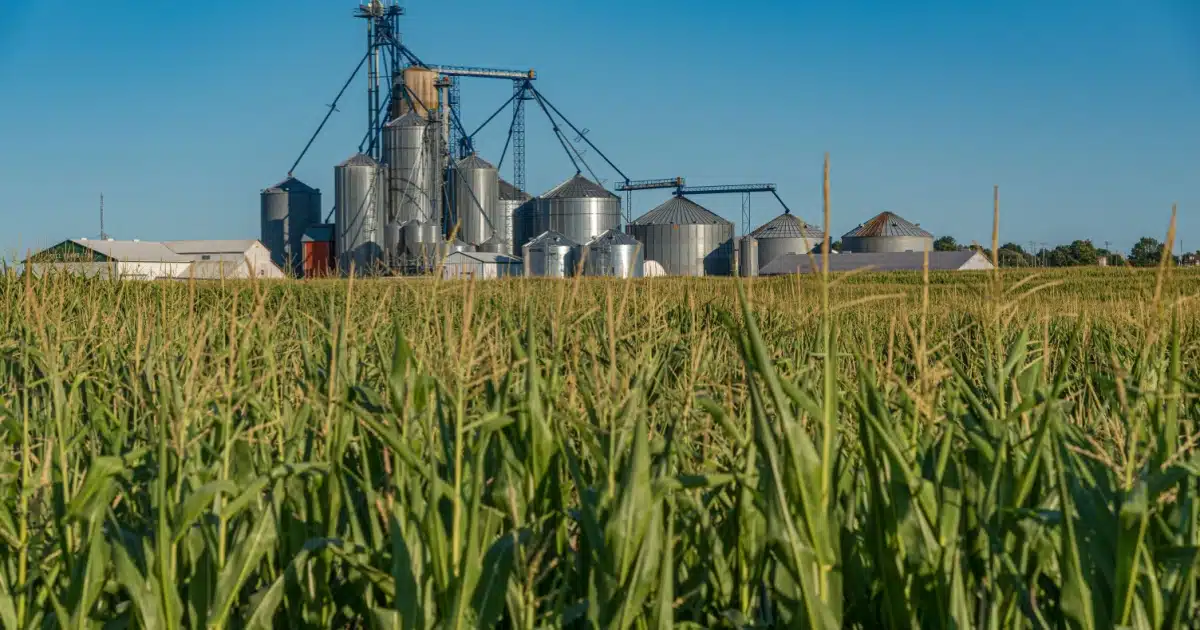
One of the key arguments in How the World Really Works is that modern food systems are fundamentally tied to fossil fuel inputs. Industrial agriculture depends heavily on energy for machinery, transport, and processing, as well as on chemical inputs such as nitrogen-based fertilizers that sustain high crop yields at a global scale.
A critical example is ammonia production, which relies on natural gas as a key feedstock, making large-scale food output inseparable from fossil energy use. Without these inputs, global agricultural productivity would fall significantly, with direct implications for food security. In this view, food supply is shaped as much by industrial energy systems as by natural ecological conditions.
Copenhagen Consensus President and author Bjorn Lomborg highlights the deep link between energy systems and global food security. In his analysis of disruptions in the Strait of Hormuz, he says that “half of all the calories we consume from proteins, carbs, and fats are made possible by the use of artificial fertilizers, derived overwhelmingly from natural gas.” This reliance means that shocks to fossil fuel supply chains can quickly ripple into agriculture, since fertilizer production is highly exposed to gas availability and trade routes. When energy flows are disrupted, costs rise, output tightens, and food prices and access can deteriorate, particularly in already vulnerable regions.
Lomborg argues that this dependency is often overlooked in public discourse, where fossil fuels are typically discussed in terms of climate impact rather than their essential role in food systems. He writes that “without fossil fuels, half the global population would suffer a severe lack of food.” This reflects their central role in powering fertilizer production, mechanized agriculture, irrigation, and the logistics networks that move and preserve food from farms to consumers.
Is Net Zero Realistic?
Several countries have adopted some of the world’s most ambitious net-zero timelines, underscoring how seriously governments now view decarbonization. Finland has targeted carbon neutrality by 2035, Austria aims for climate neutrality by 2040, and Sweden has a net-zero emissions goal for 2045. These targets place them among the earliest advanced economies with formal national timelines.
Yet Smil argues that energy transitions rarely move at political speed. His core view is that major shifts in energy systems unfold over decades or even generations, not in a few short years. Smil states that global reliance on fossil carbon operates at a physical scale that defies rapid substitution.
He explains that annual demand exceeds 10 billion tons, vastly larger than the mass of global staple food production and water consumption combined, underscoring the sheer magnitude of the system. “Both the high relative share and the scale of our dependence on fossil carbon make any rapid substitutions impossible: this is not a biased personal impression stemming from a poor understanding of the global energy system – but a realistic conclusion based on engineering and economic realities,” he wrote.
Historically, the move from biomass to coal, and later from coal to oil and gas, happened through long periods of overlap rather than sudden replacement. New fuels are typically added to the mix before older ones decline.
In his paper “Welfare in the 21st century: Increasing development, reducing inequality, the impact of climate change, and the cost of climate policies,” Lomborg makes a similar point about the nature of energy change. He states that historical energy transitions are typically additive rather than substitutive—new sources tend to expand the overall mix instead of displacing older ones. As oil became widely used, coal consumption did not disappear, and the rise of natural gas likewise occurred alongside continued reliance on both coal and oil.
“It seems dubious whether renewables will dominate the 21st century. When measuring renewables in percent of global energy, almost all energy was renewable in 1800,” he wrote. “Over the next 170 years, it declined to about 13–14%, where it remained for half a century up till today.”
Smil’s reasoning centers on physical constraints. Energy systems depend on long-lived infrastructure, large capital commitments, industrial supply chains, and equipment designed to operate for decades. Power plants, refineries, furnaces, pipelines, ships, and vehicle fleets cannot be replaced overnight without major economic cost. In that sense, transition timelines are shaped not only by innovation or policy ambition, but by the lifespan of existing assets and the scale of what must be rebuilt.
A recurring theme in his work is the gap between aspiration and system reality. Rapid progress in renewables, batteries, and electrification is significant, but transforming entire economies requires changes across manufacturing, transport, mining, grids, financing, and trade. Smil’s broader message is not that change is impossible, but that realistic pathways must account for the inertia of complex global systems rather than assume technology alone can compress historical timelines.
This perspective is reflected in energy debates at the regional level. According to Rappler columnist Den Somera, fossil fuels have historically underpinned social and economic development by powering essential services and infrastructure. He notes that coal remains a dominant energy source globally and continues to support development in many regions, particularly in Southeast Asia.
“As the ASEAN economies may continue to expand, electricity supply needs must stay stable and reliable, and prices must remain low to remain attractive to foreign investment,” he wrote.
Although many developed economies have announced ambitious net-zero commitments, recent trends highlight a growing disconnect between long-term targets and practical implementation on the ground.
In the United Kingdom, the legally enshrined 2050 target remains in place, but key measures have been delayed, including the phaseout of petrol and diesel vehicles, alongside growing political criticism that current policies risk economic strain.
In Australia, support for a 2050 net-zero pathway has weakened, with major parties questioning its feasibility and shifting emphasis toward affordability, energy security, and more flexible, technology-led emissions reduction.
France recently announced its 2050 fossil fuel-free goal, but progress has been complicated by uneven emissions reductions and a weakening carbon sink, underscoring the scale of structural adjustments still required to meet long-term commitments.
(Also read: 5 New RE Projects Come Online As Philippines Pushes April Capacity Surge)
Civilization as an Energy System
In Microsoft co-founder Bill Gates’ review of Smil’s book, he emphasizes the author’s systems-level thinking and analytical clarity, saying that it provides “a brief but thorough education in numeric thinking about many of the fundamental forces that shape human life.” Gates further lauds Smil’s strength in explaining “how the world’s energy systems work today,” highlighting that modern prosperity is inseparable from large-scale energy consumption.
It can be observed that Bill Gates, who has spent more than two decades studying climate change and investing billions in clean energy innovation, has recently broadened the framing of climate priorities. He has highlighted that progress should be judged not only by emissions or temperature targets, but by measurable improvements in human wellbeing. While acknowledging that climate change disproportionately affects poorer populations, he states that “the biggest problems are poverty and disease, just as they always have been.”
Similarly, Lomborg challenges the view that climate change is the foremost threat facing developing countries, arguing that it often overlooks more immediate local priorities. He points to survey data from multiple African nations where concerns such as education, employment, healthcare, and infrastructure consistently rank above climate issues. “Green campaigners insist that emissions cuts must come first for the poor — when what they really need are jobs, food, medicine, and an escape from poverty,” he stated.
Taken together, these views reinforce a broader point made by Vaclav Smil: the challenge is not resistance to transition, but the physical reality that energy systems operate at scales defined by infrastructure, time, and material constraints. Any credible pathway forward must therefore balance ambition with the structural limits that have shaped industrial development over decades.
“…modern civilization will remain fundamentally dependent on the fossil fuels used in the production of these indispensable materials,” wrote Smil. “No AI, no apps, and no electronic messages will change that.”
Sources:
https://www.iea.org/reports/global-energy-review-2026/electricity-supply
https://www.penguinrandomhouse.com/books/623494/how-the-world-really-works-by-vaclav-smil
https://www.europarl.europa.eu/thinktank/en/document/EPRS_BRI(2024)767170
https://explore.sweden.se/sweden-the-climate-matchmaker/swedens-journey-towards-net-zero-in-2045
https://www.sciencedirect.com/science/article/pii/S0040162520304157
https://climateactiontracker.org/countries/australia/2023-12-11/targets
https://www.abc.net.au/news/2025-11-02/nationals-formally-abandon-net-zero-by-2050/105962162
https://www.france24.com/en/live-news/20260429-france-unveils-plan-to-ditch-all-fossil-fuels-by-2050
https://www.europarl.europa.eu/thinktank/en/document/EPRS_BRI%282024%29767181
https://www.goodreads.com/work/quotes/88381378
https://nypost.com/2026/04/13/opinion/how-the-strait-of-hormuz-saves-the-world-from-starvation
https://www.gatesnotes.com/how-the-world-really-works
https://www.gatesnotes.com/home/home-page-topic/reader/three-tough-truths-about-climate
https://www.chinadaily.com.cn/a/202511/11/WS69128168a310fc20369a44e4.html


