

Indonesia’s Coal Policy Shift Raises New Risks To Philippine Power Security
- May 30, 2026
Table of Contents
As the Philippines struggles to stabilize its electricity supply amid recurring yellow and red alerts, a sweeping policy overhaul in Indonesia is emerging as another potential threat to the country’s already fragile energy system.
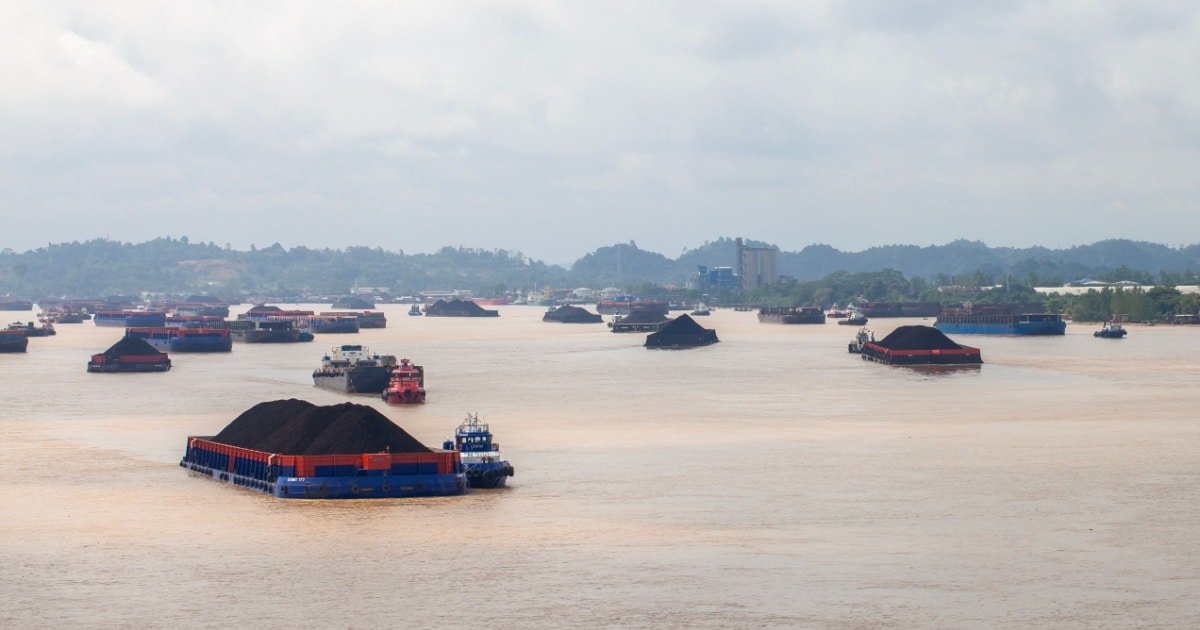
Industry players are raising concerns after Indonesian President Prabowo Subianto announced plans to centralize exports of key commodities, including thermal coal, under a state-controlled entity tied to the country’s sovereign wealth fund. The move is expected to tighten Jakarta’s control over pricing, trade flows, and export transactions for one of the Philippines’ most critical fuel sources.
For the Philippines, which relies heavily on imported coal to run its baseload power plants, the development could trigger fresh uncertainty over supply stability, contract implementation, and electricity costs.
Coal Dependency Under Scrutiny
The Philippines sources roughly 60% to 70% of its imported coal from Indonesia, with dependence sometimes climbing higher depending on market conditions and plant dispatch requirements. Coal remains the dominant fuel for the country’s power generation mix, supplying a large share of Luzon’s baseload electricity demand.
Local power producers said Indonesia’s policy recalibration has already caused anxiety among buyers and suppliers alike, particularly because implementation details remain unclear.
One industry participant said even Indonesian suppliers have yet to provide definitive guidance on how long-term contracts and shipment arrangements will be affected under the new export structure.
Indonesia’s new rules require commodity exports such as coal, palm oil, and iron alloys to be handled by PT Danantara Sumberdaya Indonesia, a newly created state-run entity under the Danantara sovereign wealth fund. Private companies are expected to transition their export dealings to the agency between June and August, with full implementation targeted by September.
President Prabowo said the policy aims to strengthen oversight, improve transparency, and prevent underreporting of export revenues that allegedly deprived Indonesia of billions of dollars in government income.
But analysts and businesses have questioned whether such a sweeping transition can be executed smoothly within a few months, warning of possible disruptions across global supply chains.
Ripple Effects Across Asia
Indonesia is the world’s largest exporter of thermal coal, making any policy shift in Jakarta highly consequential for energy-importing economies across Asia.
Beyond the Philippines, countries such as China, India, Japan, South Korea, Malaysia, and Vietnam are also expected to feel the impact of the trade overhaul.
The timing also comes amid heightened volatility in global fuel markets due to geopolitical tensions in the Middle East, which continue to affect oil and gas prices worldwide.
Philippine power generators warned that a combination of external fuel supply risks and domestic energy vulnerabilities could place additional pressure on the country’s already thin power reserves, especially during periods of peak summer demand.
The Philippine grid has repeatedly experienced tight operating margins in recent months, exposing longstanding concerns over insufficient baseload capacity and the country’s heavy dependence on imported fuel.
Semirara Uncertainty
Compounding the situation is uncertainty surrounding the future of the Semirara coal mine, currently the country’s largest domestic coal producer.
The mine’s 50-year contract is set to expire in 2027, with the Department of Energy pushing for a competitive rebidding process rather than granting an extension to the current operator.
Industry observers said the planned auction has raised questions over whether prospective bidders possess sufficient technical expertise to operate the strategically important asset.
Semirara supplies coal to several local power facilities, including the SEM-Calaca and South Luzon Power Generation Corp. plants in Batangas. Its output also serves as a blending component for imported coal used by other generators.
Energy stakeholders warned that any disruption in Semirara operations, combined with uncertainty over Indonesian coal exports, could significantly affect fuel availability for Philippine coal plants.
Energy Security Concerns
The latest developments are intensifying calls for the Philippines to strengthen long-term energy security measures and diversify its fuel sources.
Experts noted that the country’s power system remains heavily exposed to international market shifts because around 90% of coal requirements are imported.
Indonesia’s move toward stronger state control over strategic commodities also reflects a broader trend among resource-rich countries seeking greater influence over pricing and trade flows.
Under Prabowo, Jakarta has increased government intervention in sectors deemed strategically important, including mining and downstream mineral processing.
For the Philippines, however, the immediate concern is practical: ensuring enough fuel reaches local power plants to keep electricity flowing reliably. With external coal supply risks, domestic mining uncertainty, and persistent grid vulnerabilities converging at the same time, the country’s energy sector may once again face a difficult balancing act in the months ahead.
Source:


