

Marcos Fast-Tracks WTE Drive As Metro Manila’s Garbage Crisis Deepens
- August 20, 2026
Table of Contents
President Ferdinand Marcos Jr. has ordered the Department of Energy (DOE) to accelerate the government’s waste-to-energy (WTE) program, setting an 18-month timeline as authorities confront mounting garbage in Metro Manila waterways after heavy monsoon rains.
During an inspection of clearing operations at the Diokno Pumping Station in Pasay City, Marcos said the government had already settled the technical aspects of WTE projects and was now working to establish how the system would operate, including the role of local governments and private developers.
“It’s not so easy to do because we have to put the system together — we have never done it before,” Marcos said.
The DOE has resumed preparations for a special WTE auction under the Green Energy Auction Program, raising its installation target from 230 megawatts (MW) to 400 MW. The auction proper is scheduled for Oct. 13, 2026, with winning projects expected to reach mechanical completion by the end of 2028 and start delivering electricity by the end of 2029.
Waste Management And Power Generation
Energy Secretary Sharon Garin said the program is intended to provide a way to manage residual waste while generating electricity for the grid, subject to environmental and technical requirements.
“We want projects that are technically sound, environmentally compliant, supported by sustainable feedstock, commercially viable, and capable of delivering electricity to the grid,” Garin said.
Metro Manila produces about 9,000 metric tons of municipal solid waste each day, according to DOE estimates. The agency said the volume could potentially support as much as 200 MW of WTE capacity.
The government has also pointed to the limited capacity and rising costs of landfills as a reason to develop alternative waste-management facilities. Marcos said the government was studying plant locations that could reduce hauling distances and costs for local government units.
The DOE emphasized that WTE is not intended to replace waste reduction, segregation, reuse, recycling or materials recovery. Only acceptable residual waste should be used as feedstock, the agency said.
Garin said the government was moving the program from policy development toward actual implementation by identifying projects that can meet the required technical, environmental and commercial standards.
Opposition Mounts
The administration’s renewed WTE push has drawn criticism from environmental and community groups, which questioned the use of waste burning as part of the government’s response to flooding.
The Manila Anti-Incinerator Alliance (MAIA), which includes the Global Alliance for Incinerator Alternatives-Asia Pacific, said linking WTE to flood control risks conflating separate problems. The group argued that garbage entering waterways reflects weaknesses in waste management and infrastructure governance, while flooding requires measures involving drainage, waterways, land use, and flood-control systems.
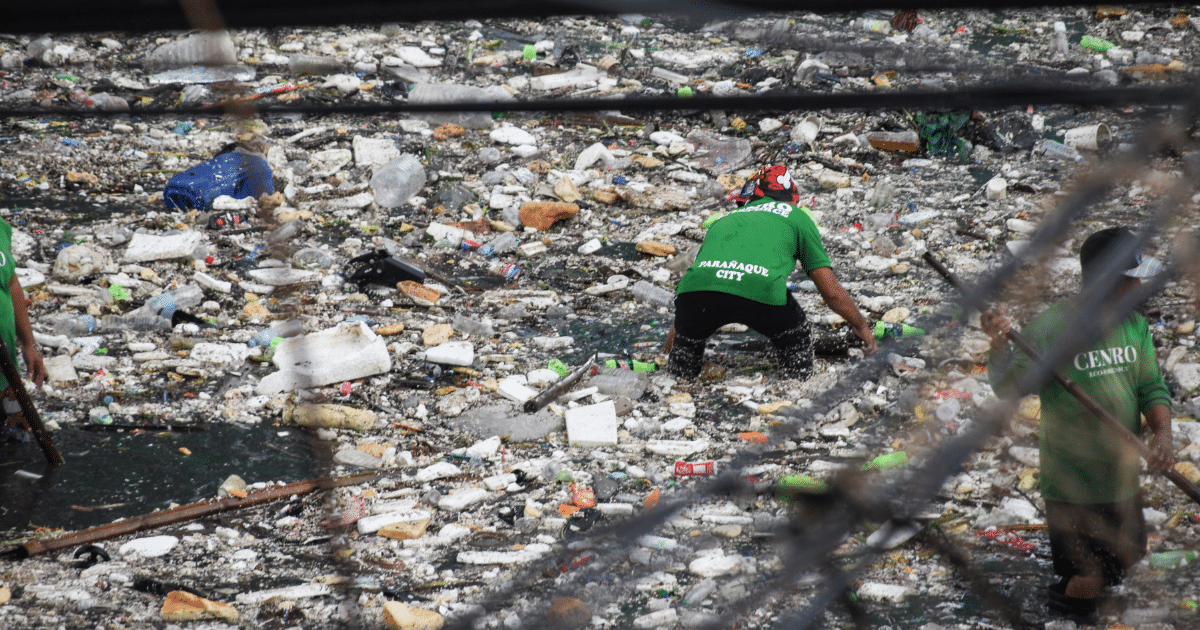
The criticism followed Marcos’ inspection of garbage-clearing operations at the Baclaran River and Redemptorist Water Channel in Parañaque City, where large amounts of waste had accumulated after heavy rains brought by the enhanced southwest monsoon.
MAIA also questioned the history of the proposed Smokey Mountain WTE facility, saying an earlier WTE component examined under the Metro Manila Flood Management Project was later replaced by other waste-management facilities amid concerns involving site suitability, procurement, and resettlement.
The alliance further raised health and environmental concerns over incineration, citing potential emissions of fine particulate matter and other pollutants. It said these risks should be considered alongside the government’s plans.
Marcos, however, has argued that WTE could help prevent garbage from reaching drainage and pumping facilities, particularly as waterways are cleared and dredged.
“We are already preparing [the waterways]; we are dredging our waterways, our canals, our esteros. We are already preparing them, we are opening them up. But as we open them up, now we have the garbage,” Marcos said.
He said the government would continue studying where plants could be located and how LGUs could bring collected waste to them without incurring excessive hauling costs.
Source:
https://newsinfo.inquirer.net/2284484/green-groups-to-marcos-waste-to-energy-no-fix-for-flooding
https://www.sunstar.com.ph/cebu/doe-committed-to-boosting-waste-to-energy-program


