

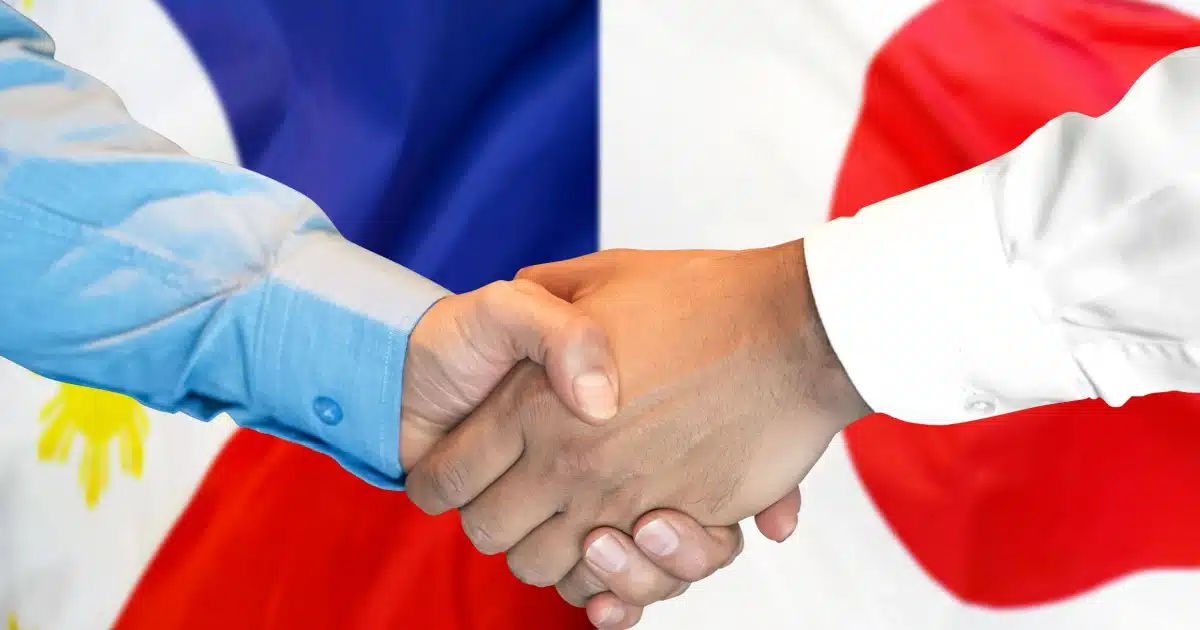
Philippines, Japan Deepen Energy Security Partnership With $10 Billion POWERR Asia Initiative
- June 2, 2026
Table of Contents
President Ferdinand Marcos Jr. has welcomed Japan’s $10-billion Partnership on Wide Energy and Resources Resilience (POWERR Asia) initiative, signaling closer Philippines-Japan cooperation on energy security as concerns grow over potential supply disruptions linked to tensions in the Middle East.
The initiative took center stage during Marcos’ meeting with former Japanese Prime Minister Fumio Kishida in Tokyo last week. Kishida now serves as supreme adviser to the Parliamentary Association of the Asia Zero Emission Community (AZEC), a regional platform promoting energy transition and sustainable economic growth.
According to the Presidential Communications Office (PCO), discussions focused on strengthening bilateral cooperation in renewable energy, low-carbon technologies, and long-term energy security under the AZEC framework.
Marcos welcomed the Japanese-led initiative, which seeks to reinforce regional energy procurement, diversify supply sources, expand stockpiling capacity, and support investments in energy efficiency across Asia.
Strengthening Regional Energy Resilience
The POWERR Asia program was launched as governments across the region grapple with rising energy security concerns stemming from geopolitical tensions and uncertainties in global oil markets.
The Middle East remains a critical source of oil for many Asian economies, and escalating conflicts in the region have heightened fears of supply disruptions and price volatility. Philippine officials have repeatedly stressed the need for coordinated international action to mitigate the impact of geopolitical shocks on energy affordability, supply stability, and economic growth.
Under the framework, Japan has committed approximately $10 billion in financial assistance to help Asian countries secure emergency crude oil supplies and strengthen energy supply chains during periods of disruption.
The initiative is also expected to support broader regional efforts aimed at improving preparedness against future energy crises through enhanced stockpiling mechanisms and stronger cross-border cooperation.
Strategic Petroleum Reserve
Beyond the broader regional program, Japan and the Philippines have agreed to deepen bilateral cooperation on energy security, including Tokyo’s support for Manila’s plan to establish its first strategic petroleum reserve system.
The Department of Energy (DOE) said the agreement followed discussions between Marcos and Japanese Prime Minister Sanae Takaichi, during which both leaders underscored the importance of resilient supply chains amid shifting global geopolitical conditions.
As part of the arrangement, Japan will assist the Philippines in developing a strategic petroleum reserve program and related storage infrastructure. Japanese support will include feasibility studies, technical expertise, and capacity-building initiatives through government institutions such as the Japan Organization for Metals and Energy Security (JOGMEC) and the Japan Bank for International Cooperation (JBIC).
Japanese trading houses, engineering firms, and other private-sector entities may also participate in project development, engineering, procurement and construction activities, as well as financing arrangements for future facilities.
The proposed reserve system is expected to strengthen the country’s ability to manage supply disruptions and cushion the domestic market from sudden swings in global oil prices.
ASEAN-wide stockpiling initiative
The Philippines and Japan are likewise pushing for a broader regional energy security mechanism through the development of an ASEAN-wide joint stockpiling roadmap.
Under the plan, the Economic Research Institute for ASEAN and East Asia (ERIA) will lead the preparation of a financing roadmap for a regional stockpiling framework. The proposal is expected to be presented during the upcoming ASEAN and AZEC summits.
Japanese officials have also indicated plans to engage Middle Eastern and other oil-producing countries to support regional energy resilience initiatives and help secure long-term supply arrangements.
Japan’s experience in maintaining strategic petroleum reserves is expected to play a key role in the partnership. The country is regarded as having one of the world’s largest oil stockpiles, with reserves equivalent to roughly 206 to 228 days of domestic consumption, significantly exceeding the International Energy Agency’s recommended minimum of 90 days.
AZEC Summit
Marcos also conveyed the Philippines’ readiness to co-chair the AZEC Leaders’ Summit in Manila in November 2026 alongside Takaichi as part of the country’s chairmanship of the Association of Southeast Asian Nations (ASEAN).
The summit is expected to highlight regional initiatives on energy security, decarbonization and sustainable economic development, including projects under the POWERR Asia framework.
The President thanked the Japanese government for its support for the Philippines’ ASEAN chairmanship and for backing Manila’s bid for a non-permanent seat on the United Nations Security Council for the 2027-2028 term.
The latest discussions underscore the growing strategic partnership between Manila and Tokyo, particularly in the areas of energy transition, infrastructure development, and climate-related investments. As regional governments seek to shield their economies from global energy shocks, both countries are positioning energy security as a central pillar of their broader economic and geopolitical cooperation.
Source:
https://globalnation.inquirer.net/325160/ph-welcomes-japan-power-aid-initiative


