Philippines’ Solar Momentum Masks Mounting Risks
- July 21, 2026
Table of Contents
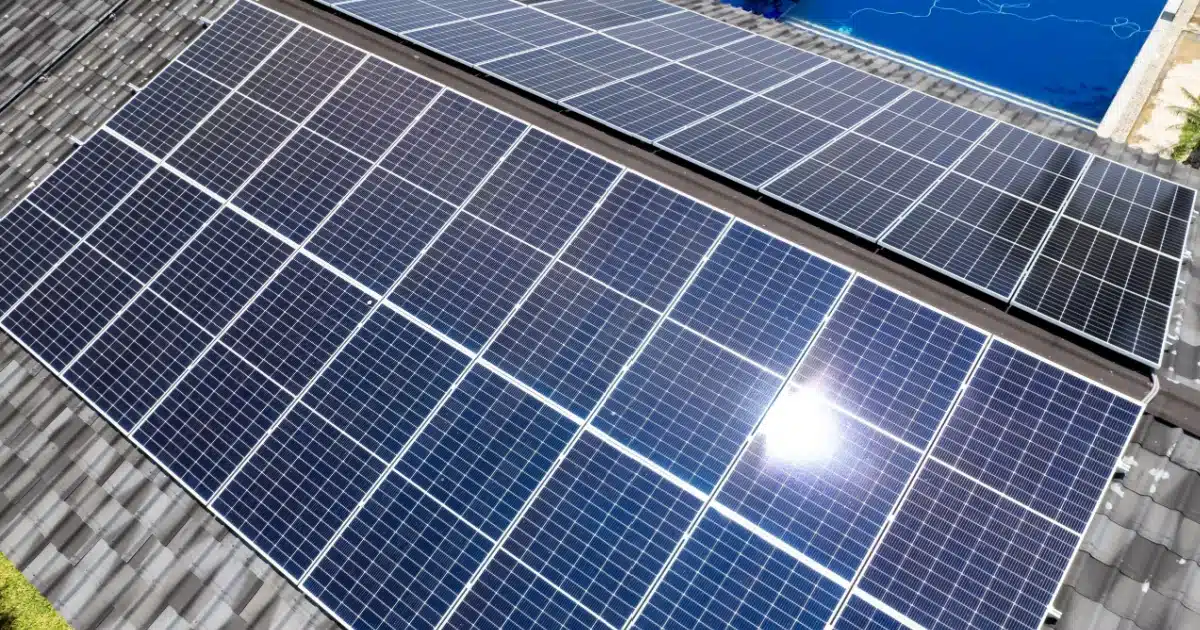
Think tank Ember projects that the Philippines’ rooftop solar capacity could nearly triple in the next two years, with distributed solar reaching 3,500 megawatts (MW) by 2028.
According to Ember analyst Alnie Demoral, this growth is driven by two key factors. “First is that electricity prices have increased significantly, making electricity much more expensive now for households and businesses,” she explained. “And the second is that the cost of solar panels has also fallen significantly in the previous years because of the global oversupply and manufacturing scale.”
Ember also noted the falling cost of solar installations, combined with savings from reduced grid electricity purchases, has shortened the payback period to about 3.1 years for households, down from four years, and around two years for businesses.
Meanwhile, BPI reported that its solar financing portfolio grew 89% in 2025, with outstanding solar loan balances reaching ₱100 million, reflecting rising consumer and business interest in investing in onsite renewable energy (RE).
Large commercial establishments are also expanding their rooftop solar footprint to curb electricity costs. SM Supermalls, for instance, has installed more than 200,000 solar panels across 59 malls, enabling the company to replace a significant portion of its daytime grid consumption and generate an estimated ₱600 million to ₱1 billion in annual electricity savings.
(Also read: Power Bills Climb As Supply Crunch Sends Wholesale Prices Soaring)
Why Rooftop Solar Isn’t Without Challenges
The Philippines has become China’s second-largest export market for solar panels, with 87% of Filipinos reportedly considering solar panel installations. However, as rooftop solar expands rapidly, its potential drawbacks must also be examined.
High upfront costs
Despite Ember’s assessment that rooftop solar payback periods have become shorter, the upfront cost remains a major barrier for many Filipino households. According to local solar installer Solaric, even a basic 1.6 kilowatt-peak (kWp) grid-tied system starts at around ₱108,000, while more typical residential setups cost significantly more. A 3.2 kWp home solar system averages about ₱183,000, while a larger 5.6 kWp grid-tied installation starts at roughly ₱270,000.
Because of this, Demoral acknowledged that wider solar adoption will require more accessible financing options beyond government employees, citing GSIS-backed loans as a key driver of household uptake.
Grid instability
In California, the rapid adoption of rooftop solar created new challenges for grid operators as increasing amounts of distributed power disrupted traditional electricity flows. The surge contributed to supply-demand imbalances, reverse power flows, and voltage fluctuations, forcing the grid to adapt. It also placed added stress on conventional power plants, which had to frequently adjust output to match intermittent solar generation, accelerating equipment wear and increasing maintenance needs.
In fact, the addition of RE capacity has not prevented power alerts in the Visayas and Mindanao in May and may have even added pressure to the grid, according to Energy Regulatory Commission (ERC) Chairman Francis Saturnino Juan. He said the issue is not just a lack of generation capacity but the grid’s ability to adjust when solar output declines. “We are not simply facing an afternoon and early evening shortage; we are facing a flexibility shortage in the hours after the sun goes down,” he explained.
Safety risks
Unregistered rooftop solar installations can endanger lives by allowing electricity to flow back into the grid without utilities knowing. During outages, line workers repairing damaged power lines may assume circuits are dead, only to encounter live electricity from rooftop systems, creating potentially fatal electrocution risks.
Beyond worker safety, improper installations can also trigger electrical fires, harm grid equipment, and disrupt local power systems. Proper registration and safety standards are therefore critical as solar adoption grows.
Deepening inequality in energy access
PhilStar columnist Boo Chanco raised concerns over the broader policy implications of rooftop solar growth, particularly for utilities that rely on electricity sales to fund grid investments. As more consumers generate their own power, utilities may collect less revenue to support infrastructure upgrades.
Chanco warned that while net metering can benefit solar adopters, the cost of maintaining the grid could increasingly shift to consumers who cannot afford rooftop systems. “This has the unintended consequence of making rooftop solar an anti-poor alternative,” he wrote.
Rooftop solar does not always mean cheaper electricity
Manila Bulletin journalist Chino Leyco’s experience highlights the limits of rooftop solar savings.
After investing in his own solar installation, Leyco’s household generated 932 kilowatt-hours (kWh) of electricity in a month and only purchased 471 kWh from the grid. However, his calculated cost for imported electricity reached ₱15.70 per kWh—higher than his neighbors’ ₱15.51 per kWh rate despite their full reliance on the grid.
Leyco attributed this to billing rules under ERC Resolution No. 15, where certain charges are based on total consumption rather than grid electricity purchased. “My household assumed 100 percent of the financial risk to install these solar panels. State infrastructure did nothing, the utility did nothing, and the sun provided the raw fuel for free. Yet, the mechanism of government still finds a way to financialize that sunshine, penalizing our efficiency by inflating our unit rates,” he wrote.
Germany’s Plug-In Solar Also Faces Weaknesses
In Germany, plug-in solar has become a popular alternative to traditional rooftop solar as more households seek affordable ways to generate their own electricity. Unlike conventional rooftop systems, which require larger investments, professional installation, and suitable roof space, plug-in solar devices are smaller units that can be mounted on balconies or other areas. This makes them especially appealing to renters and households that cannot install standard solar panels.
Germany has become a global leader in plug-in solar adoption, with experts estimating that these systems could account for up to 2% of the country’s electricity demand by 2045. However, the country’s RE expansion is also exposing challenges in grid management.
As solar capacity grows, Germany’s aging grid is struggling to handle increasingly variable power flows. An Ember report warned that more than 120 GW of planned renewable projects could face risks without significant infrastructure upgrades. On sunny days when solar generation exceeds demand, excess electricity can contribute to negative power prices and force generators to reduce output.
Battery storage is increasingly seen as a solution. By storing surplus solar power during the day and releasing it during peak demand periods, batteries can reduce wasted energy, improve grid stability, and help Germany better integrate growing RE capacity.
In the Philippines, fully disconnecting rooftop solar households from the grid could reduce operational challenges for utilities. However, achieving power independence would require costly battery storage systems.
According to RE company EcoFlow, while smaller solar batteries may start at around ₱9,000 to ₱24,000, these lower-cost options are generally less suitable for full household use due to limited capacity and shorter lifespans. More practical residential batteries, such as 10 kWh lithium iron phosphate systems, can cost around ₱90,000 to ₱135,000, excluding other equipment and installation expenses.
For households aiming to fully rely on solar even during cloudy days or nighttime, costs can rise significantly. EcoFlow noted that off-grid systems require much larger battery capacity, with a 5 kW setup in the Philippines potentially costing ₱320,000 to ₱450,000, with batteries accounting for a major portion of the investment. Additional expenses for inverters, installation, and other electrical components can further increase the total cost.
This means that while battery storage can improve energy security, achieving true 24/7 solar independence remains a costly investment for many Filipino households.
(Also read: The Real Power Crisis May Be Poor Governance in Electric Cooperatives)
The Need for a Fair and Practical Energy Transition
The Philippines’ rooftop solar boom may look impressive on paper, signaling stronger RE adoption and positioning the country as a rising participant in the global clean energy transition. Falling technology costs, shorter payback periods, and growing consumer interest all point to promising momentum. However, the reality is more complicated than the success story suggests.
Solar power can help reduce dependence on the grid, but its intermittent nature requires additional investments in grid upgrades, flexible generation, and battery storage to maintain reliability. These added costs raise questions about whether rapid solar expansion is the most practical path for a developing economy still facing high electricity prices and limited household purchasing power.
There is also a risk of creating an unjust energy transition. Rooftop solar remains largely accessible only to households and businesses with enough capital to afford installation, while lower-income consumers who cannot invest may continue shouldering grid costs. If not carefully managed, the shift toward distributed energy could widen existing inequalities rather than benefit all Filipinos.
Rooftop solar should remain part of the country’s energy strategy, but it must be pursued alongside affordability, reliability, and equitable access. A successful transition is not only about adding more renewable capacity—it is about ensuring that every Filipino can benefit from a secure and affordable power system.
Sources:
https://www.facebook.com/reel/1906422803367473
https://www.philstar.com/business/2026/05/18/2528626/rooftop-solar
https://www.philstar.com/business/2026/06/18/2535931/powering-solar-protecting-homes-and-businesses
https://solaric.com.ph/solar-panel-installation-cost
https://www.facebook.com/ERCgovPH/posts/erc-highlights-energy-resilience-and-flexibility-at-ejap-energy-forum27-may-2026/1300035232273933
ERC Chairman Francis Saturnino Juan, speech at the Economic Journalists Association of the Philippines (EJAP) Energy Forum 2026, Manila, Philippines, May 26, 2026.
https://qa.philstar.com/business/2026/05/14/2527729/clean-energy-clear-facts
https://mb.com.ph/2026/05/27/our-solar-roof-costs-us-more-per-kilowatt
https://www.ecoflow.com/ph/blog/solar-battery-price-in-the-philippines