

Residents Fight Back Against Pakil Hydropower Project Over Forest & Livelihood Threats
- June 4, 2026
Table of Contents
On May 30, a coalition of Pakil residents in Laguna, environmental advocates, and church-based organizations staged a protest march across the municipality to express opposition to the proposed Ahunan dam. The action was spearheaded by Mamamayang Nagmamahal sa Pakil (MaNaPak), which has been vocal in challenging the project.
Valued at US$1.1 billion, the hydropower development is expected to deliver 1,400 megawatts (MW) of renewable energy (RE) once completed. Despite its clean energy ambitions, the proposal has become a source of controversy, with critics warning of possible consequences for the surrounding communities, natural ecosystems, water resources, and areas of cultural significance.
“Pakil is more than a location for energy infrastructure,” stated the Catholic community, Living Laudato Si’ Philippines. “It is the home of the centuries-old devotion to Our Lady of Turumba and the Ahunan pilgrimage tradition. Its mountains, springs, forests, and waters are part of a living landscape that sustains both nature and culture.”
The group also pushed for open processes, active community participation, and impartial scientific studies, insisting that all concerns from affected residents be fully addressed.
“Development must be guided not only by energy needs, but also by ecological integrity, cultural stewardship, and justice,” it asserted.
(Also read: Will Renewable Energy Bring Our Electric Bills Down?)
When Clean Energy Collides With Social and Environmental Justice
The Pakil project in Laguna, which is planned to hold 14,000 megawatt-hours (MWh) of energy, is being positioned as one of Asia’s largest pumped-storage developments and is targeted for operation in 2029. The project is being developed by Ahunan Power Inc., a partnership that brings together Prime Metro Power Holdings, led by billionaire Enrique Razon, and the Lopez-owned First Gen Corporation.
Pakil is a small municipality in eastern Laguna, situated between Laguna de Bay and the Sierra Madre mountain range. Known for its quiet, faith-centered character and natural surroundings, the town’s mountains are more than a natural resource—they are closely tied to the community’s livelihoods, traditions, and history.
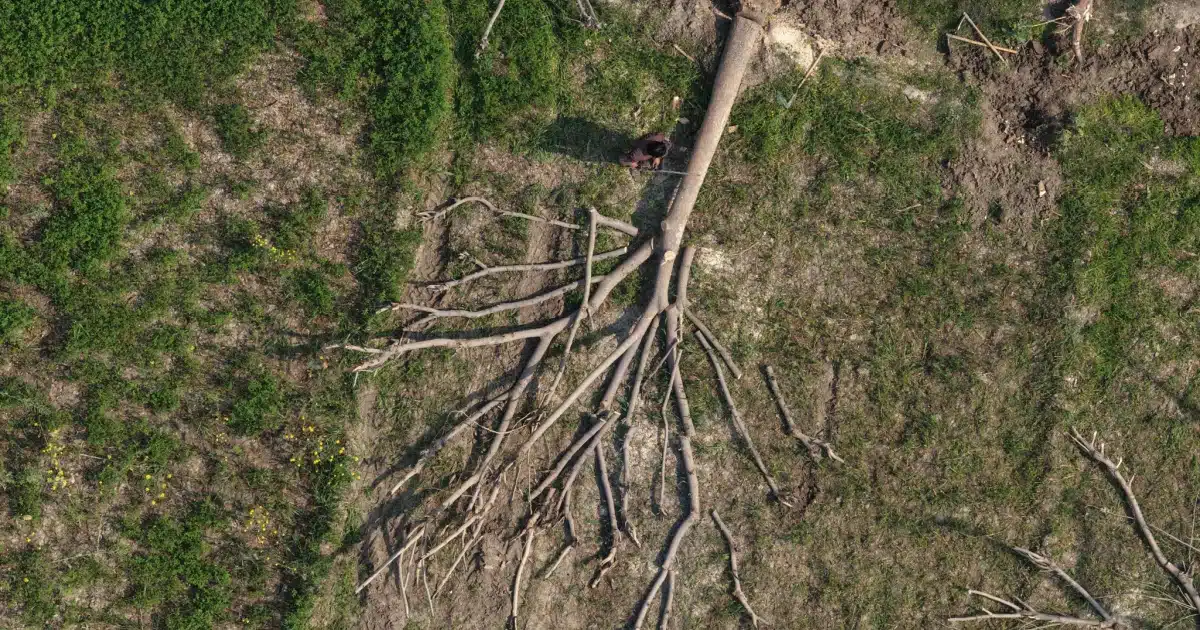
On June 21, 2025, residents awoke to the sound of chainsaws cutting through the mountains above Pakil. After climbing Mt. Ping-as, resident Lina Naldo said she discovered rows of felled fruit trees, which had long provided food and income for local families. Project critics say the development could lead to the clearing of more than 300 hectares of Sierra Madre forest. For many residents, the issue extends beyond environmental concerns.
Mt. Ping-as is considered a sacred site and the endpoint of the annual Ahunan pilgrimage, where devotees of Our Lady of Sorrows of Turumba ascend the mountain to pray and attend Mass. The tradition, which dates back to the Spanish colonial period, has long been observed by residents of Pakil and is the basis for the project’s name.
According to the Department of Environment and Natural Resources (DENR), more than 3,000 trees are slated for cutting to make way for the dam, prompting concerns among residents about potential disasters linked to the large-scale deforestation of the mountain.
At the foot of Mount Ping-as, farmers have also reported being unable to access their fields after government-installed fencing restricted entry to agricultural areas, a move carried out with the approval of the Department of Energy (DOE) and the DENR.
Farmers fear for their land, with the planned dam potentially affecting around 69 hectares of agricultural areas registered under the Registry System for Basic Sector in Agriculture. The land is a key source of rice production in Pakil.
Jun Asin, 64, a farmer and president of the Pakil East Farmers Association, said that farming conditions were already challenging even before the project. Many cultivators work under informal arrangements, sharing harvests with landowners, while others rely on seasonal farm labor to earn income through planting, clearing, and harvesting.
Some farmers have been forced to set aside their farming tools and seek work in the city, often taking jobs as construction workers to make a living.
Others have been recruited by the dam corporation itself. According to Asin, some former farm workers have been taken on as security personnel or assigned to menial roles within the company.
“Kawawa ang mahirap (The poor suffer even more),” Asin lamented.
Another noticeable change is the severity of recent floods.
In Pangil, residents and fisherfolk stated that the link between deforestation and landslides has become increasingly clear and directly felt on the ground. They warned that continued tree cutting could trigger landslides and potentially lead to widespread flooding, putting many communities at risk.
“Ipaalam muna ng mayor kung ano yung ginagawa sa [lugar namin] kasi tayong mamamayan ang maaagrabyado,” said resident Theresa Bolante. (The mayor should first inform us about what is being done in our area because we are the ones who will be adversely affected.)
She also asked, “Sino ba ang magbe-benefit” (who will benefit) and questioned where their safety would stand with the RE projects.
“Kahit sabihin mong [1,000] megawatts ‘yong isa at 800 [megawatts] ‘yong isa, parehas lang ‘yang disgrasyang mangyayari,” she added. (Even if one is [1,000] megawatts and the other is 800 megawatts, the same disaster will happen anyway.)
(Also read: Lawmakers Challenge DOE’s Energy Roadmap As Power Shortages Persist)
Clean Power, Unclean Impacts
Ahunan Power’s proposed development has been designated by the DOE as an Energy Project of National Significance and has also secured “green lane” approval from the Department of Trade and Industry (DTI) and the Board of Investments (BOI), streamlining its permitting process.
Prime Infra said the pumped-storage facilities are intended to support the country’s long-term energy transition goals, including raising the share of RE to 35% by 2030 and 50% by 2050. Once operational, the facility is projected to generate enough electricity to power more than 2.3 million households annually and reduce coal use by an estimated 3.1 million tons each year.
However, the project raises a difficult question of whether the end justifies the means. While it is positioned as a major step toward cleaner energy and lower coal dependence, it also faces criticism over its potential impacts on the very communities and environments it is meant to serve.
Similar tensions are emerging worldwide as countries accelerate their energy transition. In the US, solar developments near Indigenous lands have sparked concerns over sacred sites and traditional livelihoods, while in Brazil, the Belo Monte hydropower dam has been widely criticized for displacing communities and disrupting Amazon ecosystems.
In India, large-scale solar parks have triggered disputes over farmland use, and in the UK, offshore wind expansion has raised concerns among fisherfolk about restricted access to fishing grounds and marine impacts.
These cases highlight a recurring global challenge: the push for cleaner energy often collides with local communities that bear the immediate social and environmental costs.
Against this backdrop, advocacy groups have stressed that energy transitions must be pursued in a way that protects people and ecosystems as much as it advances decarbonization.“The transition away from fossil fuels is necessary, but renewable energy must also respect people, ecosystems, heritage, and the common good. Climate solutions should not create new social, cultural, or environmental harms,” stated Laudato Si’ Philippines. “The future of Pakil should be shaped with its people, not despite them.”
Sources:
https://pinoyweekly.org/2025/08/muog-laban-sa-dambuhalang-dam/
https://www.rappler.com/voices/thought-leaders/opinion-massacre-trees-people
https://pinoyweekly.org/2025/12/baha-sa-laguna-gawa-ng-tao-hindi-ng-ulan/
https://business.inquirer.net/513627/prime-infra-engages-manager-for-hydro-projects
https://primeinfra.com/sectors/ahunan-power-inc
https://thefishingdaily.com/latest-news/scotlands-crowded-seas-threaten-fishing-coastal-communities/


