

NPC Ramps Up Solar-Diesel Projects As Global Oil Price Risks Persist
- June 25, 2026
Table of Contents
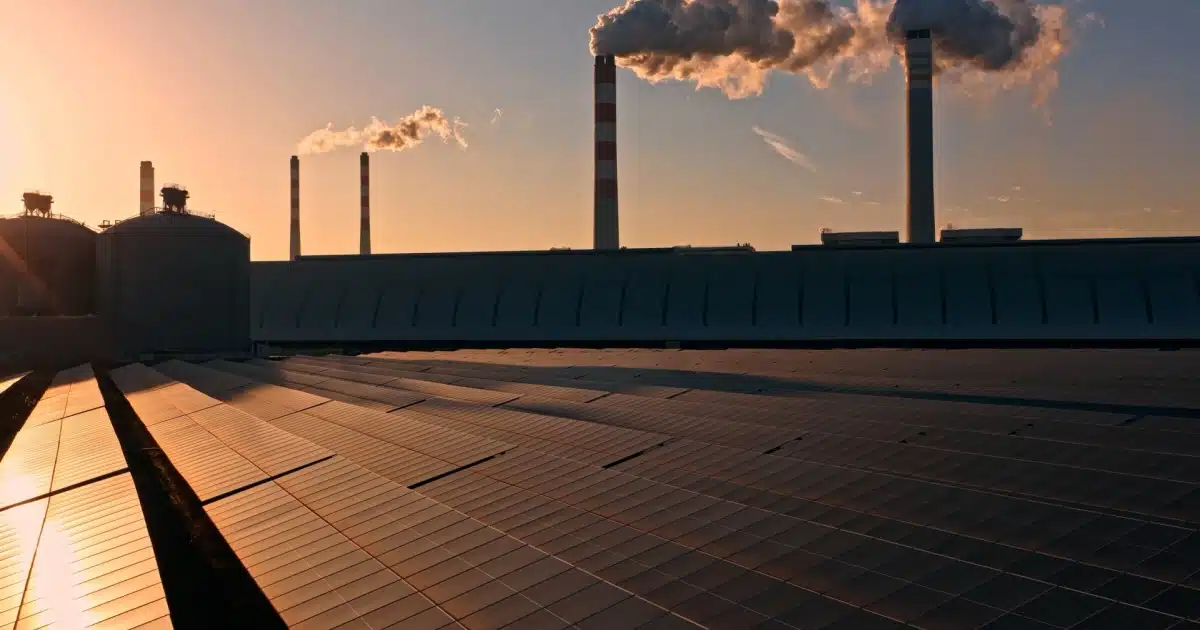
State-run National Power Corp. (NPC) is accelerating its transition toward renewable energy-powered microgrids in off-grid communities, targeting the operation of its power plants through a hybrid mix of solar, battery storage and diesel by 2028 as it seeks to reduce exposure to volatile global fuel prices and lower the cost of electricity generation in remote areas.
NPC President and Chief Executive Officer Jericho Jonas B. Nograles said the agency is fast-tracking its Accelerated Hybridization Program (AHP), a long-term initiative designed to lessen the dependence of island communities and remote areas on imported diesel fuel. The push comes as global oil markets remain vulnerable to geopolitical tensions, including the recent conflict involving Iran and Israel, which has heightened concerns over future fuel price shocks.
Speaking in a recent interview, Nograles said NPC has already completed four hybridization projects and is working on additional installations as part of its broader modernization effort for off-grid power systems.
Moving Away From Diesel
Many of the country’s missionary electrification areas continue to rely on diesel-fired generators operated by NPC’s Small Power Utilities Group (SPUG). As of the end of 2024, NPC operated 217 SPUG power plants nationwide, the majority of which are powered by diesel.
Because the Philippines imports most of its fuel requirements, fluctuations in international oil prices can significantly affect power generation costs in isolated communities. NPC’s hybridization strategy aims to mitigate this risk by integrating renewable energy technologies such as solar power, battery energy storage systems (BESS), and potentially wind resources alongside existing diesel facilities.
Under NPC’s Missionary Electrification Plan for 2025-2029, the agency has completed four solar-diesel-battery hybrid projects. These include a 55-kilowatt-peak (kWp) facility in Cuaming, Bohol; a 30-kWp project in Palumbanes, Catanduanes; a 150-kWp installation in Palanan, Isabela; and a 500-kWp facility in Rapu-Rapu, Albay.
NPC projects that its planned hybridization initiatives will add around 36 megawatts (MW) of solar capacity and 34 megawatt-hours (MWh) of battery storage capacity by 2030. The projects are expected to generate approximately ₱3.14 billion in fuel savings and require total capital investments estimated at ₱10.41 billion.
Ticao Island Pilot Facility
As part of the program’s next phase, NPC is preparing to deploy a pilot solar-diesel hybrid facility on Ticao Island in Masbate.
According to Nograles, the project will integrate renewable energy resources with existing diesel generators to create a model that can be replicated across other off-grid locations. Legal and regulatory compliance reviews are currently being completed before construction begins.
While NPC has not disclosed the planned generating capacity of the Ticao project, officials view it as a critical demonstration facility that could guide future commercial-scale hybridization efforts across the country’s island grids.
The project also forms part of NPC’s strategy to modernize energy infrastructure in geographically isolated areas while reducing long-term fuel consumption and operating costs.
Private Sector Participation Sought
To accelerate implementation, NPC is seeking greater participation from private investors and power developers.
Nograles said the state-owned utility wants private companies to help finance and deploy future hybrid systems rather than relying solely on government funding. NPC is currently preparing its fiscal year 2027 budget, but officials hope private-sector involvement can speed up deployment ahead of the government’s original implementation schedule extending through 2028 to 2030.
The utility sees private investment as a key factor in expanding renewable energy projects across remote communities where electricity generation costs remain among the highest in the country.
Hybrid systems combine renewable energy technologies such as solar arrays or wind turbines with conventional diesel generators. The arrangement allows renewable sources to provide a larger share of electricity demand while diesel units serve as backup power, improving grid stability and reducing fuel consumption.
The approach also supports the country’s broader energy transition goals by lowering carbon emissions and reducing dependence on imported fuel.
Meaningful Savings
Despite progress, Nograles acknowledged that some existing hybrid systems have yet to deliver the level of fuel savings originally envisioned.
“Right now, we’re seeing only 4 to 10% fuel savings, but the gold standard should be at least 50 to 100%,” Nograles said.
He stressed that future projects must be designed more effectively to maximize renewable energy utilization and achieve substantial reductions in diesel use.
“Hybridization should have real impact — it’s quality over quantity. You can’t just hybridize for the sake of it if you’re only saving a few liters of diesel,” he added.
Beyond solar and battery projects, NPC is also working with the National Irrigation Administration to improve the performance of provincial run-of-river hydroelectric facilities. The collaboration aims to synchronize irrigation and dam improvement programs to increase power generation capacity in certain areas.
NPC’s hybridization push comes as the state-owned corporation continues to shoulder the costs of supplying electricity to remote communities through the Universal Charge for Missionary Electrification, a subsidy collected from electricity consumers connected to the main grid.
By reducing diesel consumption and increasing renewable energy penetration, NPC hopes to strengthen energy security, contain operating costs, and build a more resilient power system for the country’s off-grid communities over the coming years.
Source:
https://mb.com.ph/2026/06/22/napocor-seeks-investors-to-rescue-off-grid-islands-from-costly-diesel


