

Is the Green Transition Truly Green? Communities Push Back on Renewable Energy Projects
- May 21, 2026
Table of Contents
The Philippines is actively accelerating its shift toward renewable energy (RE), with a national target of increasing the share of renewables in the power mix to 35% by 2030 and 50% by 2040, as outlined in the Philippine Energy Plan.
This move is widely framed as essential for sustainability and long-term climate resilience, consistent with global commitments under the Paris Agreement, which emphasizes limiting global temperature rise and scaling clean energy to reduce emissions.
However, on the ground, some residents and local communities are raising concerns that this transition is also encroaching on livelihoods and ecosystems. For many, especially in rural and coastal areas, the transition is not experienced as entirely green, sparking questions about whose costs and benefits are being prioritized in the RE shift.
Calbayog City Pushes Back Against Wind Farm Project in Samar
The Calbayog City government has taken a firm stance against portions of a planned wind energy development that would place turbines within the protected Calbayog Pan-as Hayiban Protected Landscape (CPHPL), a critical watershed that supplies water to the city. While city officials clarified that they are not opposing the entire project, they voiced concerns over the environmental risks linked to constructing turbines inside the protected area.
Calbayog City Mayor Raymund Uy said the city objected specifically to 13 of the 37 proposed turbines that were initially planned within the watershed zone. The project, led by Gemini Wind Energy Corporation (GWEC), the local partner of Singapore-based Vena Energy, forms part of a broader wind power expansion in Samar and Northern Samar worth around P20 billion.
The city council earlier passed a resolution opposing the installation of turbines within the 5,067.93-hectare protected landscape, also known as the Calbayog Watershed. Officials likewise pushed for the restoration of the area’s original classification as a “strict protection zone” after the Protected Area Management Board reclassified portions of the site into a “multiple-use zone,” allowing RE projects to proceed.
Public consultations conducted in October drew strong opposition from residents, civil society groups, and environmental advocates. Concerns centered on possible biodiversity loss, soil erosion, disruption of farming activities, and threats to water security if construction proceeded inside the watershed.
In February 2026, however, Vena Corporation announced that it had cancelled plans to install five turbines within the protected landscape, following sustained advocacy from the Save Calbayog Rivers Foundation and other environmental groups. During a city council session, company representatives presented an updated project layout relocating the affected turbines outside the strict protection zone.
(Also read: DOE Presses NGCP For Full Transparency After Widespread Outages)
Talim Island Fisherfolk Resist Proposed Wind Farm Project
In February, fisherfolk and coastal communities surrounding Laguna de Bay staged a protest march in Binangonan to oppose the proposed Talim Wind Power Project, warning that the development could damage the island’s fragile environment and threaten local livelihoods dependent on the lake.
The protest, called “Alay Lakad para sa Talim Island at Kalikasan,” was organized by Kapit sa Talim Environmental Advocates and drew residents from communities across Talim Island and nearby lakeside towns. Protesters expressed fears that the RE initiative could bring long-term ecological consequences to the island, which lies between the municipalities of Binangonan and Cardona in Rizal.
According to the group, more than 40,000 residents and fisherfolk may be affected by the project. Pambansang Lakas ng Kilusang Mamamalakaya ng Pilipinas (PAMALAKAYA) Vice Chairperson Ronnel Arambulo, himself a resident of Talim Island, claimed, “The construction of the windmill project on our island has already resulted in unprecedented flooding in coastal communities and biodiversity loss.”
Arambulo added that site development led to the uprooting of trees on Mount Tagapo, one of Talim Island’s most prominent natural landmarks, resulting in biodiversity loss and worsening flooding in nearby coastal communities. He also criticized what he described as the lack of proper consultation with affected residents before the project moved forward.
Despite the project’s inclusion in broader RE initiatives, community groups said they would continue campaigning for its suspension.
Olongapo Communities Oppose Solar Facility
In November, residents from communities near Mt. Balimpuyo and the wider Zambales mountain range in Olongapo City have formally asked the local government to stop Phase 2 of a proposed solar energy project, pointing out environmental risks and procedural transparency issues.
In a petition submitted to city officials, 919 residents said they are not opposed to RE in principle. However, they stressed that development must not come at the cost of forests, watersheds, and community safety.
The petitioners pointed to Mt. Balimpuyo’s role as part of a forest reserve and watershed system, saying it should have remained strictly protected rather than classified as alienable and disposable land. They also questioned the approval of Phase 1 of the solar facility, particularly the issuance of an Environmental Compliance Certificate (ECC), and called for clearer explanations from the Department of Environment and Natural Resources (DENR) and the Protected Area Management Board (PAMB).
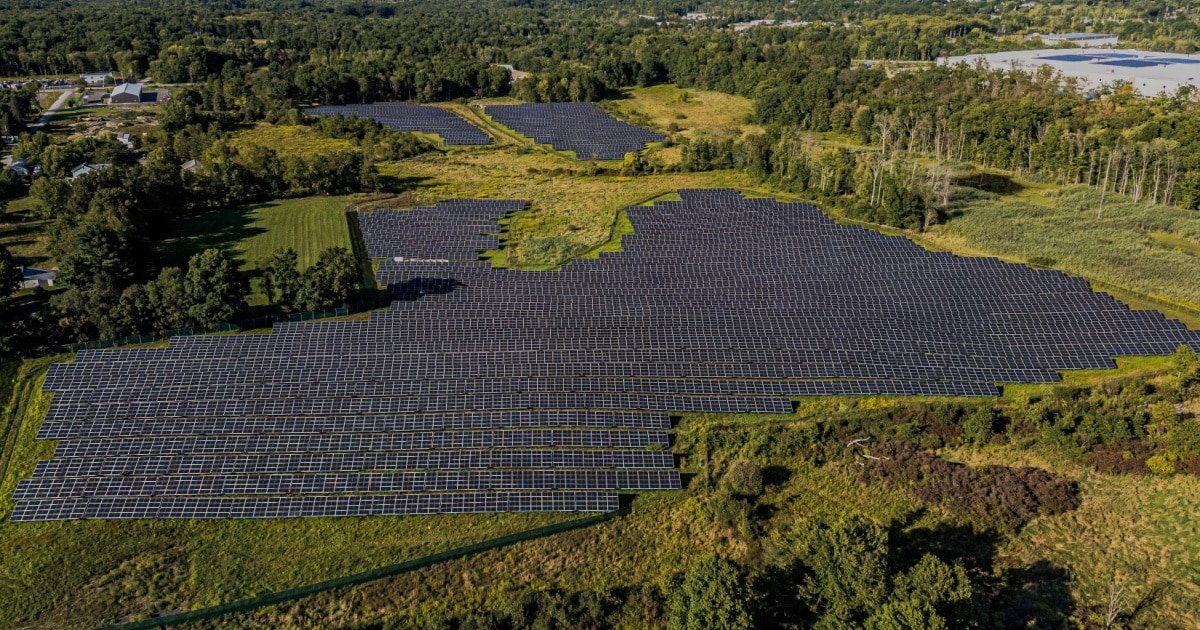
Residents further raised alarms over the scale of development across the Zambales mountain range, which they estimate already spans more than 1,800 hectares of solar installations. They warned that large-scale land conversion could intensify flooding, soil erosion, and landslides in an area already considered geohazard-prone. The cutting of thousands of trees, they said, may also disrupt natural water flows and worsen sediment buildup in rivers.
The petition urged city officials and national agencies to halt Phase 2, review the ECC for Phase 1, and strengthen safeguards to ensure that future energy projects are both environmentally sound and community-centered.
Environmental Groups Flag Issues in Mt. Banahaw Wind Power Project
The proposed 247-megawatt Banahaw Wind Power Project in Quezon province drew growing scrutiny from residents and environmental groups, who said the scale and location of the development raise serious ecological, cultural, and governance concerns.
The project is being advanced by GigaWind4 Inc., a subsidiary of ACEN Corporation, with an estimated cost of ₱34.5 billion. It plans to install 38 wind turbine generators across barangays in Tayabas, spanning a wide area that includes parts of the Mt. Banahaw landscape, a site long regarded as both ecologically sensitive and culturally significant.
Opposition groups argued that the development directly conflicts with the protected status of the Mt. Banahaw-San Cristobal Protected Landscape under Republic Act No. 9847. Environmental organizations such as Tanggol Kalikasan and local coalitions have described the project as a “great irony,” pointing to what they see as a contradiction between RE expansion and the preservation of a legally protected biodiversity zone.
Residents and advocates stressed that Mt. Banahaw is more than a forested mountain, calling it a watershed that supports surrounding agricultural communities and a refuge for endemic and threatened species. They warned that clearing for turbines, access roads, and related infrastructure could fragment habitats, increase soil erosion, and weaken water retention systems that feed rivers and farms downstream.
Some environmental groups also emphasized the project’s footprint, noting that 28 turbines are planned within proximity to the protected landscape boundary. They highlighted that large-scale construction in steep and forested terrain could increase risks such as landslides, especially given the mountain’s ecological sensitivity and volcanic characteristics.
Beyond environmental risks, cultural and spiritual concerns became a major point of opposition. Mt. Banahaw is considered sacred by pilgrims and indigenous communities, and critics stated industrial development could disrupt long-standing cultural practices tied to the mountain’s identity.
(Also read: Brownouts and Broken Economies: The Crisis Facing Philippine Island Tourism)
Just Transition, Real-World Trade-Offs
The country’s accelerating RE drive reflects a clear policy commitment to decarbonization and climate resilience, aligned with national targets and global climate agreements. In principle, these projects are widely seen as necessary for a low-carbon future. Yet across various RE sites, a consistent pattern emerges: communities positioned as beneficiaries of “green growth” are also those most exposed to its immediate environmental and social costs.
Watersheds, coastal ecosystems, agricultural land, and culturally significant landscapes are increasingly at the center of project site conflicts. While policymakers frame these initiatives as essential for long-term sustainability, affected residents often experience them as disruptions to livelihoods, ecosystems, and local rights.
These tensions do not negate the energy transition, but they highlight its complexity. A genuinely just transition must go beyond deployment targets and investment figures. It requires stronger safeguards, transparent processes, and meaningful participation to ensure that the shift to RE does not unintentionally deepen vulnerability in the very communities it aims to protect.
Sources:
https://www.elibrary.imf.org/view/journals/018/2026/005/article-A001-en.xml
https://unfccc.int/process-and-meetings/the-paris-agreement
https://www.pna.gov.ph/articles/1264128
https://manilastandard.net/business/314635313/acen-unit-eyes-247-mw-wind-farm-in-quezon.html


