

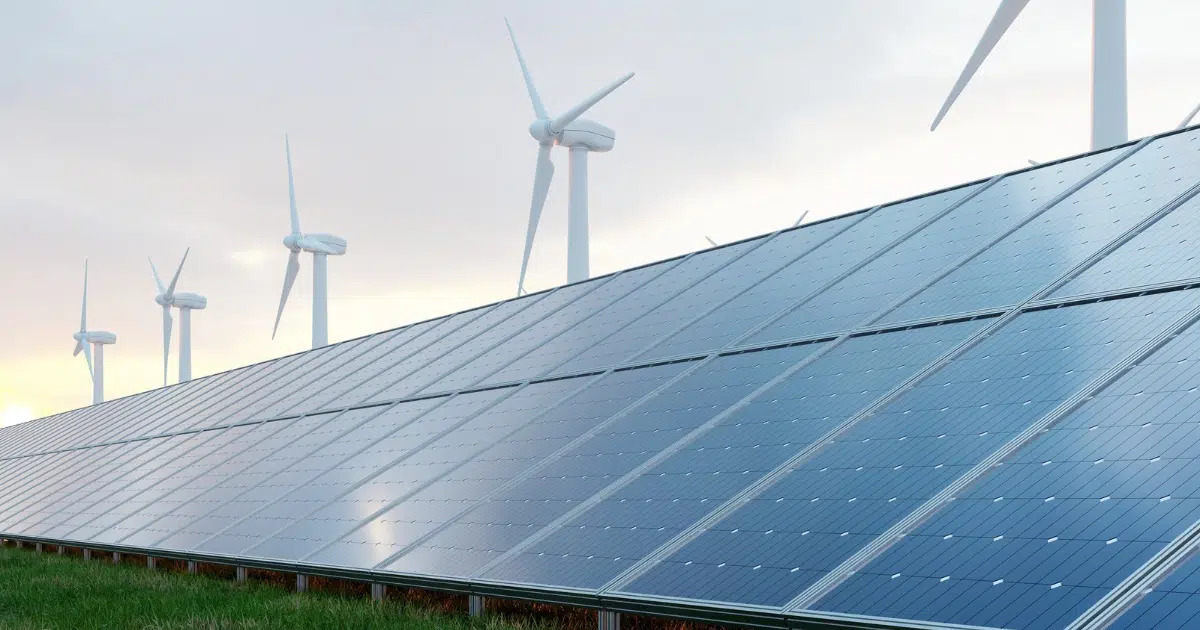
DOE Unveils Massive Clean Energy Push With 25 GW In New Auctions
- November 26, 2026
Table of Contents
The Philippines is expanding its clean energy investment pipeline, with the Department of Energy (DOE) planning 25 gigawatts (GW) of additional renewable energy capacity auctions through 2035. The DOE makes this push as it aims to meet national generation targets and address challenges that have stalled several existing projects.
Energy Secretary Sharon Garin said the Department of Energy (DOE) had already awarded approximately 20.7 GW through four rounds of the Green Energy Auction Program (GEAP), with another 25 GW planned for delivery between 2027 and 2035.
The expanded pipeline is intended to help the country achieve its renewable energy targets while attracting developers into emerging technologies, including offshore wind, floating solar, biomass, hydropower, and energy storage.
The government is also preparing two major power auctions over the next two months. A 3,000-megawatt (MW) natural gas auction is scheduled for December, followed by a 3,300-MW offshore wind auction in January 2027.
Garin said the offshore wind auction would form part of the country’s efforts to expand clean energy capacity, while the gas-fired plants would provide flexible generation to support grid stability when renewable output fluctuates.
“Our answer is to diversify our energy mix, develop indigenous resources, and strengthen our power system,” she said.
Balancing Renewable Growth And Reliability
The planned auctions come as the Philippines seeks to increase renewable energy’s share in the power generation mix from the current 25.2% to 35% by 2030, 50% by 2040 and more than 50% by 2050.
Garin expressed confidence that the government would meet its 2030 target, despite recent developments involving the withdrawal and cancellation of several renewable energy projects.
Beyond offshore wind, the DOE is preparing auctions for floating solar installations, solar projects on fishponds, rooftop solar in Mindanao, off-grid power systems, and mid-merit solar facilities. Biomass, hydropower, and pumped-storage projects are also being considered.
The country’s first special waste-to-energy auction identified nine potential winning bidders for 12 projects with a combined capacity of 428 MW. Mechanical completion is targeted for 2028, subject to the completion of post-auction requirements.
However, the expansion of intermittent renewable sources also requires complementary investments in dispatchable generation and storage.
Garin said the planned natural gas capacity would help compensate for changes in renewable output, particularly when solar generation declines. The DOE is also pursuing geothermal and other indigenous energy resources through the Philippine Conventional Energy Contracting Program and its Geothermal De-risking Facility.
Project Cleanup
The government’s renewable energy ambitions are unfolding alongside a push to clear inactive service contracts and make development opportunities available to companies capable of executing projects.
The DOE began cancelling idle renewable energy projects in 2024, initially covering around 105 producers. Garin said the initiative was intended to ensure that service contracts went to serious developers rather than companies that could leave potential capacity undeveloped.
The cleanup comes as some developers face implementation challenges, including bureaucratic delays and land-related issues. Other companies have opted to surrender their contracts voluntarily.
Among them is ACEN Corp., which recently disclosed the withdrawal of 12 wind and solar service contracts in Luzon with nearly 5,000 MW of combined potential capacity.
ACEN president and chief executive Eric Francia said the decision reflected a broader portfolio rationalization, with the company prioritizing projects it was better positioned to execute while allowing other developers to pursue the remaining opportunities.
Garin clarified that the DOE did not terminate ACEN’s contracts, describing the withdrawals as voluntary.
Energy Assistant Secretary Mandy Romero maintained that the government remained on track to achieve its 35% renewable energy target by 2030. She said other generation companies were interested in taking over abandoned or surrendered projects, stressing that ACEN’s decision did not necessarily mean the locations were unsuitable for renewable energy development.
Investment And Energy Security
Investor appetite remains substantial despite project execution challenges. Board of Investments data showed that renewable energy accounted for ₱745.1 billion, or approximately 79%, of the ₱942.9 billion in approved investments from January to September 2026.
To sustain this momentum, the government has opened eligible renewable energy projects to full foreign ownership and is accelerating permitting through the Energy Virtual One-Stop Shop. It is also seeking greater private-sector participation in major infrastructure developments.
Garin emphasized that generation investments must be matched by transmission and storage infrastructure, particularly as the country attracts energy-intensive industries such as semiconductor manufacturers, factories, and data centers.
Energy security is another priority. The Philippine National Oil Co. is developing the country’s first government-owned strategic petroleum reserve in Bataan, with an initial capacity of one million barrels targeted for completion by December 2027. The government is seeking investors to expand the facility and has signed a cooperation agreement with Japan on emergency petroleum storage arrangements.
Meanwhile, the DOE is addressing electricity access in remote communities, where 93% of missionary areas still depend on diesel generators. Some receive only eight to 16 hours of electricity daily. The National Total Electrification Roadmap and Microgrid Systems Act are among the measures being pursued to improve supply.
As the government moves toward its next round of auctions, the challenge will be ensuring that investment commitments become operational capacity. The success of the 25-GW pipeline will depend not only on attracting bidders but also on resolving permitting, land, transmission, and financing constraints.
Source:
https://tribune.net.ph/2026/11/20/doe-eyes-25-gw-more-renewable-energy-projects-by-2035
https://business.inquirer.net/621610/ph-keeps-clean-energy-target-at-30-of-mix-by-2030


