

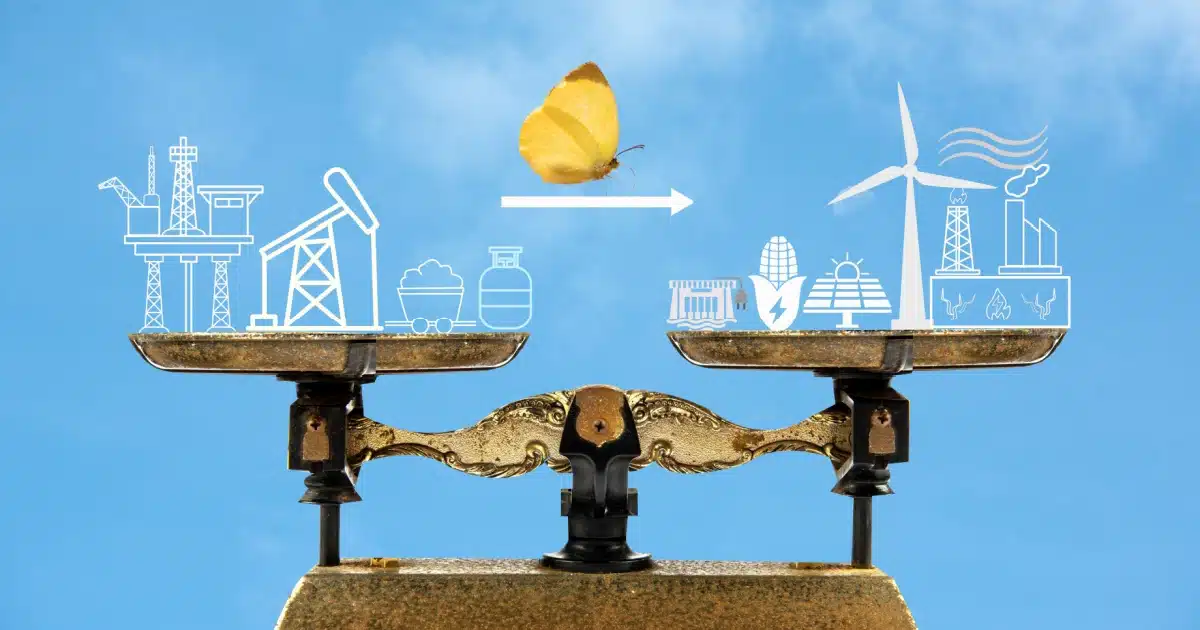
Grid Troubles And Rising Costs Intensify Calls For Renewable Energy Transition
- June 9, 2026
Table of Contents
Consumer advocates are pressing the government to accelerate the country’s transition to renewable energy, warning that continued dependence on imported fossil fuels is exposing Filipinos to higher electricity costs and recurring supply risks, even as President Ferdinand Marcos Jr. moves to address recent power disruptions through reforms in the power sector and transmission network.
The call was made during the national convention of the Power for People Coalition (P4P) at the University of the Philippines Diliman, where the group argued that the country’s existing energy policies have failed to adequately protect consumers from rising electricity prices and inflation.
P4P leaders said the Philippines remains highly vulnerable to global market shocks because coal, natural gas, and oil continue to dominate the country’s energy mix. They maintained that recent developments in the Middle East have once again highlighted the risks associated with fossil fuel dependence, with fluctuations in global fuel prices translating into higher electricity costs for consumers.
Energy Reforms
“The energy crisis we face today is the consequence of decades-long fossil dependence. Coal and gas continue to dominate our power generation mix, and entire communities in off-grid areas rely on oil for their electricity,” P4P convenor Gerry Arances said.
According to data cited by the coalition, renewable energy currently accounts for only 22.9 percent of the country’s energy supply, compared with 58.4 percent from coal and 17.4 percent from natural gas.
Arances said the ongoing conflict involving the United States, Israel, and Iran has underscored the vulnerability of countries that depend heavily on imported fossil fuels.
“History has repeated itself, as the US/Israel-Iran war sparked rate hikes, with our dependence on fossils leaving us vulnerable to further bill shocks,” he said.
The coalition also criticized what it described as a power sector structure that disproportionately benefits large energy companies while consumers shoulder the burden of rising electricity rates. During the convention, P4P argued that government responses to increasing fuel and power prices have not gone far enough and called for deeper reforms aimed at ensuring affordable and reliable electricity.
The group urged policymakers to speed up the development of renewable energy projects and implement measures that would reduce the country’s exposure to volatile global fuel markets.
Transitioning Away From Fossil Fuels
P4P co-convenor and Caritas Philippines president Bishop Gerry Alminaza echoed the call for a more aggressive shift toward renewable energy, saying dependence on coal, oil, and natural gas carries economic, environmental, and social costs.
“Whether it is coal, gas, or oil, we continue to rely on energy sources that expose us to volatile global markets, environmental harm, and long-term economic risks,” Alminaza said.
“We are calling for a transition away from coal, gas, and oil toward renewable energy systems that are clean, affordable, reliable, and accessible.”
The coalition maintained that expanding renewable energy capacity would help improve long-term energy security while shielding consumers from recurring fuel price spikes.
NGCP Performance Under Review
The push from consumer groups comes as the Marcos administration seeks to address recent power supply problems that have affected several parts of the country.
Malacañang disclosed that President Ferdinand Marcos Jr. has directed the Energy Regulatory Commission (ERC) to conduct a performance review of the National Grid Corporation of the Philippines (NGCP) following a series of power outages and supply constraints in Luzon and the Visayas.
Palace Press Officer Claire Castro said the President convened an extensive meeting with officials from the Department of Energy (DOE) and other agencies to assess the state of the country’s power system and identify measures needed to stabilize supply.
According to Castro, Marcos instructed the ERC to evaluate NGCP’s performance and ensure that the grid operator fulfills its commitments and project obligations.
The President also directed the DOE to move quickly in addressing power supply concerns and to implement measures aimed at improving grid reliability and energy security.
“The directive is to fix or normalize the situation as soon as possible,” Castro said. “First of all, new power plants must be built to increase energy production. The transmission network must be expanded, and interventions must be implemented to address problems delaying the construction of submarine cables and transmission lines,” she added.
Expanding Generation Capacity
The administration is also looking into issues affecting the completion of key transmission projects, including submarine cable connections and transmission line developments considered critical to improving grid stability.
The government’s actions follow a series of power-related incidents across the country, including red and yellow alerts in the Luzon and Visayas grids, a system-wide blackout in Palawan, and continuing rotational brownouts in Catanduanes.
Officials likewise discussed power supply concerns in the Visayas and Mindanao during the meeting, as well as ongoing efforts to address generation and transmission constraints that have contributed to recent disruptions.
Source:
https://tnt.abante.com.ph/2026/06/05/power-for-people-nanawagan-ng-paglipat-sa-renewable-energy/news
https://malaya.com.ph/business/business-news/marcos-orders-ngcp-review-doe-action-on-power-outages


