

Filipinos Brace For Higher Power Bills As Peso Hits Record Low
- November 2, 2026
Table of Contents
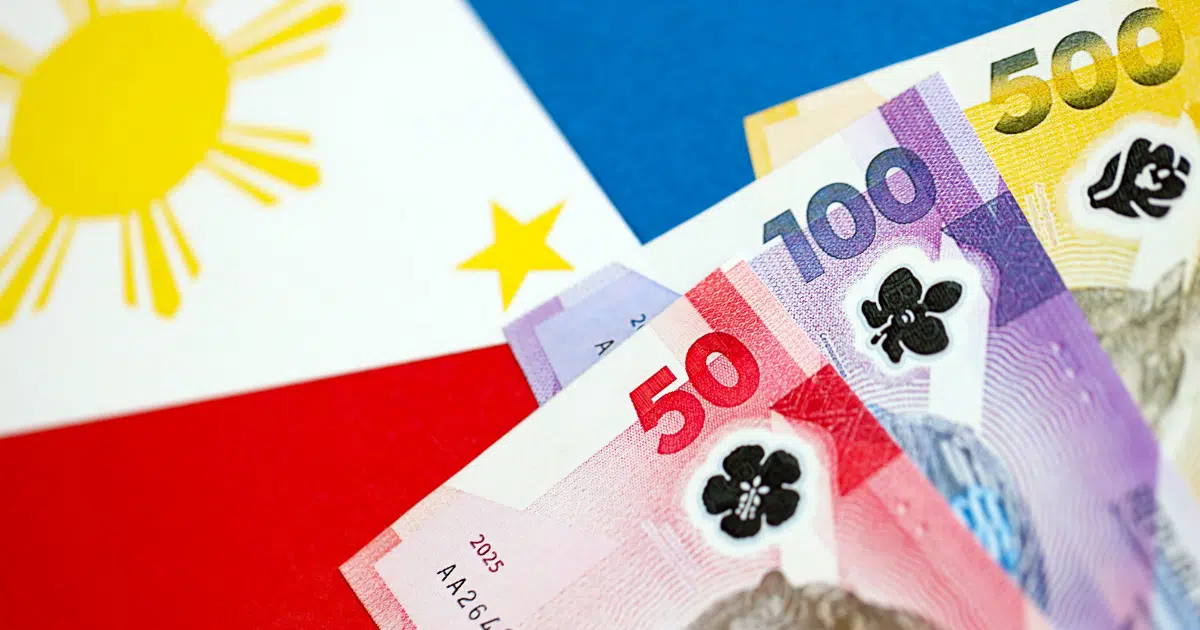
The peso’s continued slide against the US dollar is threatening to push electricity rates and fuel prices higher, adding pressure on Filipino households already grappling with elevated energy costs, Energy Secretary Sharon Garin said.
Garin said the weakening local currency would increase the cost of imported coal, diesel and liquefied natural gas (LNG), which could eventually be passed on to consumers through higher electricity charges.
The peso breached the ₱64-per-dollar level for the first time during intraday trading on Tuesday before closing at ₱64.17 against the greenback, according to data from the Bankers Association of the Philippines.
“So P64 is probably the highest we have now. So it will impact the rate of electricity because it passes through, so it will impact per kilowatt-hour,” Garin said during the Singapore International Energy Week.
The energy chief said she would meet with Energy Regulatory Commission (ERC) Chair and CEO Francis Saturnino Juan to discuss possible measures to cushion the impact of the peso’s depreciation and prevent sudden increases in electricity bills.
Garin said the Department of Energy (DOE) would explore ways to delay or reduce the effect of currency movements on power rates, although she acknowledged that the higher import costs would eventually affect electricity prices.
Electricity Bills Soar
The discussions come as consumers face another round of higher electricity charges, with Manila Electric Co. (Meralco) announcing an increase in its October rates.
Meralco raised its overall rate by ₱0.3191 per kilowatt-hour (kWh) to ₱15.0615 per kWh from ₱14.7424 per kWh in September, citing higher power generation costs.
For a household consuming 200 kWh monthly, the adjustment translates to an additional ₱64 on its electricity bill.
The ERC has also approved an increase in Meralco’s average distribution rate to ₱1.48 per kWh from ₱1.35 per kWh, representing a 9.6% adjustment.
The peso’s depreciation adds another cost pressure because some power supply contracts are denominated in US dollars. A weaker currency means power companies need more pesos to settle dollar-based obligations, potentially increasing the cost of electricity delivered to consumers.
Fuel Prices Also Under Pressure
The weaker peso could also make petroleum products more expensive as the country continues to deal with volatility in international oil markets.
Garin said the DOE may again ask oil companies to implement staggered pump price increases to prevent consumers from absorbing large adjustments at once.
“We’ll ask them (oil companies) again once we see the computations this week. Normally, they follow, but hopefully, it won’t be necessary anymore,” she said.
The DOE releases its estimated price adjustment range every Monday, with changes at fuel stations taking effect on Tuesdays.
The government has also been setting the price adjustment range that oil companies must follow after the Philippines was placed under a state of national energy emergency because of the impact of the Middle East crisis.
For the week covered by the latest adjustment, the DOE prescribed maximum increases of ₱1.20 per liter for diesel and ₱0.50 per liter for kerosene. Gasoline prices, meanwhile, declined by at least ₱0.30 per liter.
Garin said the government would assess the latest market computations before deciding whether to seek another staggered implementation of fuel price increases.
The DOE has previously used the approach to spread the impact of higher international oil prices over several weeks, giving motorists and other consumers more time to adjust to rising fuel expenses.
El Niño Adds To Energy Concerns
The pressure on electricity prices comes as the country also prepares for the possible effects of a super El Niño, which could intensify electricity demand and increase the risk of power interruptions.
Garin earlier warned that prolonged hot and dry conditions could lead to higher consumption as households and businesses increase their use of air-conditioning and other cooling equipment.
The Philippine Atmospheric, Geophysical and Astronomical Services Administration expects El Niño to peak toward the end of the year, while the Department of Science and Technology has warned that drought conditions could emerge by March 2027.
The combination of higher fuel import costs, currency depreciation and stronger electricity demand could complicate efforts to keep power prices manageable.
Garin said the DOE was working to minimize the impact of these developments but acknowledged that the government might need additional intervention if energy costs rise significantly.
“If the impact is really big, then we can report that to the committee, to the Cabinet and then maybe …, subsidies can be given,” she said.
The energy secretary also pointed to the difficulty of managing the country’s energy concerns amid the global oil crisis, higher domestic fuel costs and worsening currency pressures.
Source:
https://newsinfo.inquirer.net/2331344/doe-seeks-solutions-as-weaker-peso-may-hike-electricity-rates
https://www.philstar.com/headlines/2026/10/28/2566255/weak-peso-may-push-fuel-power-costs


